Every restaurant has a bin in the kitchen. What most operators don’t know is what’s actually going into it — or how much it’s costing them. A new study published in the journal Waste Management suggests changing that simple fact can transform food waste performance overnight.
Researchers from Harokopio University in Athens and Muenster University of Applied Sciences installed AI-based waste-tracking devices in five foodservice operations across Germany, Greece, and Switzerland — including two hotels in Greece, a hotel in Switzerland, a resort restaurant in Germany, and a corporate caterer in Germany.
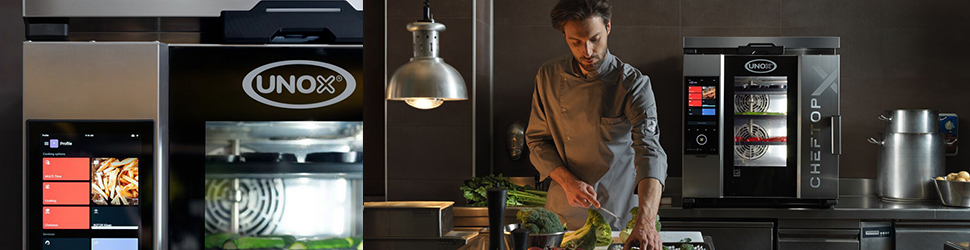
The devices, made by Swiss company KITRO, combined a scale with an internet-of-things (IoT) camera that photographed every piece of discarded food in real time. A cloud system then automatically identified, weighed, and categorised each waste event using deep learning algorithms, feeding results into a dashboard that managers could check daily.
Before the intervention, researchers measured baseline waste without giving managers access to the data. The numbers were sobering. The resort restaurant was discarding 152 grams of food per meal. The Swiss hotel was generating 121 grams per meal.
Across all five sites, between 45% and 73% of that waste was “avoidable”. Overproduction and kitchen prep waste were the two biggest culprits.
Data as the intervention
Once managers were given dashboard access, the results were striking. Four of five sites reduced total food waste per meal by between 23% and 51%. The cost of wasted food dropped by as much as 39% per meal. The changes were statistically significant and held up over time — each site was tracked for up to 10 months after the baseline period.
What drove the change wasn’t a new mandate or a training program. It was awareness.
Managers who could suddenly see exactly where waste was occurring — which dishes, which service, which day of the week — started making targeted adjustments. Common actions included restocking breakfast buffets more frequently with smaller quantities, cooking items like scrambled eggs to order rather than in bulk, adjusting portion sizes, improving food storage, and redistributing uneaten kitchen food to staff.
The five-star hotel in Santorini achieved the largest reduction — 51% — and also implemented the most corrective measures, suggesting a direct relationship between engagement with the data and the scale of improvement.
One site went the wrong way
Not every site improved. The Swiss hotel saw food waste increase by 13% during the intervention. Researchers attributed this to COVID-19 disruption, high staff turnover, a shift to a four-day workweek, and weak buy-in from managers and staff. Preventive measures were initiated but never fully implemented.
The takeaway is pointed: the technology only works if the people using it are engaged. High baseline waste levels, it turns out, are not the determining factor in whether an intervention succeeds. Management motivation is.
A limitation worth noting
The AI devices proved most effective at tackling kitchen-side waste — overproduction and prep waste.
They were far less effective at reducing consumer plate waste, which remained largely unchanged at most sites.
The researchers suggest that operators seeking comprehensive results should pair waste-tracking technology with front-of-house interventions, such as smaller default portions, buffet nudges, or prompts encouraging guests to take less and return for more.
The business case
The study didn’t assess the cost of the technology itself — the devices were provided as part of an EU-funded research project. But the five-star Santorini hotel subsequently purchased the KITRO system outright after the study ended, and the company that owned the German resort restaurant chose to install devices across its other properties.
KITRO has separately reported a 170% return on investment for a hotel with around 400 guests per day, achieved over 34 months.
This is also the first peer-reviewed study of fully automatic AI-based food waste tracking in commercial foodservice. Previous figures — showing effectiveness of 25% to 70% in hotels and 41% to 54% in caterers — came exclusively from vendor-published case studies. The new research provides independent evidence that those numbers are plausible, and adds nuance about what conditions lead to success.
For operators feeling squeezed on food costs, the message is straightforward: you can’t manage what you can’t measure. And once you can measure it in real time, the data tends to manage itself.
Source: Sigala et al., “Reducing food waste in the HORECA sector using AI-based waste-tracking devices,” Waste Management, 2025.