
Starting a life in a new country is not easy. It is even more difficult for young people from a protection-seeking, refugee, or migrant backgrounds.
For the past 15 years, Scarf Foundation has been running programs to train migrants with hospitality skills to help them gain employment in Australia. Scarf co-founder Hannah Brennan proudly shares: “This September, we’re celebrating 15 years of outcomes, 375 graduates. We’ve run close to 300 events and over 25,000 hours of training.”
Fifteen years ago, Hannah was then in her mid-twenties with 8 years of front of house experience working in cafés, restaurants, events, and companies.
Volunteering with the local refugee community around Fitzroy through Social Studio, this organisation exposed Hannah to working with people from refugee backgrounds, giving them opportunities to train and upskill, mainly in fashion and making clothing.
She recalls: “I met a few young people through that program. They were just so keen and eager to get a job. They were smart, engaged, ambitious and had big goals for themselves. But they just couldn’t get that first job in Australia. At the same time, I was working for a beautiful events venue in the in the city, and they were always needing more staff. I know these amazing people, and they just want to be working, but it was just too big of a bridge for the company I was working for. I think they just saw it as too risky to take someone on who had no experience. And so really, Scarf was born out of frustration and also a hope that things could be better.”
“We’re a small organization that runs hospitality training and mentoring programs, but we’re also a lot more than that. We provide a safe space for people to learn, to make mistakes, and to figure out if hospitality is for them.” It turns out Scarf is providing so much more. Hannah points out, “For a lot of the young people coming into our programs, it’s a community. For them, it’s often their first community when they move to Australia.”
She explains, “If they’re new to Australia, they might only know a small handful of people. It might be some friends and family they have here, or like the local Afghan community in Dandenong. But by the end of the Scarf season, they would have met at least 30 people through our program. We’ve seen that reflected in feedback from trainees. As much as the skills and the confidence building is really important, actually that sense of belonging, community and connection is almost equally important for a lot of people.”
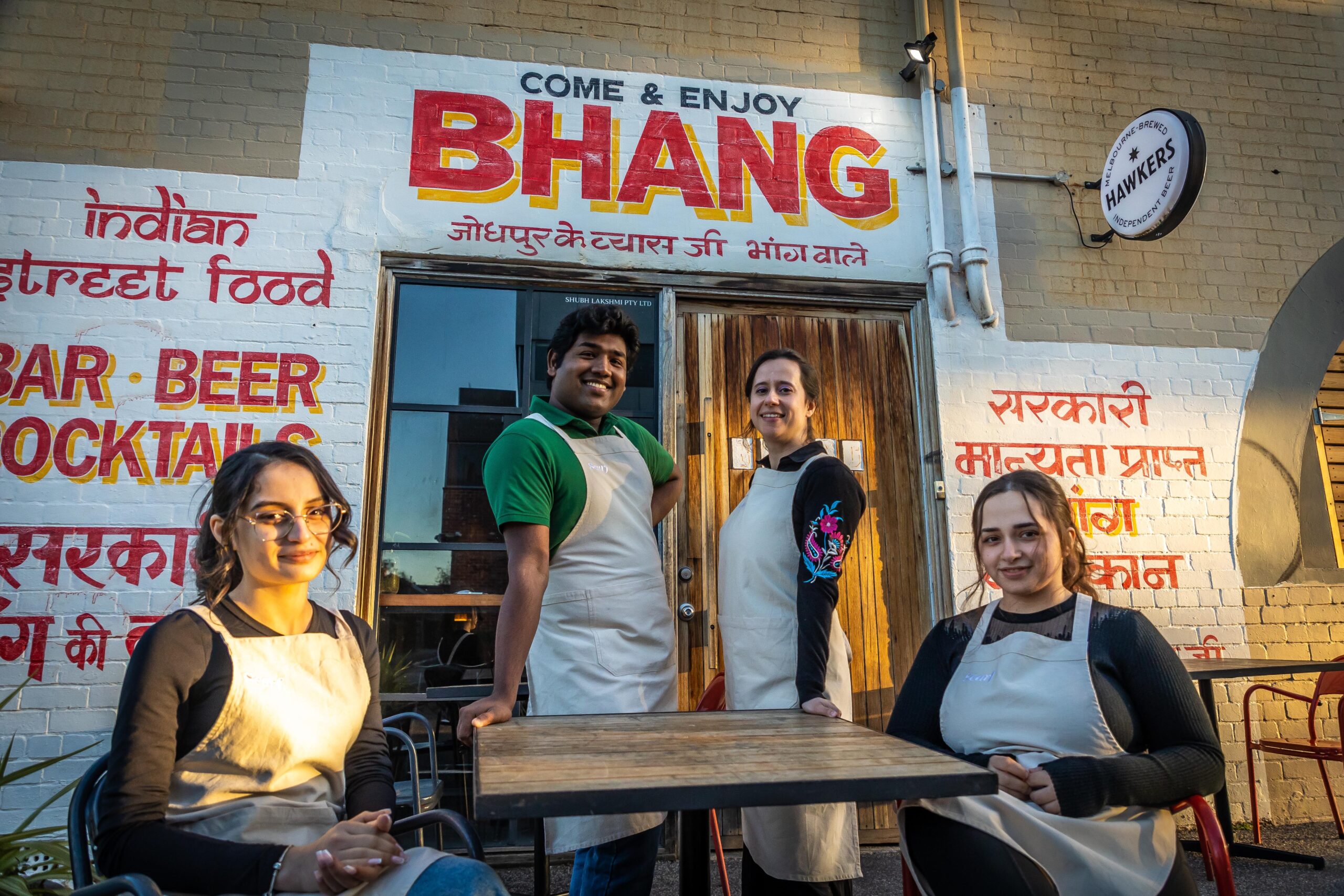
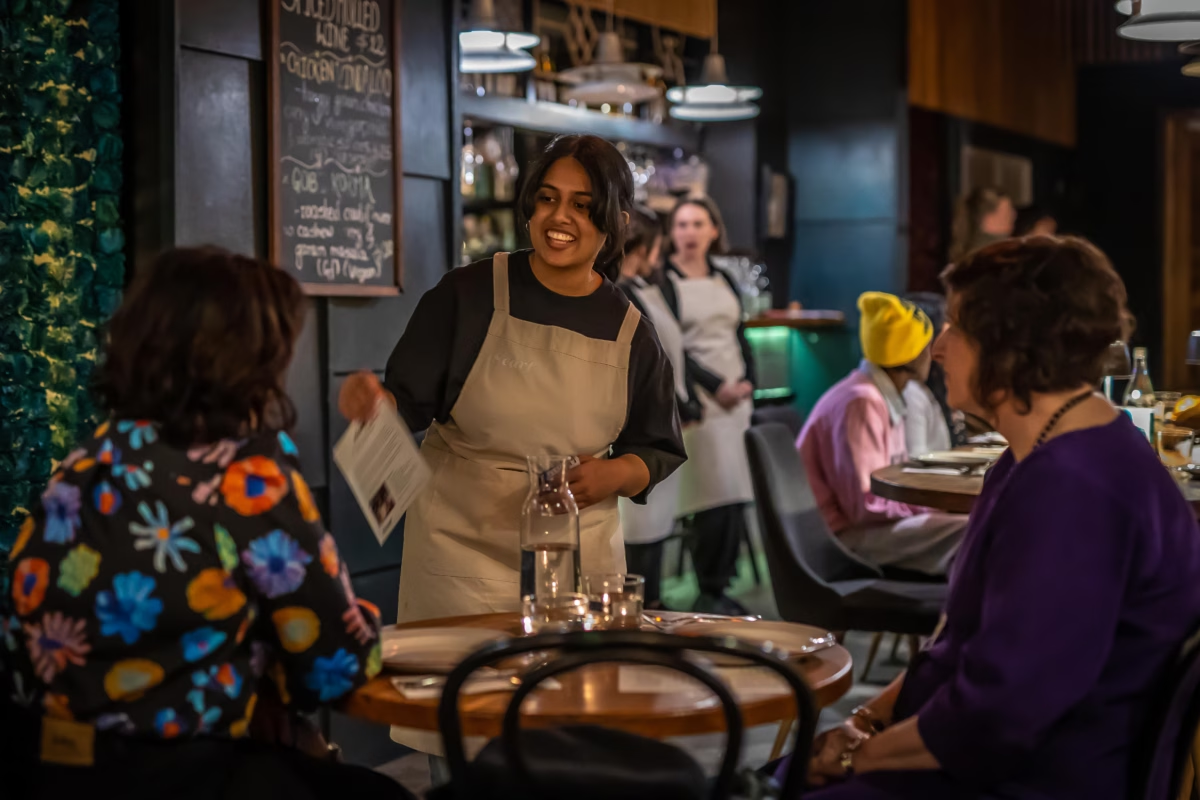
The program is open to young people 18 to 28 from a refugee, migrant or asylum-seeking background with a basic to intermediate level of English. Running across ten weeks, they learn different skills like coffee training, wine education, how to run POS and payments systems, complete their RSA, learn to take orders, carry and clear three plates. They commit to 30 to 40 training hours, work Front of the House at two Scarf dinners, plus do typically about 35 to 40 hours of work experience at one of the Scarf partner work experience venues.
It is much more than a work placement or a paid internship. “Essentially, we’re working very closely with the venue to make sure there’s somebody at the venue who can act as a mentor. When that young person comes into their first shift, we always have a Scarf team member be there at the beginning to introduce them.”
Throughout the work experience, they’re working alongside a mentor who has been through trauma informed training with Scarf. Hannah stresses on this importance, “We really try and make sure that they have a good understanding of some of the barriers our trainees might have faced or are currently facing. We make sure they work in a really supportive and sensitive way.”
Starting September, Scarf is introducing a training program with no alcohol. “We have seen an increase in young people wanting to do our program, but they can’t work with alcohol due to religious or cultural reasons. For instance, a lot of young women from Afghanistan have been applying for our programs. They’re clearly saying in that first phone call that they can’t work with alcohol, but they want to do Scarf.”
There are many ways for hospitality professionals to get involved.
Hannah offers this invitation: “You can host a Scarf pop-up dinner at your venue. We are keen to expand our work experience program to include more restaurants interested in providing opportunities for young people who are starting their working lives in Australia. We always want to connect with more mentors and trainers, basically hospitality professionals who want to give back, share their skills and knowledge.”
But perhaps the easiest way to get involved is to simply attend one of Scarf’s events. She says: “We need people to come to our dinners to help us keep the social enterprise model going. Dine with us. Come along to one of our dinners. It’s a really good introduction to what we do. It’s also great way to see the training and mentoring take place while you’re having a nice dinner out. Dinners are an essential part of what we do, and so we love hospitality people coming to dinners.”
With the current labour shortages in hospitality and migrant communities’ barriers to entry, it is inspiring to Scarf’s unique model of hands-on training, mentorship, and a community driven solution to integrate into Australian society.