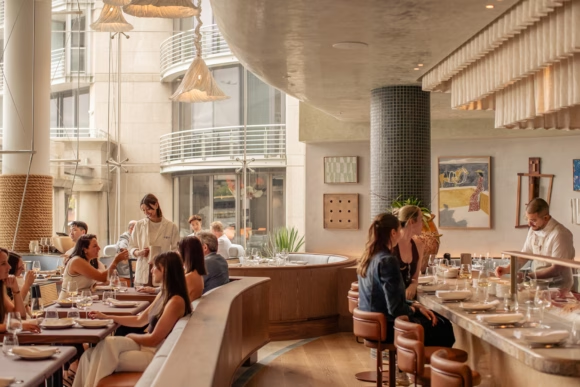
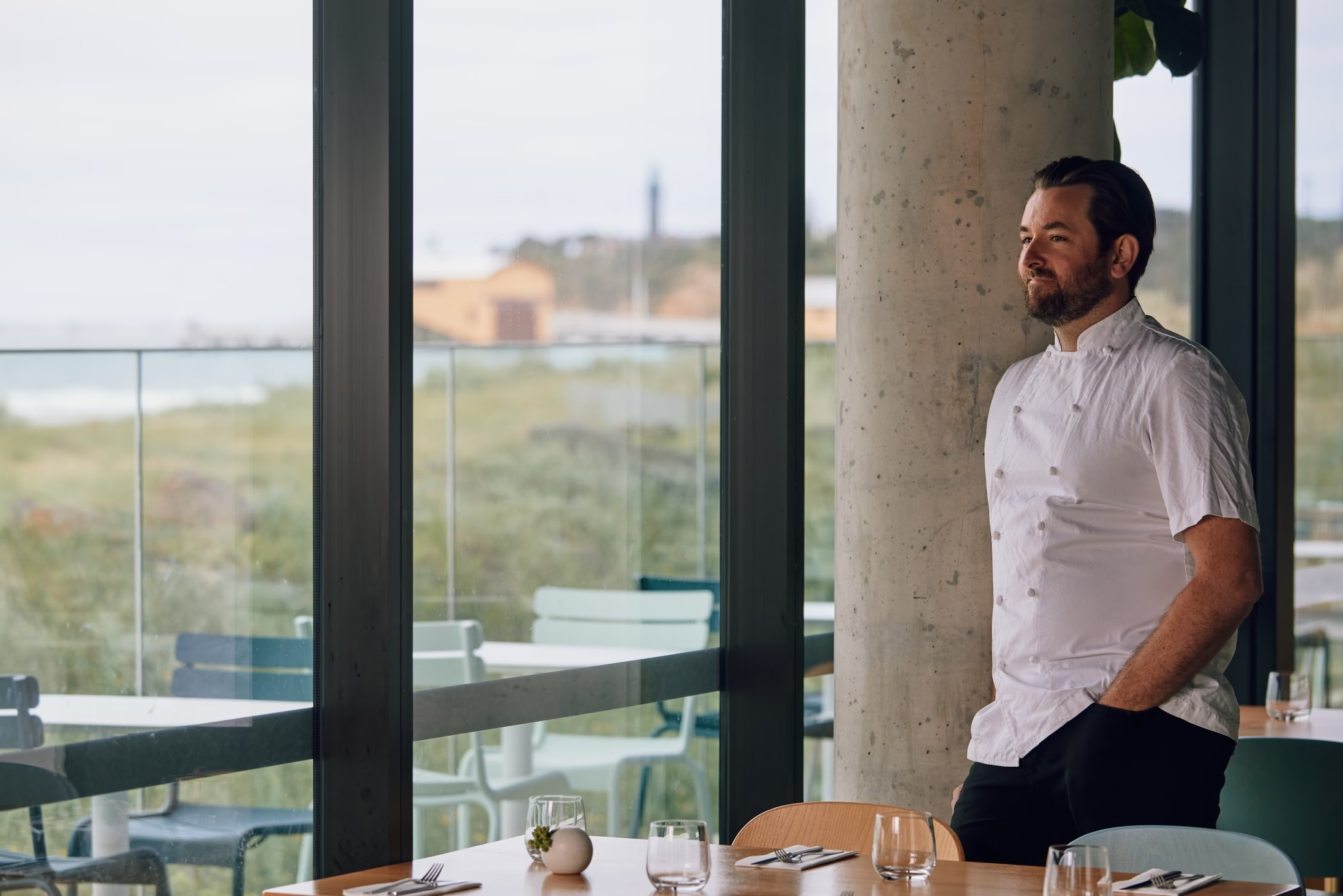
Inside the kitchen at ONDA, the newly-launched restaurant at the Sea Road Sorrento ferry terminal, nothing is discarded if it can be reused. Tomato offcuts are dehydrated to make seasoning, dried strawberry tops are included in dessert crumbles, herb stalks infuse flavour into pickling vinegar and there is a strict no single-use plastic policy when purchasing wholesale food.
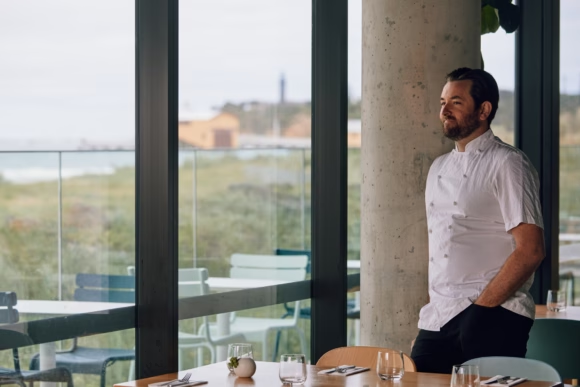
Executive Chef Mike Jaques, who is also at the helm of Tarra, the corresponding ferry terminal restaurant in Queenscliff, is committed to keeping his kitchen low-waste and environmentally friendly. There are three reasons for this: it builds a story for his diners, it has a positive environmental impact, and it has cost benefits.
Early in his career, Jaques worked with Graham Jefferies, an industry leader in low-waste kitchen management, who taught him the importance of getting the buy-in from his chefs and his suppliers. Jaques learned to question his practices and view waste as an opportunity to be creative.
For businesses wanting to take their first steps towards a lower waste kitchen, the single most effective, high-impact change that they could implement tomorrow, requiring minimal infrastructure and equipment, is to assess their current practices, says Jaques.
Mike Jaques suggests starting with these three adjustments:
Request reusable packaging from your suppliers: A phone call to suppliers to ask them if there is a better way costs nothing. Generally, suppliers and vendors are open to improving their practices. Jaques no longer accepts produce delivered in non-reusable packaging. When produce arrives, his team unpacks it and returns the boxes to the truck before it leaves.
“Don’t be afraid to actually have that conversation with your supplier, to ask them whether it’s possible to work without the styrofoam box packaging,” he says. He’s found that suppliers are usually excited to hear that their clients want to engage with them, and he has built many positive relationships with suppliers throughout his journey.
“When I speak to my suppliers, I can see a light bulb going on in their head.” The suppliers don’t even need to get buy-in from everyone. They can simply start to make these improvements themselves. A single request can trigger a ripple effect of change. Jaques knows from experience that there aren’t many chefs who’d complain about receiving less packaging.
Assess the service items in your fridge. Replace plastic takeaway containers with something that’s washable and reusable. This can have a huge impact because the disposal of single-use items is totally inefficient. 60% of a garbage bag full of plastic containers is probably air. When waste fills a skip twice as fast, businesses need twice as many collections. Jaques advises using reusable items, like silicone lids, to replace cling film. This single change is easily achievable and cost-effective.
Question everything in your bins. Have a good look at the food waste you create. A considered bin audit can facilitate a positive environmental outcome for very little effort. “What is it about this vegetable that we like, and are we losing that by trimming it for shape or for look? Why is the skin of a carrot not usable? Why is that top of a tomato not usable? Is there still flavour in it, or something that I can extract from it?”
“There are wins like that all over a kitchen,” says Jaques. “It’s just a matter of doing an uncomfortable deep dive into your rubbish.” He guarantees you’ll find things in it that don’t need to be there.
Chefs, like everyone, can face hurdles when establishing new practices. “To get started doing this in your own business, set a really clear intention about what you want to achieve, and start with the obvious things,” he advises.
Jaques admits that there is extra time involved in running a low-waste kitchen, so initially it can create an extra cost for a business owner. For example, the dehydrating of tomato tops. “The first time you do it, it feels laborious, but it becomes part of the routine, and it’s like any other practised skill; you get faster at it and more efficient as you go.”
“I absolutely think that it’s time well spent, not only because of the effect of limiting waste, but also because of the opportunity it gives for the menu to have unique and interesting ingredients, and it’s a great story to tell in the dining room.”
“I love that my staff take the time to look at a product which might otherwise be considered waste, and then make something delicious out of it.”
Jaques’ kitchens are having an impact on the industry as a whole. “The exercise of trialling it and exploring it is valuable in itself,” he says. “Hopefully, the traceable thread that comes from working with me is that people have this mentality towards the creative use of waste products,” he says.