The robots are coming — and for Australia’s hospitality industry, that may be exactly what operators need.
When thousands of food and hospitality professionals descend on ICC Sydney for Food & Hospitality Week 2026 from May 25–27, some of the biggest conversations won’t be about food trends, fit-outs or even menus. They’ll be about automation, AI and the technologies rapidly changing the way venues operate.
For an industry facing ongoing labour shortages, rising wages, tighter margins and increasing energy costs, hospitality technology is no longer viewed as futuristic. It’s becoming essential.
This year’s event will bring together more than 450 exhibitors across four trade shows, including the Sydney debut of RESTECH: The Hospitality Technology Show, dedicated entirely to the future of hospitality operations and venue technology.
And some of the innovations on display are beginning to blur the line between commercial kitchen and science fiction.
The autonomous kitchen has arrived
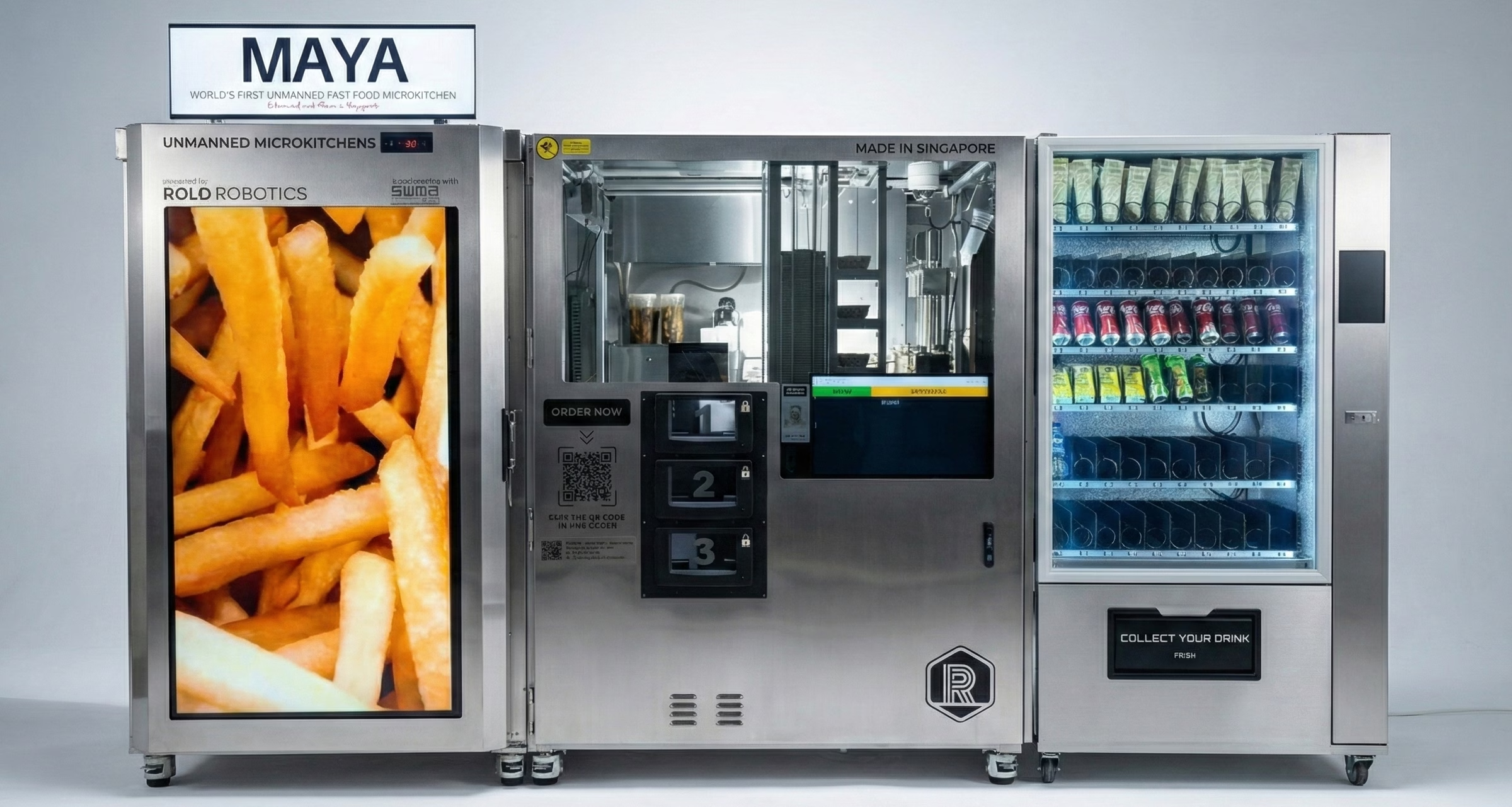
One of the most talked-about debuts at the event is expected to be Maya 3.0 from Rolo Robotics — an autonomous cooking kiosk capable of preparing made-to-order hot meals in minutes.
Unlike traditional vending machines, the system cooks food fresh on demand, handling everything from stir-fries to hot snacks without the need for chefs or kitchen staff.
For high-volume environments such as airports, universities, hospitals and food courts, the implications are significant. Automation is increasingly being viewed not simply as a novelty, but as a solution to one of hospitality’s biggest ongoing challenges: staffing.
The rise of the robotic barista
Coffee is also getting the automation treatment.
Future Cafe Vending will showcase a fully automated café kiosk featuring a robotic arm capable of grinding, brewing and serving customised coffees in under 60 seconds.
With more than 200 drink combinations available and no staff required to operate the system, the technology is challenging one of Australia’s strongest hospitality assumptions — that great coffee can only come from a trained barista.
For café owners navigating staff shortages and rising wage costs, systems like these are quickly becoming commercially attractive rather than simply attention-grabbing.
AI and automation enter the commercial kitchen
Meanwhile, Oxtech’s Robochef system is designed to automate some of the most demanding commercial cooking processes using 3D electromagnetic heating technology.
The system reaches temperatures of 300 degrees in under 30 seconds and can automate stir-frying, braising and boiling while maintaining consistent flavour profiles across every cook cycle.
For restaurant groups and franchise operators, consistency has long been one of the hardest operational challenges to solve at scale. Automated cooking systems aim to remove human variability entirely, helping businesses deliver faster service and standardised results across multiple venues.
The hidden tech story: Energy
Not all hospitality innovation is happening in the kitchen.
As energy prices continue to pressure operators, technology companies are increasingly focusing on helping venues reduce operational costs through smarter energy management.
Flow Power will present systems designed specifically for hospitality businesses, including wholesale electricity plans, smart automation tools, solar integration and live energy monitoring platforms.
For commercial kitchens running high-powered equipment around the clock, energy efficiency is becoming just as important as labour efficiency.
Why hospitality is embracing technology faster than ever
Hospitality has traditionally been slower than other industries to adopt automation, largely because service, food and customer experience have always relied heavily on people.
But the economics of the industry are shifting.
Operators are now balancing rising overheads with customers who expect faster service, greater consistency and seamless experiences. At the same time, staffing shortages continue to affect restaurants, cafés and venues across Australia.
Technology is increasingly being viewed not as a replacement for hospitality, but as a way to keep businesses sustainable.
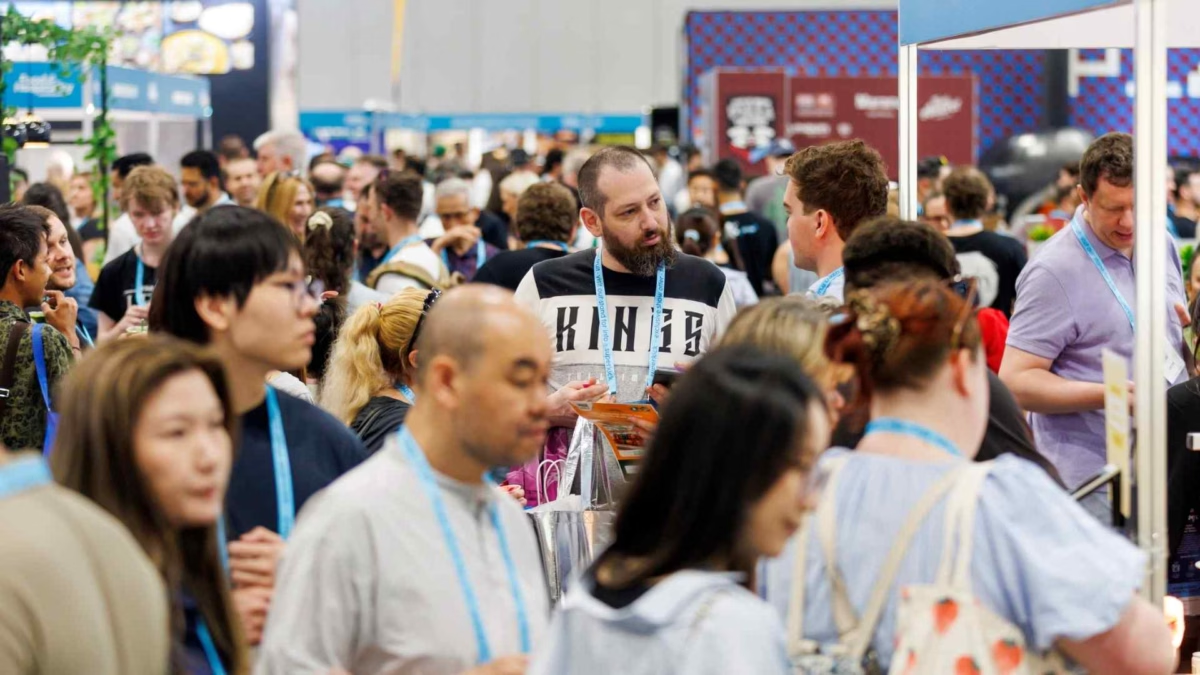
Events like Food & Hospitality Week are helping accelerate that shift by allowing operators to see emerging technology working in real-world environments, speak directly with suppliers and explore what implementation actually looks like on the ground.
Alongside the technology showcases, Food & Hospitality Week 2026 will feature 80 education sessions, live cooking competitions, industry panels and more than 450 exhibitors across foodservice, hospitality, bakery, retail and venue operations.
The robots will be there. The question is how quickly the industry decides to put them to work.