Australia’s hospitality industry is entering a new era — one defined by smarter operations, more intentional dining experiences, and consumers who expect far more than just good food.
Over the next 12 months, restaurants, cafés, bars and venues across the country will be navigating a rapidly changing landscape shaped by economic pressure, evolving consumer behaviour, social media culture and new technology.
And according to industry leaders gathering at Food & Hospitality Week 2026 this month at ICC Sydney, the venues that thrive will be the ones able to balance experience, efficiency and authenticity all at once.
From Indigenous ingredients and nostalgic comfort food to AI-powered kitchens and culture-led staffing strategies, here are the biggest hospitality trends expected to dominate the year ahead.
Menus are becoming more local, personal and story-driven
One of the strongest shifts happening across Australian hospitality is the growing focus on culinary identity and provenance.
Consumers increasingly want to know where ingredients come from, who produced them and the story behind the dishes they’re ordering. As a result, regional produce, hyper-local sourcing and Indigenous ingredients are moving from niche offerings into mainstream menus.
Cross-cultural dining is also continuing to gain momentum, with chefs blending influences and techniques in increasingly creative ways. Japanese-European concepts, Australian-Filipino flavours and modern Asian fusion formats are all expected to expand over the next year as diners seek experiences that feel both familiar and new.
For many venues, provenance storytelling is becoming just as important as the food itself — not only on menus, but across social media, branding and customer experience.
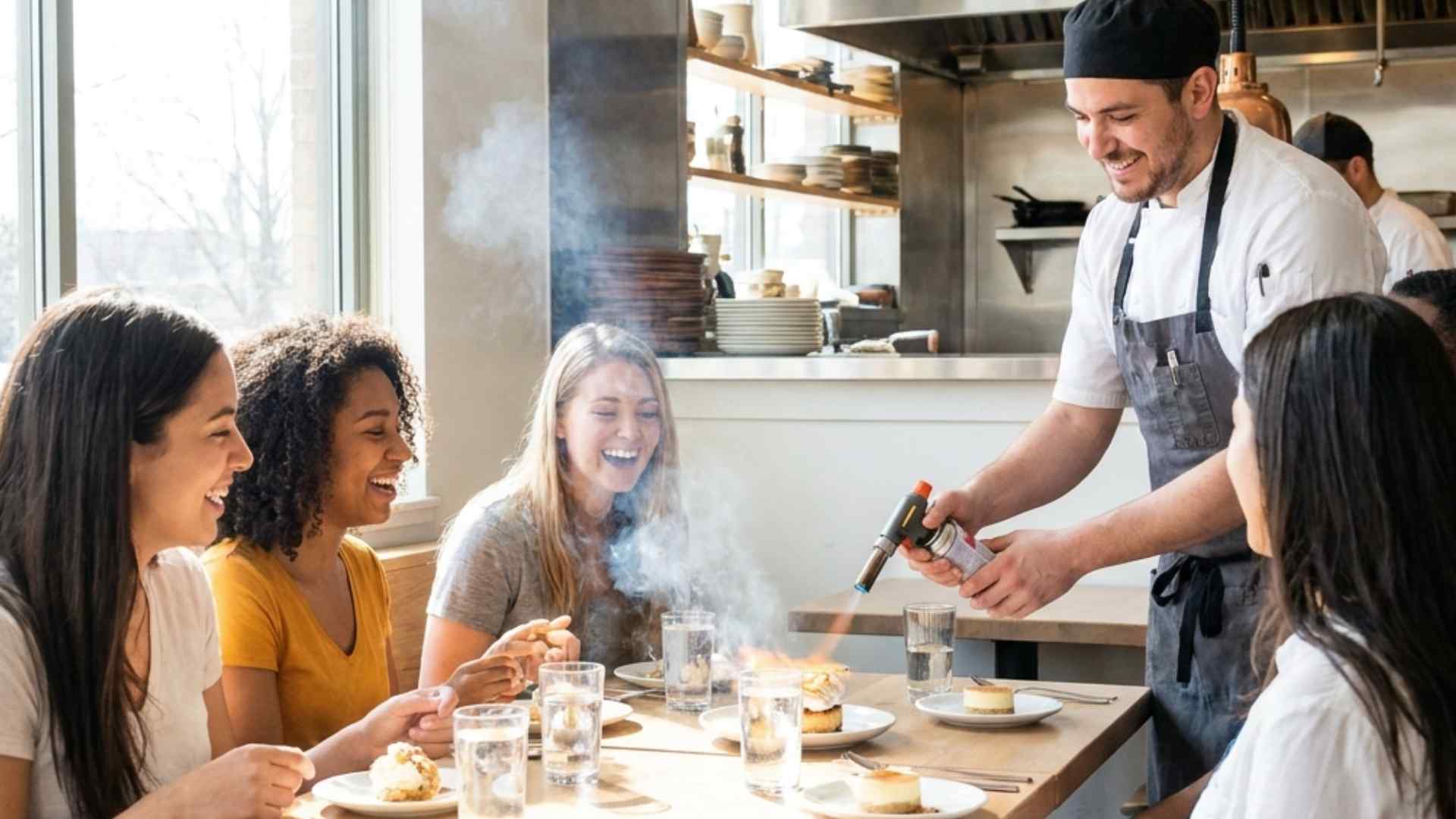
Dining out is becoming more experiential
For Gen Z diners in particular, restaurants are no longer just about the meal.
Atmosphere, design, music, interaction and overall experience are now weighted as heavily as the food itself, especially in venues competing for attention online.
The rise of immersive dining is expected to continue throughout 2026, with more venues embracing interactive, theatre-style and personalised experiences designed to make guests feel part of the occasion rather than simply observers.
At the same time, highly customisable menus are becoming increasingly important as consumers look for more control over dietary preferences, flavour profiles and portion sizes.
Health-conscious dining is also evolving, with lighter meals, functional ingredients and high-protein snack-style offerings continuing to grow in popularity.
Casual dining continues to dominate
The line between casual dining and premium dining is becoming increasingly blurred.
Sharing plates, communal dining and relaxed venue formats remain hugely popular, but consumers still expect elevated ingredients, quality execution and strong presentation.
Across the industry, chefs are bringing fine dining techniques into more accessible neighbourhood venues, while all-hours dining concepts, pop-ups and hybrid hospitality formats continue gaining traction.
At the same time, nostalgic comfort food is having a major resurgence.
Classic dishes like parmigiana, pasta, roasts and familiar winter favourites are returning to menus across pubs, restaurants and casual venues alike — driven partly by consumer comfort-seeking during ongoing economic uncertainty.
Protein is undergoing a major shift
Protein will remain one of the biggest focus categories in hospitality over the next year, but how venues approach it is changing rapidly.
Sustainable seafood is expected to attract increasing attention ahead of anticipated government legislation later this year, while plant-based dining is entering what many operators describe as its “second wave” — moving away from novelty and focusing instead on functionality, nutrition and performance.
At the same time, operators are becoming more strategic about protein pricing.
Manufactured formats such as burgers are continuing to outperform premium steak offerings as venues respond to growing consumer price sensitivity, while pork is emerging as one of the most cost-effective proteins for venues trying to maintain margins without sacrificing quality.
Chefs are simplifying menus to protect margins
Behind the scenes, many chefs are becoming more selective and intentional with menu design.
Tighter menus with fewer dishes are helping venues reduce waste, improve kitchen efficiency and maintain consistency, while also protecting profit margins during a period of rising operational costs.
Local sourcing is also becoming both a creative and commercial strategy, helping venues differentiate themselves while reducing supply chain risk and improving ingredient reliability.
Venue operators are prioritising culture and technology
For venue owners, staffing remains one of the industry’s biggest ongoing challenges.
Over the next 12 months, operators are expected to invest more heavily in smarter rostering systems, staff training and incentive programs as they compete to retain quality employees in a tight labour market.
At the same time, hospitality technology adoption is accelerating rapidly.
Automation, AI tools, robotics and smarter POS systems are increasingly being viewed as essential operational tools rather than future concepts, helping venues reduce overheads while improving efficiency and consistency.
Social media is also continuing to evolve from a marketing add-on into a core business strategy, with operators increasingly designing menus, interiors and experiences specifically with digital visibility in mind.
Suppliers are racing to keep up
Suppliers are also adapting to the speed of modern hospitality trends.
Many are investing in more resilient supply chains, consolidating product ranges and accelerating product development cycles to respond faster to changing consumer demand.
Operational efficiency across logistics, fulfilment and account management is becoming a major focus area as suppliers work to support venues navigating increasingly complex operating conditions.
Where the industry comes together
Many of these trends — from AI-powered hospitality technology to Indigenous ingredients, operational strategy and the future of dining culture — will be front and centre at Food & Hospitality Week 2026, taking place from May 25–27 at ICC Sydney.
The event brings together more than 450 exhibitors, four industry trade shows, 80 educational sessions and some of the country’s leading chefs, operators, suppliers and hospitality innovators.
For anyone wanting to understand where the industry is heading next, Food & Hospitality Week offers a snapshot of what the future of hospitality looks like — and how quickly it’s already arriving.