When Mat Bourget opened his first pizza restaurant four years ago, a jar of imported Italian tomato paste cost him 70 cents a kilo.
Then a ship blocked the Black Sea, more than 12,700km away at the southeastern extremity of Europe, and the price doubled.
By year’s end, that same jar of paste cost 600% more ($4/kg) than it did four years ago.
The cost of most other ingredients used across his menu also skyrocketed.
Along with about one-third of hospitality venues around Australia, Bourget raised his menu prices to offset rising costs and claw back some profit. His bottom line was still 20% down.
In an industry where profit margins are often as thin as 10%, cafés and restaurants scrambled to adapt.
Price hikes were added to every facet of business, from food and drink to supply chains, packaging, energy, insurance, rent, and minimum wages, threatening to outpace sector productivity.
Customers continued to slash discretionary spending, and businesses in CBDs were still suffering work-from-home-related downturns.
Some continued to attract diners
Despite the cost-of-living squeeze, some innovative operators continued to attract diners. In Sydney’s Lane Cove, renowned Hatena Group restaurateur Tin Jung Shea established a co-retail space, SevenH, in a residential area where small businesses shared the financial burden of the space.
Each stallholder paid only rent and modest fit‑out costs.
Shea and business partner Sunny Liu (from award-winning design studio Studio Hiyaku) “…thought it would be nice to create a little community and little spaces where people who want to open their business can dive in without all the big risk involved with owning a small business”.
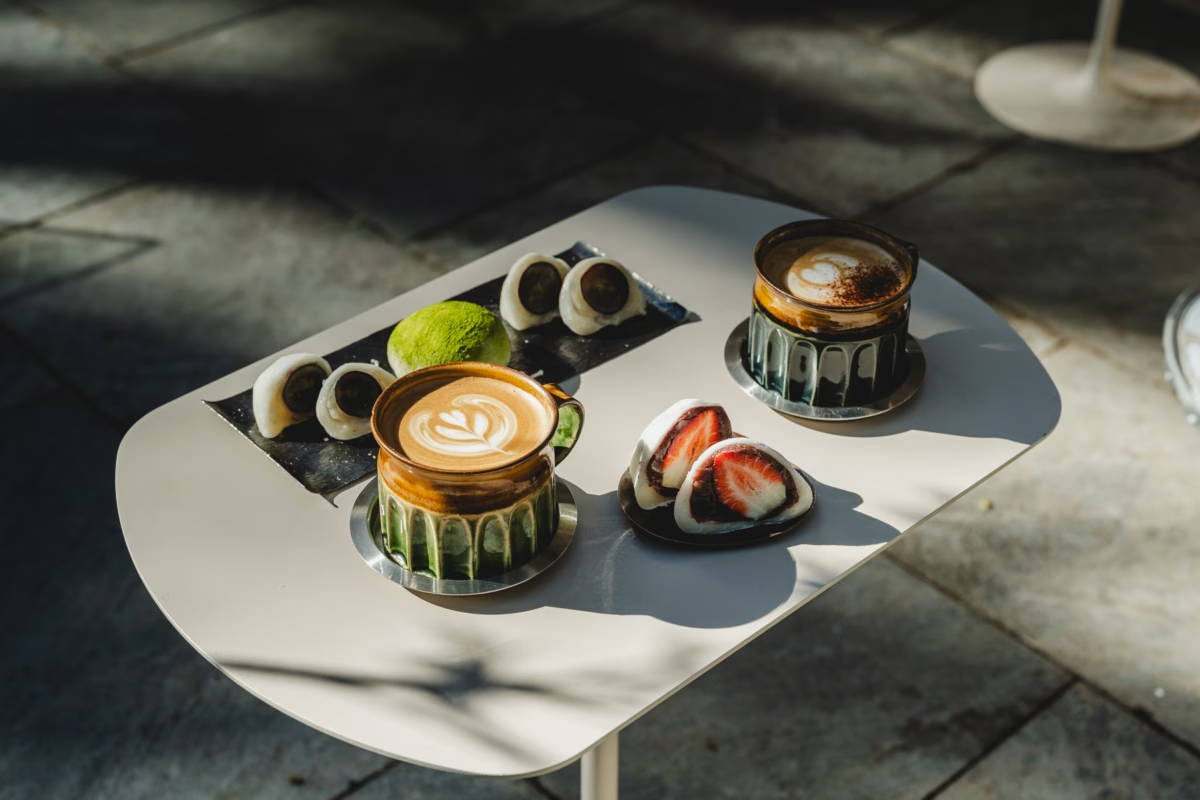
SevenH houses a traditional Japanese pastry shop, an apparel label, a coffee shop, a nail salon and soon, a Pokémon card trader and tattoo artist, with space for more entrepreneurs available.
Shea encourages other hospitality business owners to think outside the square and look for collaborations: “If you’re a shop that’s open only at night, you could potentially lease it out to someone during the day and vice versa.”
Driving loyalty, raising prices
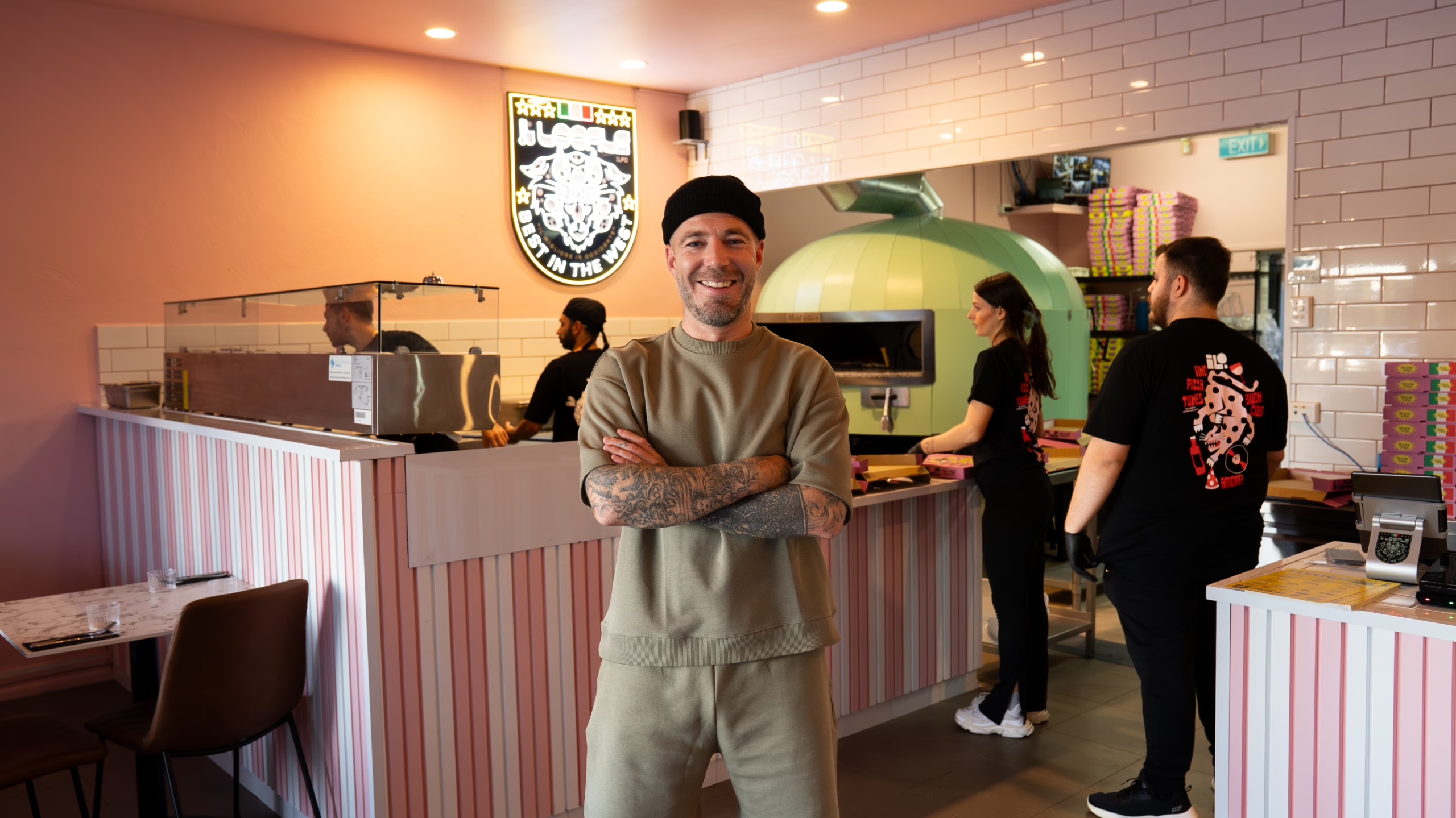
Mat Bourget has six Il Locale PIZZA venues in Western Australia with plans to franchise on the east coast.
Despite his profit margin taking a 20% hit, he doubled down on value and engagement this year.
Il Locale launched its own app-based loyalty program: every pizza box earned points, and 10 pizzas equal one free pizza.
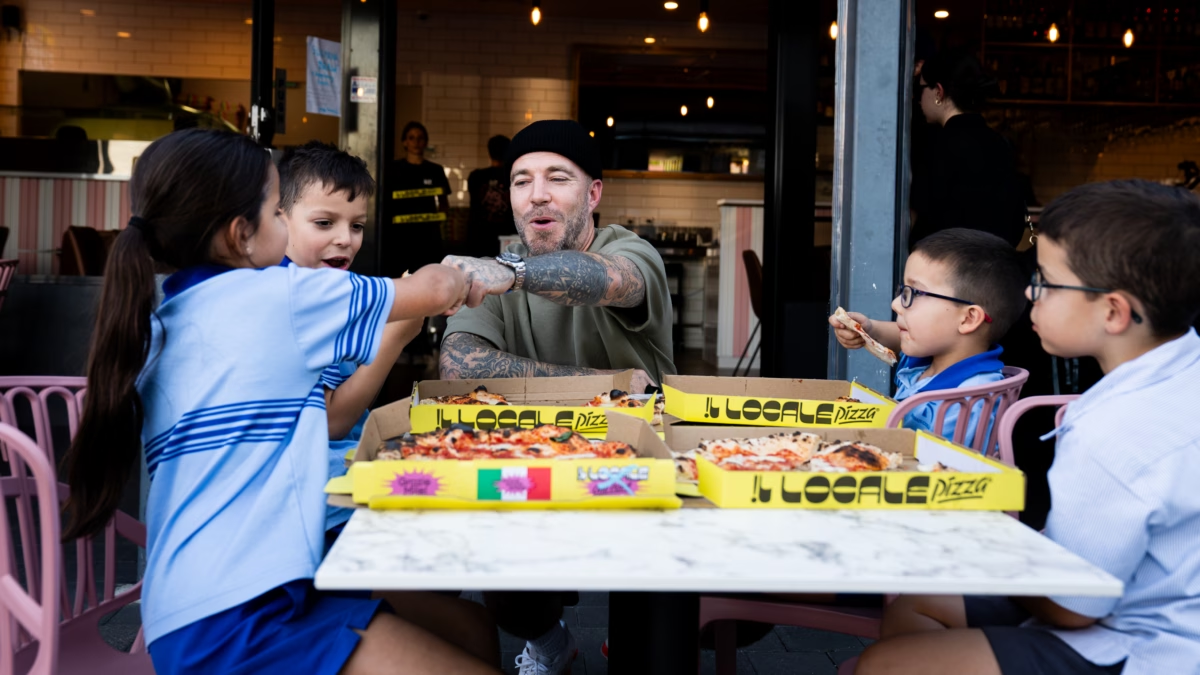
“So even if the cheapest Margherita is $18, after 10 of them, customers can get a $32 burrata pizza for free. So basically, it’s a 10% lifetime discount.”
Bourget raised the price of all his pizzas by $1 to offset price rises and the cost of perks like waiving surcharges on gluten-free bases, vegan cheeses, and plant-based milk, as well as discounts and loyalty measures to keep customers coming through the door.
While other venues trimmed staff hours and/or reduced opening hours, Bourget refused to do so. “The staff are as important as our customers. Without our team, we have nothing literally.”
But Melbourne’s Buono and Sincero restaurants had no choice.
Five years ago, they were full seven days with three chefs in the kitchen and three wait staff for every service.
They now close on Mondays, have two chefs and two wait staff per shift, and owners Fabio Magliano and Cinzia Buono handle the cleaning.
The couple didn’t go on their annual holiday to Italy to see family because they couldn’t afford to pay someone else to manage their business.
Local markets saved food costs
However, weekly trips to their local market were saving them $300 a week in food costs.
“When we go to the market, they know where you’re coming from, and they know what you’re looking for, they know the quality that you want, and it’s really nice to be helping another small business,” Fabio said.
Market shopping also reduced food waste and was a hit with customers who appreciated the freshest ingredients possible, the couple said.
Both restaurants had also switched to Australian wine, which was cheaper without import costs.
Theme events like lasagne and Roman pasta nights continued to lure customers to Buono and Sincero, giving diners a reason to eat out and the restaurants a chance to offer set menus.
Fine-casual formats grew in 2025
A clear trend was downshifting the dining experience, with some fine-dining chefs embracing ‘fine-casual’ formats.
For example, Chathun Perera left a Hatted restaurant in the Blue Mountains to serve his favourite fare with a Sri Lankan twist, including curries, at his own Gia Café & Bistro in nearby Leura, and at Spikes Bistro at Blackheath Golf Club.
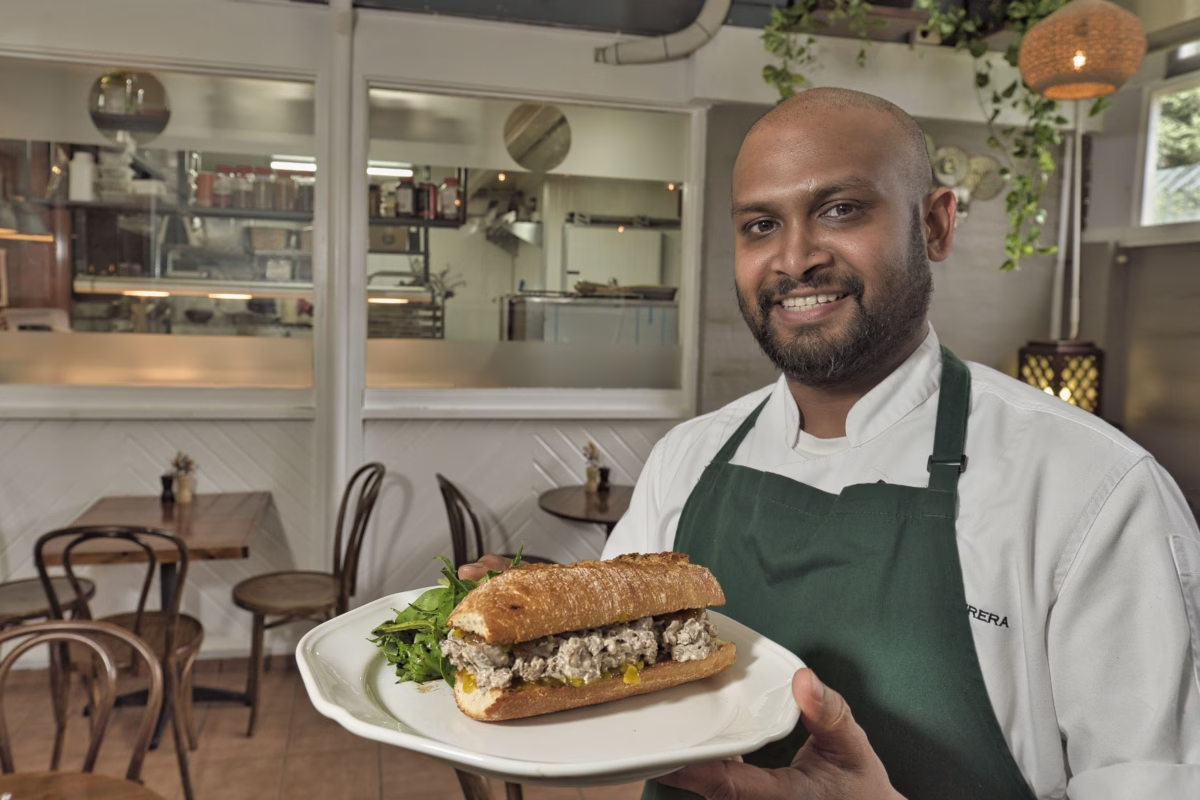
Fine-dining kitchen colleague Jackie Jacutin served breakfast and lunch at Katoomba’s Café Lurline, and weekend Filipino-infused dinners. Café Lurline had a sister gourmet burger joint, was opening a Mexican venue soon, and Perera and Jacutin collaborated and supported each other’s ventures.
Meanwhile, shopping centre owner JMK Retail bet on casual dining precincts.
General manager Vicki Leavy said weather and macro events had fragmented the market: while inner-city full-service restaurants struggled, quick-service chains were more resilient.
Middle-market cafés felt the pinch most, with customers opting for smaller dishes and fewer courses.
“Older people who are used to having that weekly catch up will still go and meet, but rather than having two cups of coffee, a sandwich and a dessert, they might have a cup of coffee and the sandwich or a dessert,” Leavy said.
JMK invested heavily in a modern open-air dining hub with playgrounds for families at Toowoomba’s Yamanto Central, and demand was surging, Leavy said.
Industry snapshot in 2025
Results from tech company Square’s poll of Australian restaurateurs this year found that 63% of consumers were cutting back on eating out, and 73% of restaurants planned price increases.
Yet 78% of operators said they felt more optimistic about their business than in 2024.
Nearly two‑thirds of owners (65%) intended to expand their number of outlets in 2025, and 74% planned to broaden their menus.
Restaurant owners were strengthening technology and loyalty: 85% planned to invest in new tech (AI, automation, online ordering) that year, and 71% were boosting rewards and loyalty programs, which 83% of operators said would drive bigger baskets and repeat visits.