Australian restaurants and bars are filling seats, but the economics behind those full tables are getting harder to square. That’s the central finding of new research from Zeller, the Melbourne-based business banking company, released alongside the launch of No Reservations — a national campaign designed to support the next wave of hospitality operators.
Zeller’s transaction data shows that venues are serving 9% more diners compared to the same period last year, yet average spend per diner has fallen 13%. For operators already working on thin margins, that combination is proving punishing.
“Australia proudly operates one of the world’s leading hospitality sectors, but the business behind running a successful venue has become much harder to sustain,” said Josh McNicol, Director of Growth at Zeller. “Our data shows venues are serving more diners, but earning less per transaction, while operators are absorbing higher costs across almost every part of the business.”
The Numbers Behind the Squeeze
The divergence between customer activity and financial performance is sharpest at pubs and bars, where average spend per diner is down 24% year-on-year even as the number of patrons served has climbed 22%. Cafés and coffee shops tell a similar story: spend per diner down 15%, but customer counts up 25%. Restaurants have fared somewhat better, with spend per diner nearly flat at -1.8%, though covers served have dipped 8%.
The picture that emerges is not a demand crisis — Australians are still dining out. But they’re trading down, opting for lower-priced menu items and spending more carefully, which puts pressure on already stretched margins.
That pressure is showing up across the business. Zeller’s survey of 1,131 Australian hospitality operators found that more than two-thirds say profit margins are down compared to twelve months ago. Fifty-six percent report revenue is down, 55% say average spend per seating has decreased, and 54% say foot traffic has declined.
Cost pressures are nearly universal: 94% of operators report increases in food and ingredient costs, 90% in delivery and freight, 87% in energy and utilities, 75% in insurance, and 68% in rent or property costs.
To keep their doors open, many owners are absorbing the burden personally. Nearly three-quarters (73%) say they are working longer hours themselves to reduce wage costs, while 47% have cut rostered hours for staff and 40% have raised menu prices.
A Hard Sector to Recommend
Against that backdrop, sentiment about new entrants is bleak. Only 12% of operators surveyed believe it is still a good opportunity to open a new hospitality business in Australia today. Forty-two percent would actively discourage someone from starting a venue right now, citing excessive risk. A further 38% say new operators should only attempt it if they bring strong capital and significant industry experience.
The staffing picture compounds the challenge. Fifty-three percent of operators rank the talent shortage as significant or critical, and 62% say hiring is harder today than it was a year ago.
When asked what they see as the biggest barriers facing new operators, respondents pointed to high operating costs such as wages and utilities (50%), difficulty accessing capital or credit (49%), attracting and training staff (47%), intense competition (38%), finding a clear niche (38%), and building a business plan that actually reaches profitability (34%).
Passion Is Not Enough
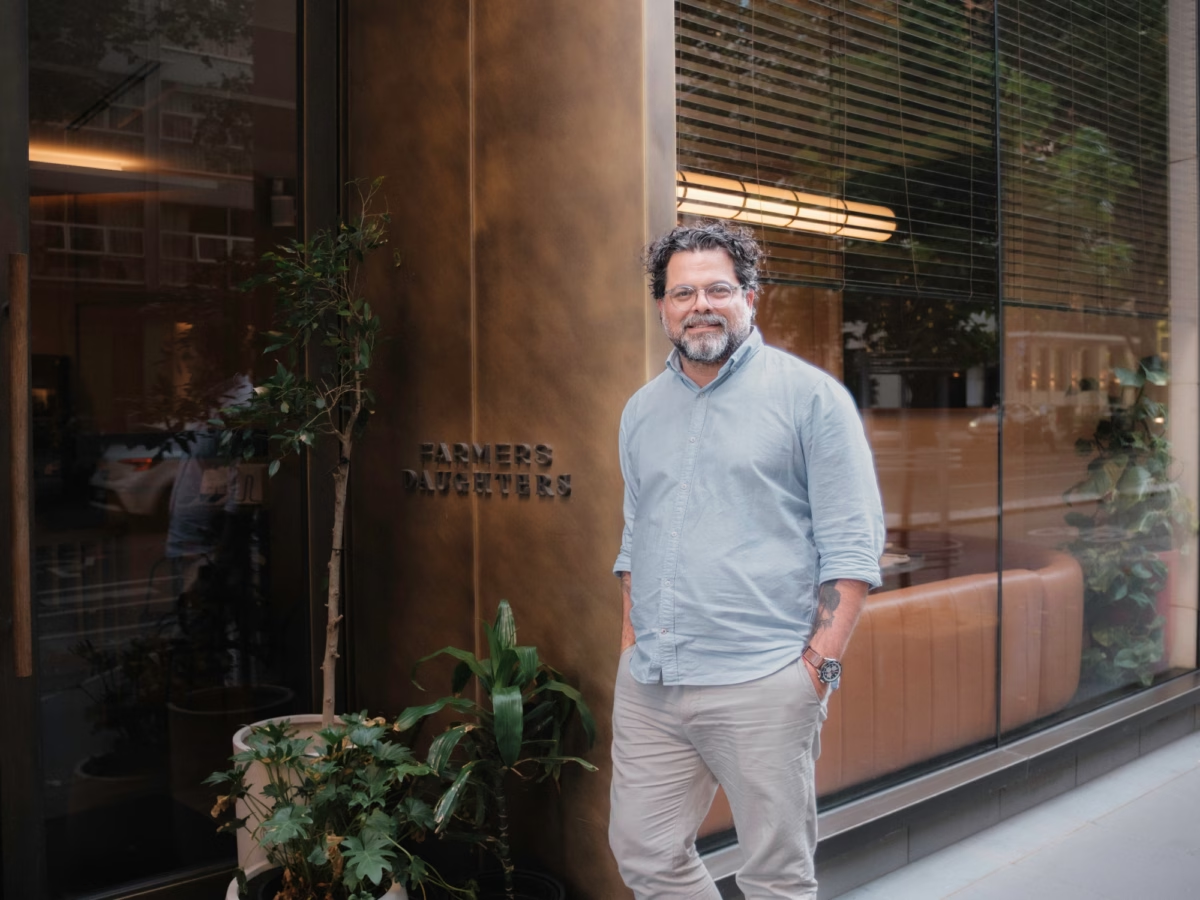
The No Reservations campaign pairs that sobering data with a practical response. Zeller has partnered with the founders of six respected Australian venues — Alejandro Saravia of Renascence Group, Rosa Mitchell of Rosa’s Canteen, Guy Greenstone and Justin Joiner of Stomping Ground, Adele Arkell of Radio Mexico, Harry Kapoulas of Homer, and Mario di Ienno of Gerald’s Bar — on a six-part video series covering the real-world challenges of running a hospitality business. Topics range from menu planning and hiring to venue design, brand-building, service delivery, and profitability.
Saravia was direct about what the next generation needs to hear.
“Hospitality has always attracted people with passion, but passion alone is not enough to keep the doors open. The next generation needs to understand the numbers behind the dream, how to manage costs, forecast demand, build a team and make decisions before pressure turns into crisis,” said Saravia. “The operators who last are the ones who can protect the guest experience while staying close to the business fundamentals. That is not always the glamorous part of hospitality, but it is the part that gives creativity a future.”
The research backs him up on where the skills gap lies. When operators were asked what competencies the next generation most needs, business operations and management ranked first (32%), followed by financial management (28%), marketing and brand-building (14%), and recruitment and team-building (12%).
A Grant Program for New Operators
Alongside the video series, Zeller announced a hospitality grant program offering two emerging operators $5,000 each to help launch their businesses. The grants are designed to provide a runway for new entrants navigating what McNicol describes as an increasingly complex economic landscape.
McNicol said the goal of both initiatives is to close the gap between ambition and sustainability. “The next generation of hospitality operators is not short on creativity, ambition or ideas, but that needs to be balanced with a strong business strategy, tools that give them greater financial visibility, and practical guidance from people who have already built venues that last.”
Zeller surveyed 1,131 Australian hospitality venue operators and decision makers across all states and territories for this research. Respondents represented restaurants, bars, pubs, nightclubs, cafés and food trucks. Transaction data compares hospitality spending and diner behaviour year-on-year across venue categories.