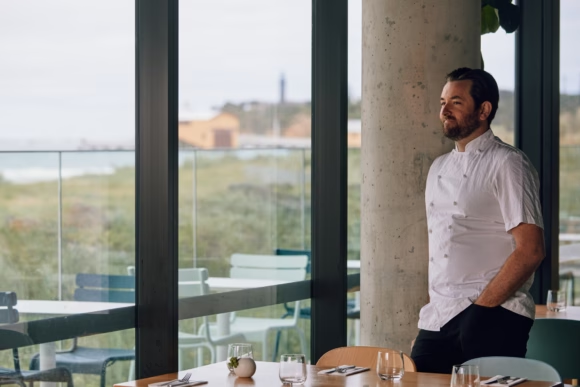

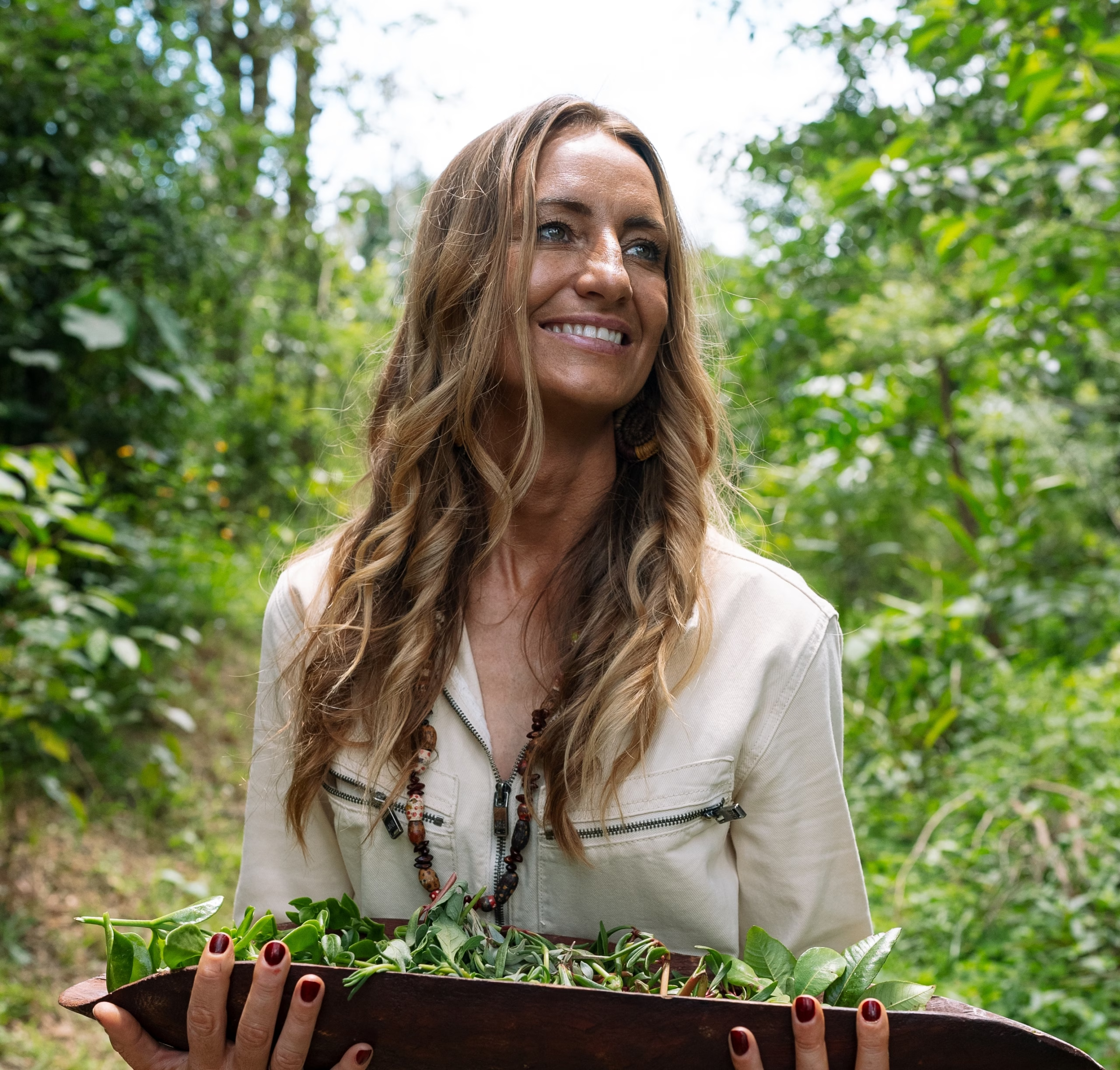
Proud Bundjalung woman, Mindy Woods dedicated her culinary career to raising the profile of native ingredients. In 2025, she received the Champion of Change award at The World’s 50 Best Restaurants 2025, which is a recognition she sees as a reflection of the positive shift happening in the Australian hospitality industry.
Native ingredients have always played an important role in Mindy Woods’ life. “During school holidays, we’d spend all day at the beach,” she says. “I’d be getting sunburnt so Nan would take me up into the sand dunes and find karkalla. She’d rub it on my skin and it would soothe me because our food is not just food, it’s medicine and a way of connecting to country.”
Woods first came to prominence using native ingredients on MasterChef Australia in 2012. She then opened Karkalla in Byron Bay, where instead of using native ingredients as an afterthought, they became the stars of the show.
Woods now runs Karkalla on Country, offering immersive food experiences that connect diners to the stories of the land that she grew up with. “My culture doesn’t exist in four walls,” Woods says of Karkalla on Country. “I really wanted to be able to give people an experience of culture through food.”
Woods envisions a different future for the Australian hospitality industry and the way we use indigenous ingredients. “Native food is not just an important part of our past,” she says. “It’s going to be essential for our future – and not just from a cultural point of view, but from an environmental and food security point of view.”
Reimagining the hospitality industry
Woods opened Karkalla in 2020 in the face of some strong opposition. “I can’t tell you how many questions I got about why I was opening a native food restaurant – like why would you want to do witchy grubs and kangaroo,” she says. “For our people, we don’t believe these are just Aboriginal foods. We believe they’re Australian foods. They tell a story of connection. Opening Kakala really did solidify what my purpose and my passion is around food.”
Karkalla proved the doubters wrong – diners flocked to the restaurant and the accolades rolled in but Woods ran into some common industry problems. “It became increasingly difficult, from a financial point of view, to keep my business viable,” she says. “It was a 28-seater restaurant, I was at maximum capacity and I couldn’t fit any more seating in. I was working longer hours trying to find ways of making it more viable and to be honest, I was burning out.”
That was when Woods decided to pivot, and in doing so moved the business closer to her own core values. “I had to reimagine what hospitality meant from a cultural point of view and what having a restaurant meant to me,” she says. “I gave it cultural authenticity by taking it out on country and allowing people to walk on country with me, sharing the stories of Bundjalung and sharing the ecological, nutritional and cultural values of these foods.”
How to use native ingredients
Woods would love all Australians to embrace using native ingredients in their cooking. “Of the six-and-a-half thousand ingredients that are unique to this beautiful country, most Australians know just a handful,” she says. “We want to break down those barriers, welcome people into our culture and invite them to be part of this with us.”
To start, Woods suggests looking for familiar flavours. “People don’t realise we have native lemongrass and it’s completely interchangeable for Southeast Asian lemongrass – it has a different flavour profile and aroma but it can be used in exactly the same way,” she says. “Native ginger is another incredible ingredient that’s easily interchanged with standard ginger.”
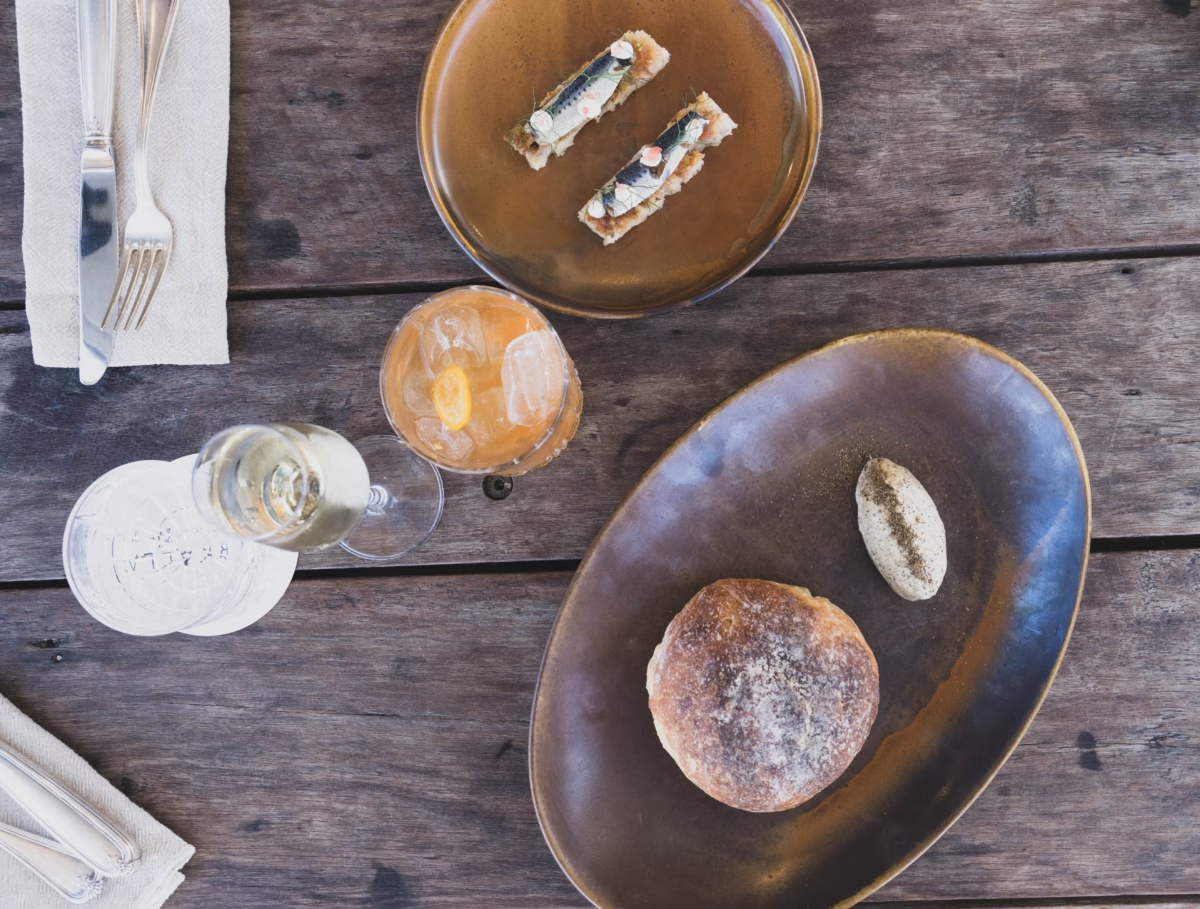
Woods is also a fan of making easy substitutes. “When you make spanakopita, start using warrigal greens instead of spinach,” she says. “It has a beautiful salty note because it takes on the flavour of that ocean with that sea spray.”
Before diving headlong into native ingredients, though, Mindy suggests consulting with local elders. “Find the foods that are growing locally to you. Connect with your local mob through the local food council or rangers in the national parks and find out what foods are coming from the country that you live in,” she says. “Also be very mindful of sharing cultural knowledge because you have to ask permission to do that.”
Being a Champion of Change
The Champions of Change award came out of the blue for Woods. “I got a random text message early on a Saturday morning saying I’d been nominated for an award. It was incredibly cryptic,” Mindy says. “I didn’t even know this category existed so it was a huge surprise to me but what an incredible accolade.”
Woods feels the award, in part, recognises how hard she has worked to carve out her niche in the industry. “Coming from being a MasterChef contestant, I had to fight my way to get cred in the industry,” she says. “I went about it in my own way and I kept my head down. I worked in restaurants and running organisations to really understand what hospo was about. It was a hard won battle and I had to prove myself so many times.”
The award meant more than that for Woods though. “It was such an incredible recognition for Australia,” she says. “Food is such a significant thing in terms of cultural expression and we haven’t quite wrapped our heads around it yet in Australia just who we are as a food identity. I think native food will play a really important piece in that for all of us.”