The hospitality industry has long relied on ever-so-predictable loyalty schemes: think tenth-meal free punch cards and clunky apps that few customers even bother to download. So, for restaurants operating in a constricting climate of rising costs and fierce competition, these cookie-cutter approaches have to be swapped out for models that reflect how people dine today.
Instead, the smart operators are re-imagining loyalty and repeat business as something deeper and more meaningful: community.
Moving past points and perks
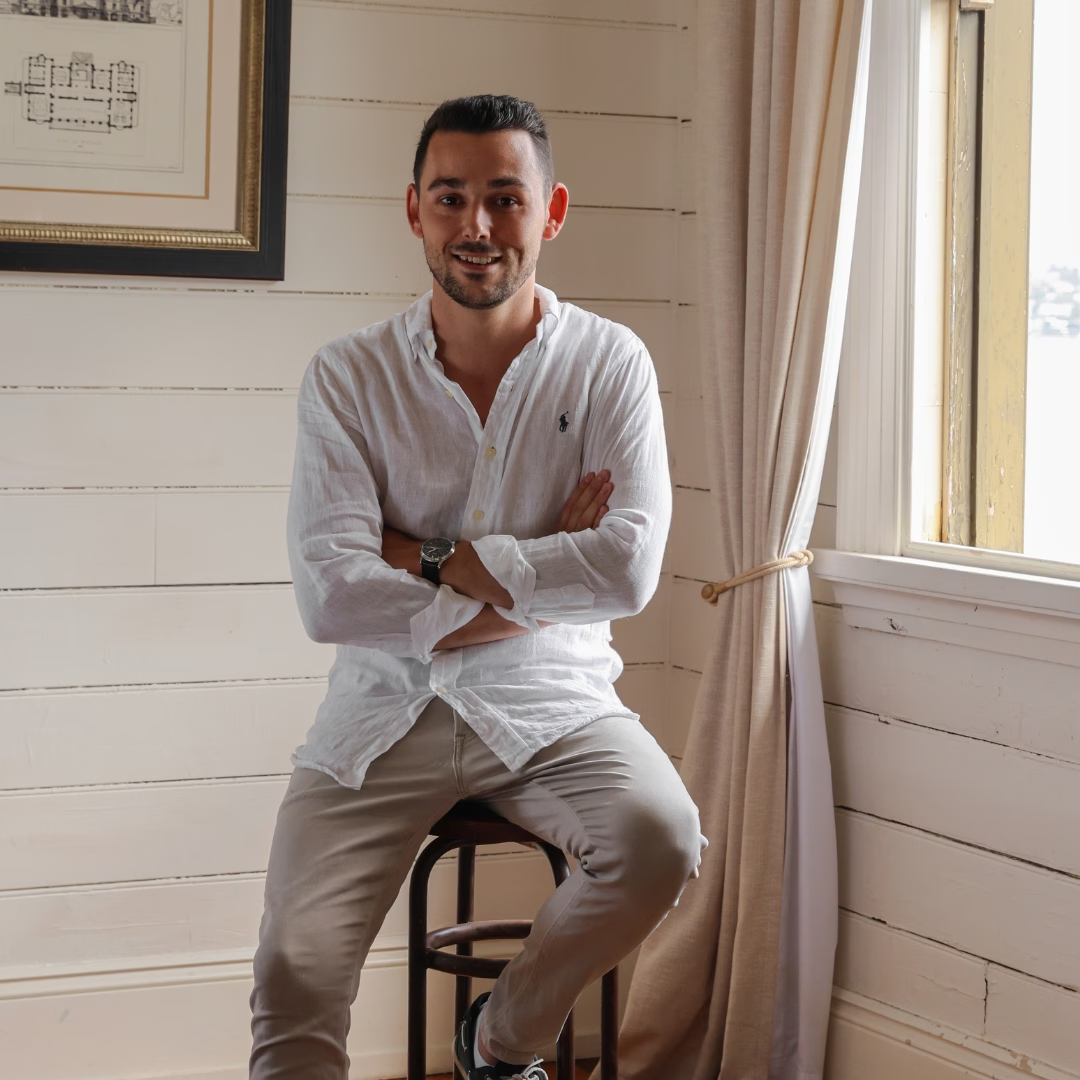
At L’Heritage Bistro in Sydney’s Mosman, restaurant manager Killian Chardonnet sees loyalty as less about discounts and more about hospitality in its truest sense.
“It’s really just about treating them like friends,” says Chardonnet. “Remember what they like, check in on them, and give them little extras because you want to, not because there’s something in return.”
Guests can sense when an interaction is genuine and when it’s manufactured. The goal is to make people feel looked after, not managed. “Keep it genuine, and they’ll feel it.”
Building loyalty as a team sport
While managers and chefs may be the face of a venue, Killian points out that consistency only happens when the whole team is engaged.
“If it’s only you building the relationships, it doesn’t last. Everyone on the floor needs to recognise those regulars and know their stories – ‘That’s Michael, he likes his steak rare and he’s just back from Europe.’”
Remembering a child’s name or asking about a recent holiday might not seem revolutionary, but those personal touches are what transform a restaurant from a one-off dining spot into a much-visited home away from home. Building rapport is an easy touchpoint.
And how does he measure success? “They come in without checking the menu first. They bring in friends and say, ‘This is my favourite place.’ You’re part of their celebrations and comfort days, and they come to you for advice on food and wines.”
Loyalty as a community in action
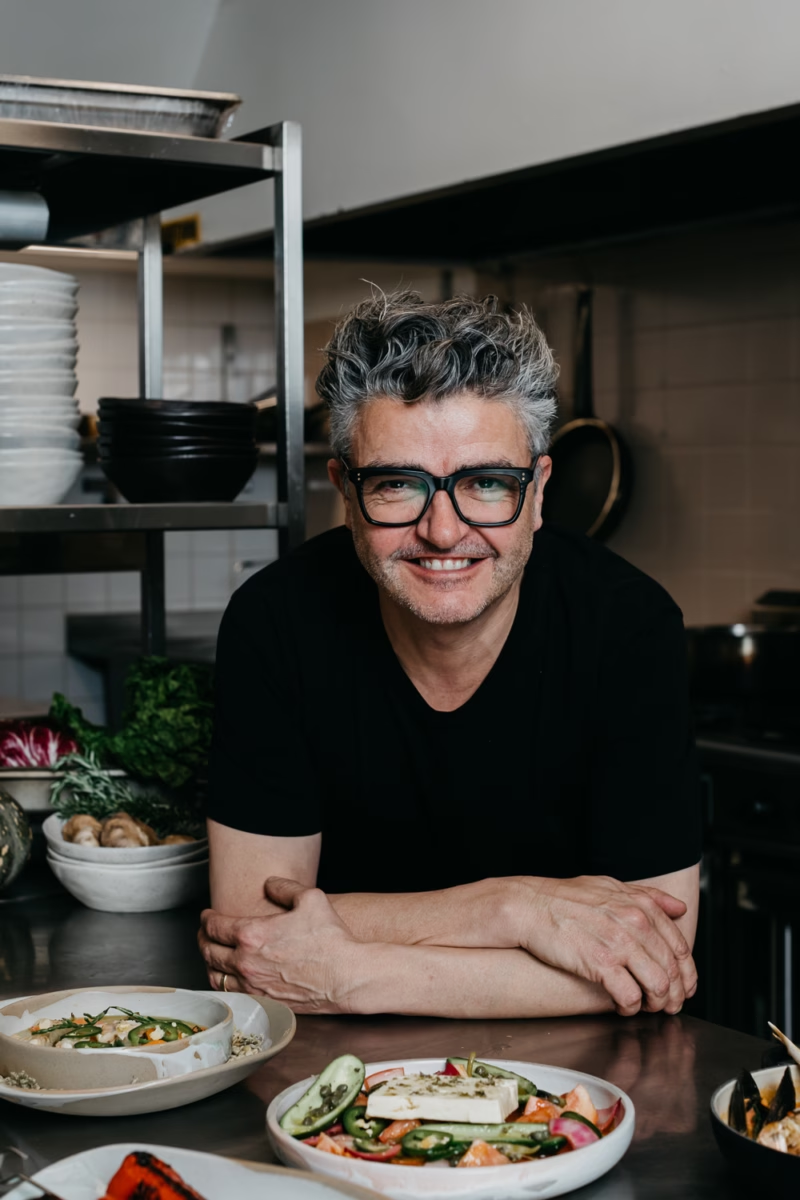
Across the Tasman, Chef Sean Connolly commands a long-standing influence on the restaurant scene and has for decades, helming award-winning kitchens from Sydney to Dubai. At Esther at QT Auckland, Connolly is clear that his version of loyalty isn’t about sign-ups and discounts.
“We focus less on loyalty programmes and more on building a community. After all, loyalty is really just community in action,” he says.
For Esther, that means cultivating regulars who come back because they trust the restaurant to deliver every time. These are the customers who recommend the venue to family and friends, confident it will live up to its promise.
Curating experiences worth returning for
Connolly emphasises that communication and engagement run both ways. “It’s also our responsibility to design offerings with our community in mind,” he believes. That might mean inviting boutique regional winemakers for an intimate dinner, or curating menus that showcase vineyards with an Esther twist.
Importantly, the outreach is selective rather than scattershot. “It’s about treating their time with respect – not bombarding them with emails – but thoughtfully connecting when we genuinely believe we have something they won’t want to miss.”
Even when Esther experiments with more structured initiatives, fun and creativity take precedence over mechanics. A case in point? The Fun in the Sun series, which ran six Mediterranean-themed soirées.
Guests were provided a ‘passport’ at the first dinner, and if they stamped all six, they were rewarded with a night at the QT. It wasn’t a churn and earn system, but rather a playful framework that added value to an already rich experience.
Beyond the transactional
The lesson for restaurateurs is that the future of loyalty is less about programmes and more about people. Customers don’t need another plastic card in their wallet; they want to feel seen, valued and like they belong.
Whether that manifests as a personal welcome or access to exclusive events, the throughline is the same; loyalty isn’t bought and paid for, it’s nurtured.
For venues looking to thrive, the challenge (and the opportunity) is to reimagine loyalty not as a line item in the marketing budget, but as an everyday practice.
Hospitality is as hospitality does.