The RB Big Interview series brings you in-depth conversations with the industry’s most influential leaders, innovators, and visionaries who are shaping the future of Australia’s hospitality landscape.
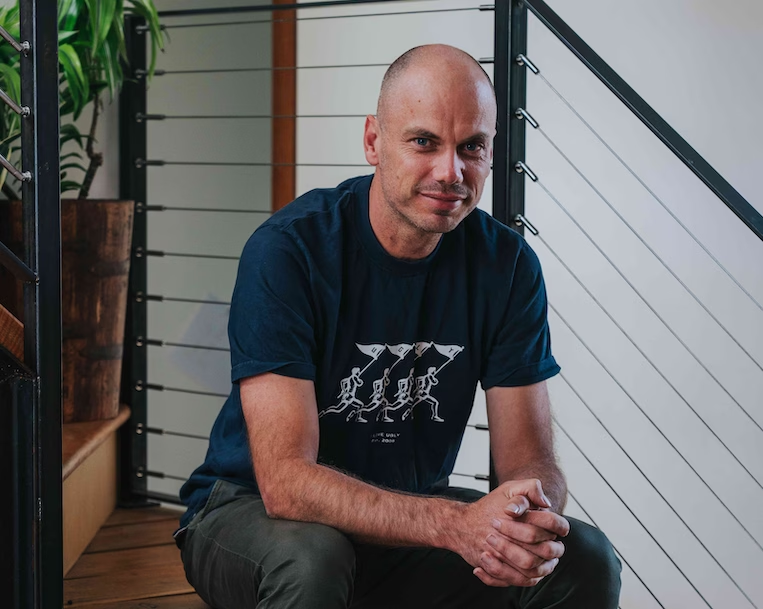
Richard McLeod is the CEO of Loaded, a hospitality management tool he co-founded with business partner James after more than 15 years of running their own bars, pubs, and restaurants. Having lived through the late nights and operational challenges firsthand, Richard initially built Loaded to manage their own 12 venues before expanding it into a platform now used by more than 10,000 operators and managers worldwide.
With a deep love for the industry and an insider’s understanding of its behind-the-scenes pressures, Richard’s mission is simple: help hospitality owners focus on the parts of the job they actually love.
You have been in the hospitality trenches for a while now, running bars, pubs and restaurants. Can you take us back to when you felt that you needed to build Loaded?
The trenches is the right word for it! It was an organic process and continuum from the moment we put our first pub in. James and I were 21, had no prior business experience, and suddenly we had 50 staff. Because we were so green, we were forced to learn everything. The industry didn’t really share how they did things, so we figured we didn’t know what we were doing, but everybody else did. From day one, we’d get to the end of each week and have no clue how much money we’d made or lost.
It’s quite a scary feeling, because we’d taken on a lot of debt to purchase the pub, and the fear of failing put us in this mode of trying to understand the flow of when the customer hands over money to the time it makes it to your bank account, and where all the places it can go missing are. We tried many different systems. We built out complex spreadsheets, but none gave us consistent control, and even as our monitoring and reporting improved, none of what we were using could be used by our staff.
We went to and fro between trying to get too much information — putting too much emphasis on staff needing to complete actions that were too onerous — to working out what the minimum things are that we need to do, the minimum information we need, and the key controls and systems we need to have in place to actually make this thing profitable.
For those who don’t know about Loaded, can you give us an overview of the platform and how an operator would use it?
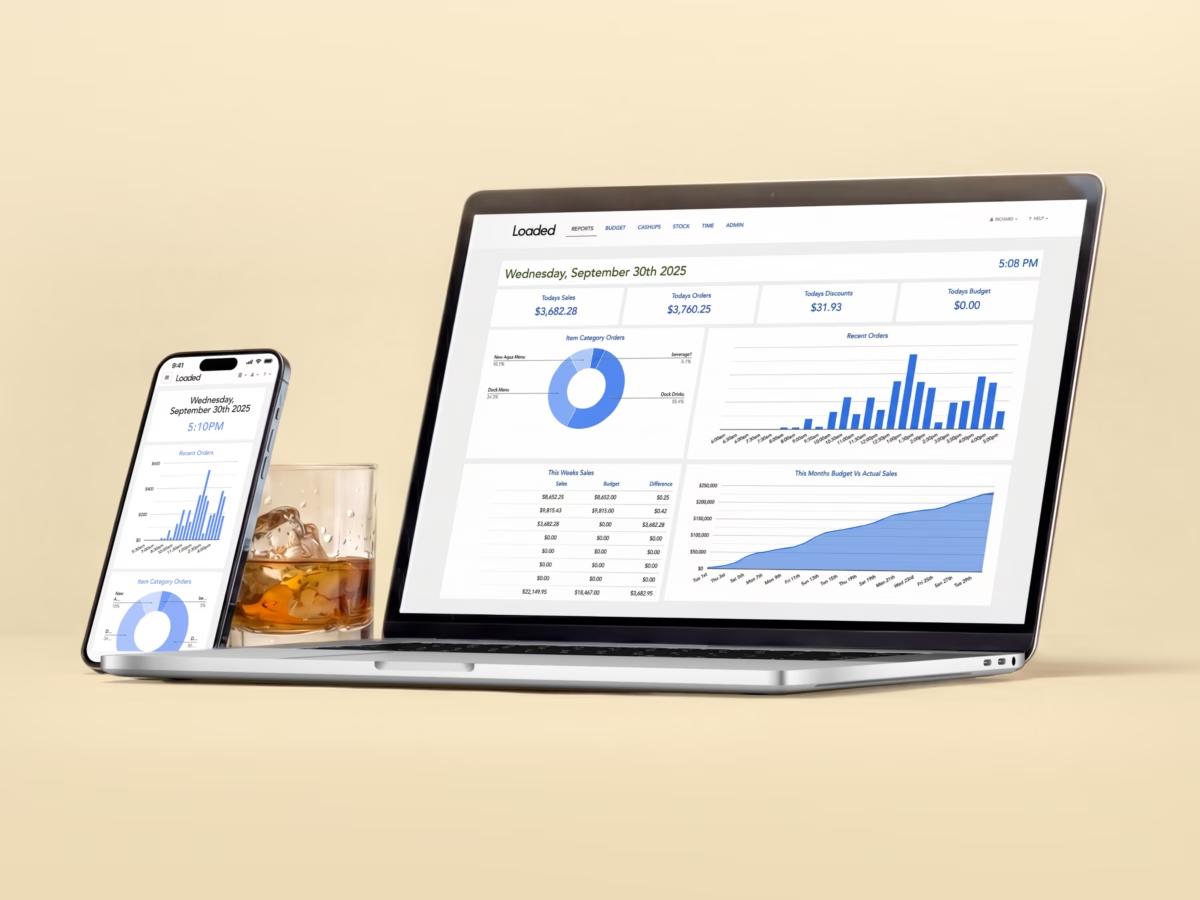
Imagine an operator opening a new venue spends 98% of their time — rightly so — creating a beautiful front of house, customer experience, interior, menus, and beverage offerings, with very limited time to focus on the back office. We’re trying to create a back office that is as beautiful as the front office. Once the money starts flowing, they can understand it and have the controls in place across revenue, their team and labour costs, and stock and cost of goods, so they get the return on investment they deserve for all the creativity, hard work, and stress they put in. It’s across those three key areas — revenue, labour, and cost of goods — that we deliver profitability back to them, which allows them to return to doing the stuff they actually love.
One of our most interesting insights over time has been that I always assumed that if we could make more people more profitable, they’d want to take more time off. But hospitality people love hospitality — the parts they’re great at. If you don’t have control of your back of house, the levers to control profitability, and systems that staff can actually manage, you end up doing things you’re not good at, things that stress you out. All that energy that comes from working in the areas you’re great at — instead, the life gets sucked out of you, and hospitality becomes really unfun pretty quickly.
You do need the numbers to be stacking up, even though most people don’t start in hospitality to become rich. At the moment, we’re hearing from some operators that economically it’s worse than during the COVID-19 pandemic. It sounds like you understand that battle well.
That was exactly our experience. You are there doing it because you love it. We had ambitions to do new venues, so that required a level of profitability across existing ones, but even if your primary motivation is not to make a lot of money, you certainly want to be able to pay wages next week and next month, your creditors and your landlord. The moment those things become difficult, life becomes very stressful, decision making becomes murky, and your creativity just dies.
We’ve all seen venues where they open beautifully — there’s something in the DNA you can’t quite put your finger on, but it’s awesome. Those are the people we’re working for. Because quite often you go back six months later and the controls haven’t been in place, it’s been difficult to make money, meet payroll, make rent, pay creditors. Stress has increased; they made a last-minute bad hire because they were so busy doing things they’re not good at, and you can just feel it, it’s off.
They’ve still got the same underlying ability and creativity to put together beautiful experiences, but they’re just not operating at their best. When we get that right, that’s a pretty satisfying outcome, seeing those people return to their best.
Who are your customers? Is it mostly restaurants and some pubs, and how soon after opening do they engage with Loaded?
Segment-wise, we’ve got customers across cafes, bars, restaurants, and pubs. It’s more about their mindset — whether they’re motivated to automate their business, make it more efficient, and make it easier for staff to run. We have small corner-site cafes through to 50-site, 500-seater restaurant groups. Hospitality on a venue-by-venue basis is very similar; we’ve now seen basically every use case and built Loaded with the flexibility to manage that. Segment is less important than the owners’ and managers’ motivations and aspirations.
On timing — the dream is to work with operators to get their back office set up before opening, so they’ve got a chance from day one. Once you open, trying to execute on anything other than delivering a great product to customers in those first three to six months is really challenging. About 15–20% of our customers come on that way. 80% come in with a real pain point — cost of goods out of control, labour costs out of control, or both. Then we often see general overwhelm and frustration with using four or five different systems in the back office that can’t be married together or used to make actual improvements. That’s generally the pain that drives them to reach out.
How have the product features within Loaded been influenced by your on-the-ground experience?
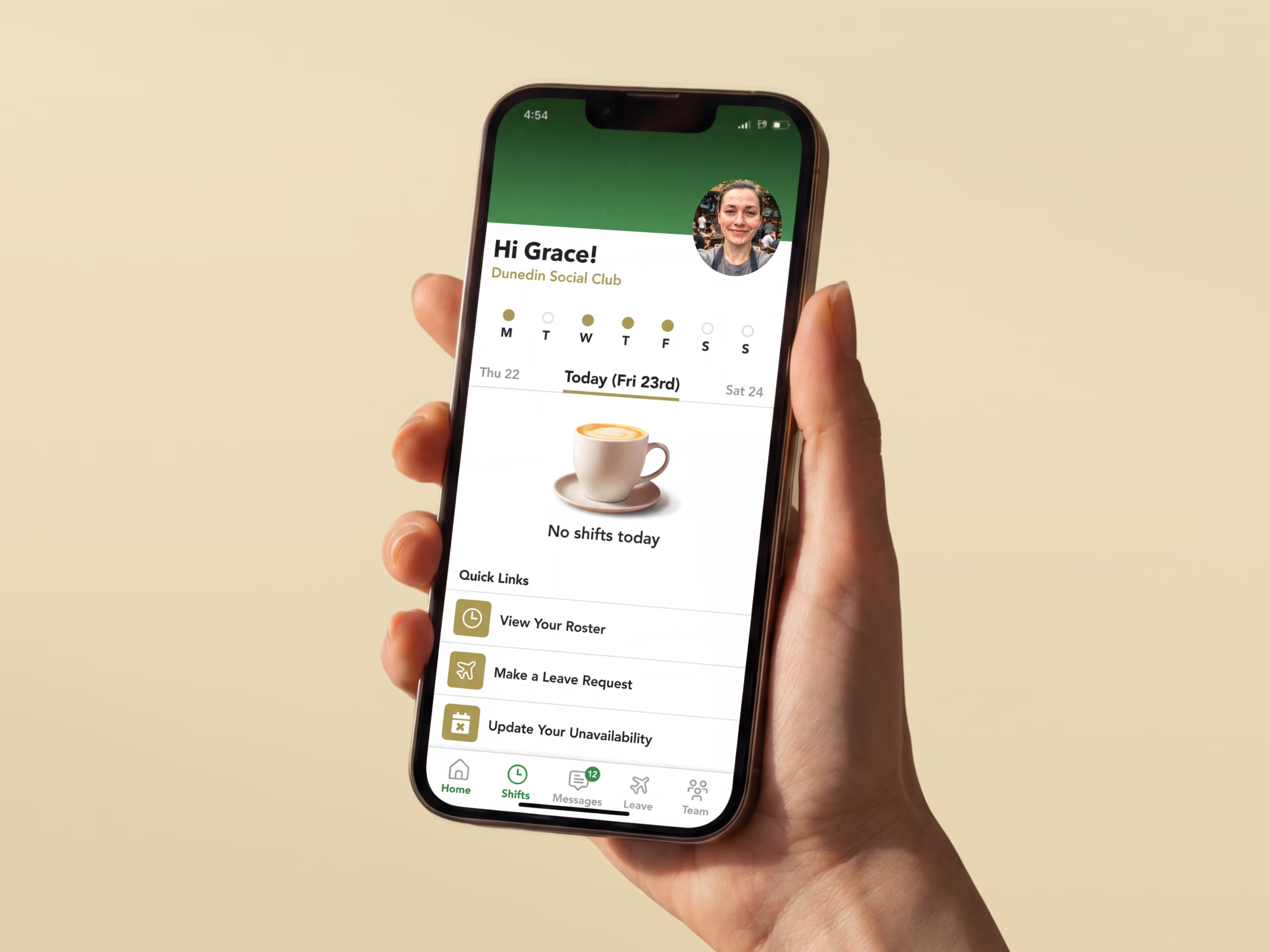
We’ve never been a point-of-sale system and never wanted to be. The back office requires a company dedicated to it. We integrate with point-of-sale and pull all data into Loaded, so customers can access revenue data while also managing stock, labour, and forecasting from one place. We go deep into time and attendance — rostering, timesheets, payroll integrations, and team apps where staff can view rosters, swap shifts, etc.
On the stock side, we were the first end-to-end inventory management platform. End-to-end means connected from the supplier through the point of sale, all the way back to the supplier — so you know exactly what you’re buying something for, what you’re selling it for, any discounts applying, anything on the point of sale affecting your margin, and any changes to products flowing through to a recipe.
All of that is trackable. It’s certainly the most complex part of the hospitality business, and it’s taken a very long time to simplify it to the point where a customer can genuinely feel it’s end-to-end — just follow their processes on site, and Loaded is the copilot alongside, making sure everything’s always up to date.
How important is simplicity of use, and how do you deliver on that promise?
James, my partner, still has nine product prototypes being tested across his bars. The litmus test is: can the team on site use them, from the shift manager through to the sous chef, through to the operations manager, through to the finance team, through to the owner? If it doesn’t make sense to the chefs in the kitchen, it doesn’t get developed. We keep prototyping and tweaking. What customers tell us, once they’re up and using Loaded, is: “This flows exactly like the way my kitchen works.”
It is such a huge advantage. It’s painstaking, but that painstakingness is what means it works for hospitality. There’s no point in hospitality people building systems for hospitality people if you still haven’t simplified it. And the ability to say no to certain things matters — we are not a business intelligence tool. At a certain scale, above 50 or 60 sites, business intelligence might drive real ROI. But our experience is that there is always so much more opportunity in the revenue, labour, and cost of goods space that, if you’re serious about profitability, focusing on anything outside that is a distraction. We have to be careful not to just say yes to everything.
The platform claims to deliver an 8% cost reduction. How did you arrive at that number, and what are operators doing differently to achieve that?
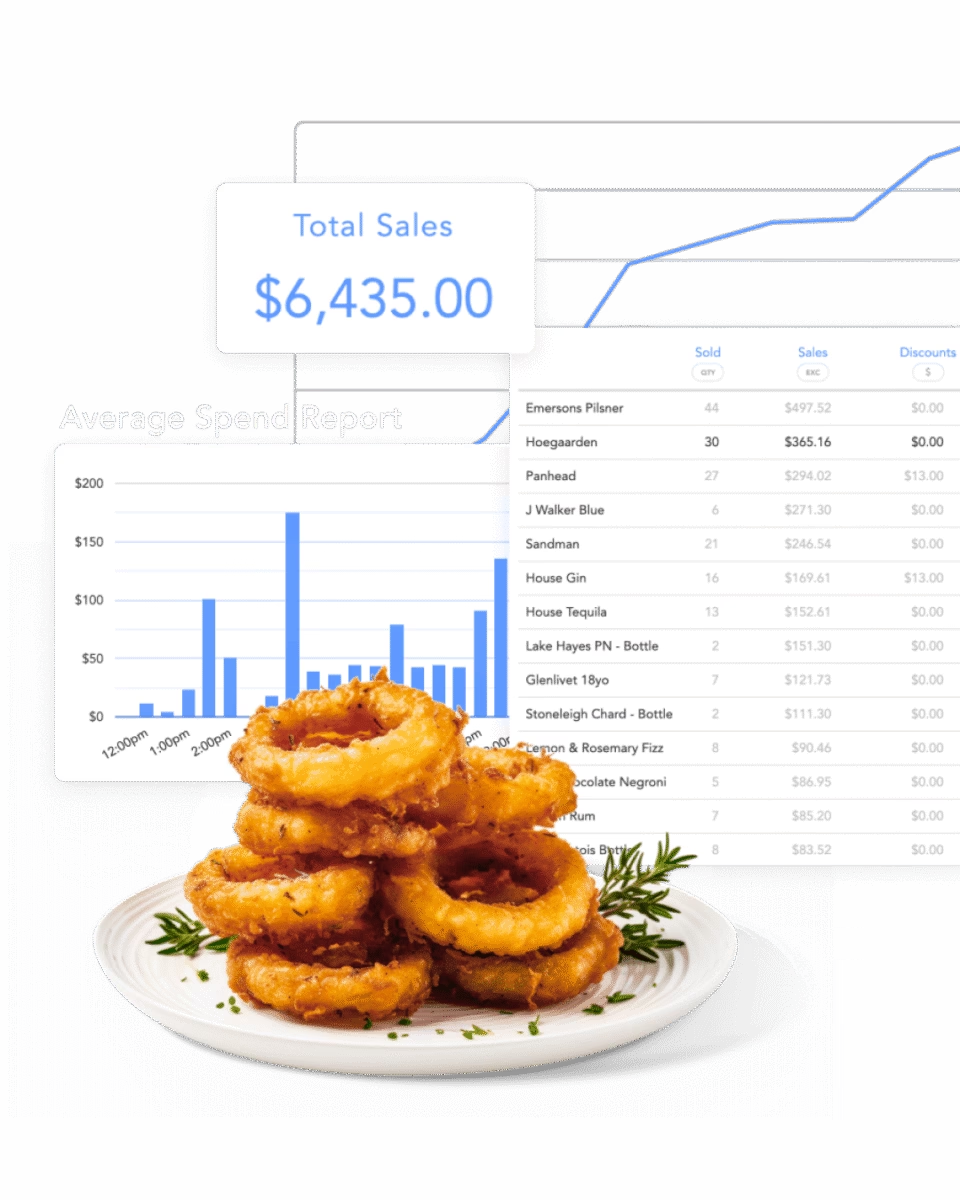
The 8% is across inventory and labour savings combined, and it’s not the same for any two customers. Through COVID, we gained that data by going deep with a cohort of customers who onboarded and worked with one of our partners — 8% was the minimum achieved across that group, and they came through COVID more profitable than they were at the start, just by focusing on areas already within their business available to unlock profitability.
A lot of it is simple. Once you complete a roster and understand what you’re going to spend, with a smart forecast against what you’ll probably turn over next week, you can adjust accordingly. If managers run a shift with no accountability or visibility into what they’re meant to spend versus what they actually spend, they’ll often blow out — $50, $100, $200 a day. Extrapolate that over 365 days, and you very quickly get to your 8%.
In stock management, it’s 100 small cuts that bleed people dry. Making it easy to accurately cost a recipe, understanding what pricing you’re meant to be getting from suppliers and helping negotiate those prices, making sure that’s actually what you pay — that alone can drive three to 4%. Then, when there are genuine supply chain changes, understanding what effect that’s having on margin in real time.
If I were achieving 20% cost of goods yesterday and 28% today, I should investigate — changes to recipes, substitutes, or pricing need to happen quickly. Having full visibility from the moment you sell an item to a customer, all the way through to how you buy it from a supplier, means you start making small improvements that add up over time.
What typically happens in your 14-day free trial that converts people to customers?
Most people jump on a one-on-one demo, then either start the 14-day free trial or go straight to our onboarding team to get everything set up. A really high percentage of those who do try it proceed. We can extrapolate their supplier invoices from the last six months, convert those into everything they’re purchasing, and then work with them to build recipes.
Within five to seven days, they’re getting visibility they’ve never had before. They know they’ve got a system where, over time, they can take next step after next step to make incremental improvements.
We’ve been running hospitality for 20 years and are still refining and getting more efficient. People’s mindset shifts from “I’m doing everything I can, we couldn’t be any more efficient” to “I’ve got constant steps I can take to be more and more efficient — and it’s not about getting more customers through the door.”
The most direct way our customer success team works through the 8% savings with people is to start with their top 5 food-and-beverage items. That’s where all the purchasing volume is. Take a ribeye sandwich that sells 10-to-1 of everything else — you’re buying a lot of ribeye. Focusing just on that: what do I buy it for, how are we managing it, is it being prepped and portioned correctly? That might account for 40% of the savings you make in the first year, just on one item.
Historically, people have been terrified of stock management because it felt like tracking 500 items every week. But there’s a lot of opportunity with low time investment, being very focused on where the volume and profitability opportunities actually are.
Looking back on building Loaded, what’s been the most difficult challenge?
It’s a super exciting time for us, given the pace AI is developing, because we have another 100 ways to simplify Loaded tomorrow and make it better for operators. But it’s been very challenging to develop that while staying true to keeping a simplified product that the end user finds intuitive.
The ability to now get prototypes up quickly and get feedback on how to simplify them has changed that. We’ve got a never-ending list of things we know will impact hospitality and our customers, and that leads to some really positive outcomes. The light at the end of the tunnel — actually impacting this industry as a whole, reducing those horrible stats about closures and terrible return on investment — is closer now than it’s ever been.
Where do you see the biggest opportunities for innovation in hospitality management tech over the next three to five years?
Hospitality is traditionally a small-to-medium enterprise, but the workflows are incredibly complex, and a constantly changing roster of team members makes communicating and teaching new systems really difficult. The simpler you make that, the better your chances of running consistently and making performance improvements. Over the next 12 months, we are really about making those workflows as simple as possible. As we do that, we’ll naturally layer in the benefits that LLMs deliver — threads of that throughout the workflow simplifications. Think recipes where you photograph items rather than working from invoices or spreadsheets. Think budget forecasting that is constantly updated based on weather forecasts, reservation changes, and booked functions.
The list is endless, but you have to get the actual workflow simple first, because then, when you layer it in, it’s genuinely useful. If the workflows are still too complex, you don’t have the thread connecting your supply chain to your team to your bank account. It feels like 100 workflows over the next 12 months that we can simplify — and that will have really meaningful outcomes for how automated running a hospitality venue becomes.
What advice would you have for hospitality operators looking to leverage technology without losing the human touch?
It’s all very well to have a company offering great tech, but you’ve also got to seek out those companies that deeply understand your problems and what you’re going through day to day.
For example, just as important as AI is, so is the next hire we make in our team at Loaded — their experience in hospitality, whether they truly understand the pain of operating or managing a kitchen or a front-of-house operation, whether they’ll have empathy for our customers, and whether they can quickly map out a solution or point people in the direction they really should be thinking at the stage of the journey they’re on.
AI will become increasingly important. But once the technology is at a simple enough point, it’s even more important to have that experience and empathy around what people’s day-to-day looks like running these venues. Hospitality operators should work with tech providers that have this.
If we’re doing our job, the people on site get to spend more time with their customers, and our team gets to spend more time with our customers. You can both focus on the end customer rather than on the processes that determine whether you’ll be profitable.
Visit www.loadedhub.com to find out more about Loaded’s services.