The next wave of protein isn’t coming from a paddock or being pulled from the sea, it’s being grown in a high-tech steel drum in Sydney’s inner west, just down the road from your favourite craft brewery.
This is where, Australian company, Forged by Vow, is rethinking meat entirely, cultivating Japanese quail from cells instead of carcasses. It’s not imitation meat, and “lab-grown” feels dated. The correct term is cell-cultured meat.
For the hospitality industry, this isn’t just another quirky talking point; it’s the future of sourcing, menu design, and what “premium protein” means in a post-farm world.
A new kind of protein
Cell-cultured meat isn’t your typical alt-protein. It’s not soy in disguise or mushrooms dressed up as steak. Instead, it’s real animal tissue grown from cells in a controlled, sterile environment.
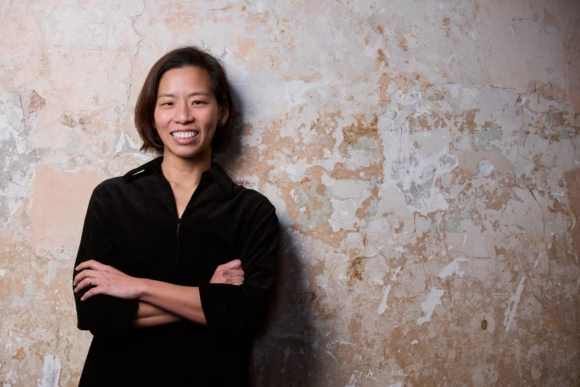
“We’re recreating what happens inside a quail—just outside of it,” explains George Peppou, founder and CEO of Vow. “We start with high-quality cells, feed them a warm, nutrient-rich broth, and grow them in large fermentation tanks that mimic the bird’s natural environment. It actually looks a lot like a brewery.”
As the cells multiply, the meat is harvested, similar to how curds are separated from whey, then shaped into refined, chef-ready products like parfait or foie gras.
Peppou, who trained as both a chef and a biochemist, brings a unique blend of culinary creativity and scientific precision to the table. “We’re not trying to slot into the alternative protein space,” he tells Restaurant Business. “Cultured meat is real meat, just made without the farm.”
Vow’s first product under its Forged brand is Japanese quail, selected after testing dozens of species, from crocodile to kangaroo. According to Peppou, quail struck the right balance between the familiar and the unexpected, rich in umami, with a smooth, luxurious texture. “It’s the perfect first step into a whole new world of flavour,” says Peppou. “Slightly familiar, but also new.”
A Singapore success
Although based in Sydney, Forged by Vow made its first commercial debut in Singapore, the only country with a formal regulatory framework for cell-cultured meat. It was a strategic choice. Singapore’s forward-thinking food policies, coupled with a thriving, innovation-driven dining scene, made it the perfect launchpad.
“Singapore was the ideal launchpad,” says Peppou. “It combines progressive food policy with a dynamic dining scene and a strong appetite for innovation.”
Since its debut, Forged’s Japanese quail has appeared on menus at top venues including Mirko Febbrile’s Somma, the cult-favourite Two Men Bagel House, and Michelin Green Star restaurant Fiz.
By launching in both fine-dining and casual settings, Vow was able to demonstrate the versatility of cell-cultured quail, proving it could stand out in a delicate dish or hold its own in bold, comfort-driven formats. This dual-venue strategy offered critical real-world feedback, now shaping Forged’s next phase: a local rollout in Australia and future expansion into global markets.
Cultured meat at home
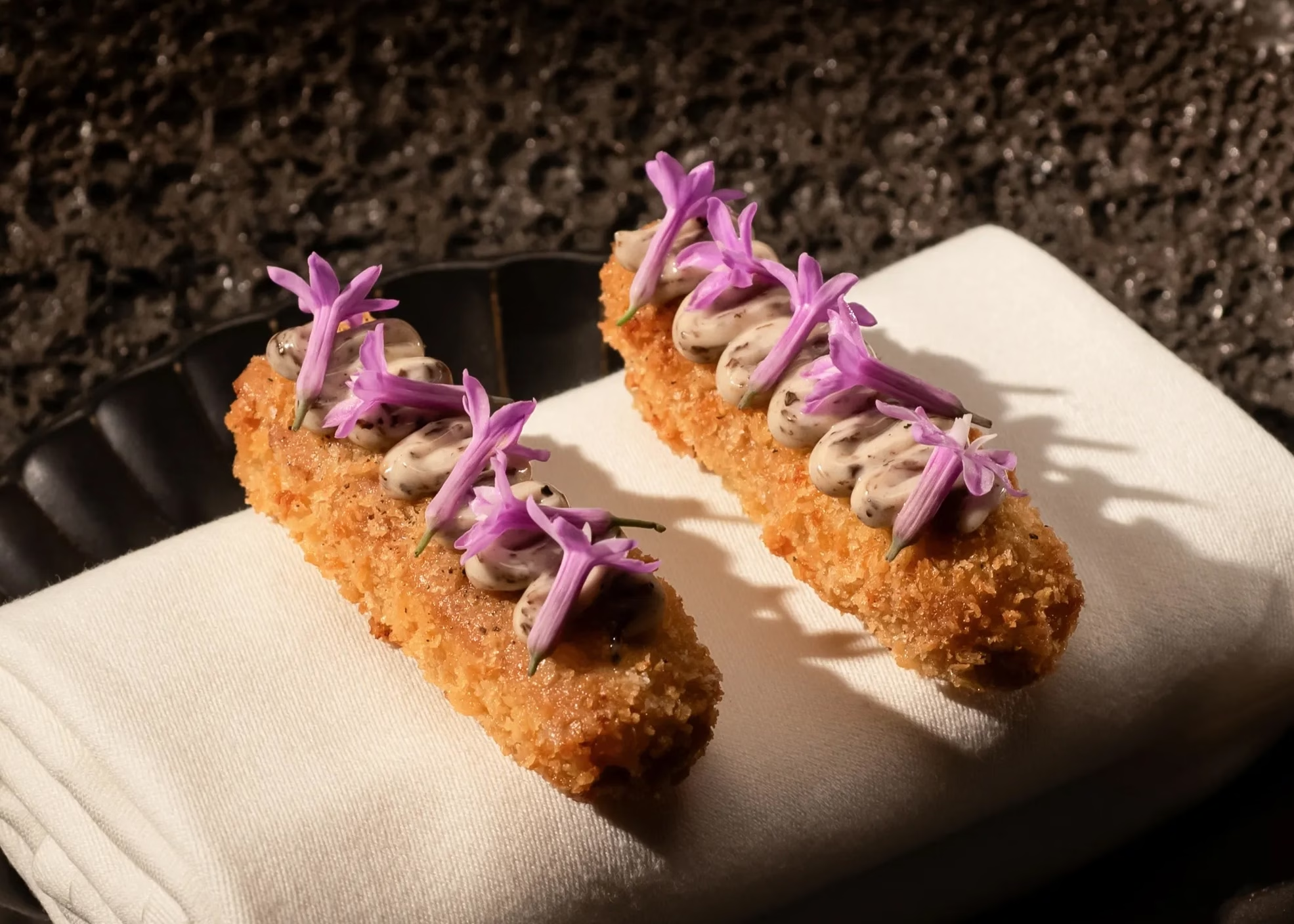
With product approvals from Australia’s food safety authority granted in June 2025, Vow is on track for a retail launch this September. In the meantime, Forged’s quail parfait, foie gras, and crowd-pleasing tallow candle have started appearing on menus at forward-thinking venues such as Melbourne’s Bottarga and Sydney’s Nel.
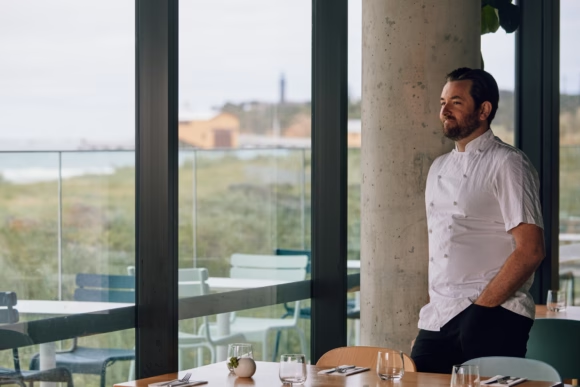
Among the first to work with the product is Mike McEnearney of Kitchen by Mike, now a food ambassador for Forged. Known for his seasonal, low-waste approach, McEnearney sees cultured meat as a relevant response to current challenges around sourcing and sustainability.
“As a chef, it’s rare to come across a completely new ingredient,” he says. “I’ve been following what George and the team at Vow are doing for some time, and this feels like just the beginning.”
At Kitchen by Mike, he incorporates Forged’s cultured quail into a savoury butter, served with house-made sourdough, a familiar format that introduces diners to the new product in a low-barrier way.
The launch coincides with growing demand among chefs for more sustainable, consistent alternatives to traditional meat. Cultured quail eliminates variables like seasonal availability, antibiotics, and slaughter, offering precision-grown protein with fewer supply chain risks.
Still, it’s not just about logistics. The product’s appeal lies in its novelty and culinary potential.
“It’s got familiar hallmarks,” says McEnearney. “Some might compare it to chicken liver parfait. It’s rich in umami, with a soft, melt-in-your-mouth texture and a clean finish. It’s unlike anything I’ve worked with before.”
Designed for the pass, not the lab
Unlike plant-based alternatives such as Beyond Meat, Forged’s cell-cultured products are designed to complement, not replace, traditional proteins.
“Some of my favourite applications are where our cultured Japanese quail is paired with classic cuts,” explains Peppou. “At Bottarga, chef Federico Bizzaro layers our foie gras with MBS 9+ eye fillet and Wagyu fat potatoes. It creates a dynamic contrast between tradition and innovation.”
While Forged’s strengths are often showcased in fine-dining contexts, the product is equally at home on more casual menus. It currently features in snacks at Sydney’s Four Pillars Lab, highlighting its versatility across different formats and dining styles.
For chefs like Mike McEnearney, this interplay of old and new is part of what keeps food culture moving forward. “All food captures a moment in time,” he says. “Techniques shift, flavours evolve. The real excitement comes from using new ingredients in ways that feel both familiar and fresh.”
Beyond the plate, Forged is working to improve the sustainability of its overall production model. “We’re collaborating with our suppliers to reduce packaging, source inputs responsibly, and use 100% renewable energy wherever possible,” Peppou says.
The company is also in the final stages of conducting an independent life cycle assessment, with early indicators suggesting a significantly lower carbon footprint than conventional poultry.
The road ahead
Looking ahead, Peppou says the technology behind cultured meat opens the door to more than just familiar proteins. “In the future, we’ll be able to design meat for specific outcomes, not just flavour, but nutritional value too,” he explains. “It’s a chance to create proteins tailored to dietary needs or culinary goals.” He sees cell-cultured meat as a new creative canvas for chefs and food developers alike.
In 2023, Vow made headlines with its Mammoth Meatball, an attention-grabbing concept that wasn’t designed for consumption. Created using fragments of mammoth DNA combined with elephant and lamb cells, the project aimed to spark public conversation around the possibilities of cultured meat beyond imitation.
While the meatball wasn’t intended for the plate, it captured global interest and provoked debate, especially following Vow’s proposal to cultivate zebra meat as a more ethical alternative to exotic game. These early experiments reflect the company’s broader ambition to push the boundaries of what’s possible in food innovation.
Despite its futuristic angle, Forged isn’t positioning itself as a replacement for traditional meat. “I’m a meat-eater myself,” says Peppou. “Australia produces some of the best conventional meats in the world. But there’s also room for something new, something that honours flavour, ethics, and creativity without compromise.”
For chefs and hospitality operators, Forged’s cultured quail presents both practical benefits and philosophical questions. It offers a consistent, sustainable protein source, but it also challenges traditional thinking around sourcing, storytelling, and guest experience.
As McEnearney puts it: “This isn’t a radical shift. It’s the next step. And the fact that it tastes this good? That’s what will ultimately change the game.”