Increasingly, we are seeing robots making barista coffee and taking orders, while overseas they can be seen flipping burgers and making sushi. DoorDash’s 2025 Delivery Trends Report reveals only 14% of consumers fully trust AI tools like robotic cooks or automated food assembly systems to prepare or cook their meals.
So it was heartening to hear from industry experts that they are far from replacing humans in the kitchen. From the sounds of things, the job of a chef sounds indefinitely safe. The emotional connection to food that humans have, can typically only be created in food through human touch and intuition. As head chef of Cecconi’s, Melbourne Drew Lettress says, “Even if something isn’t perfect, when it’s made with love it connects people.”
The role and rise of automation in kitchens
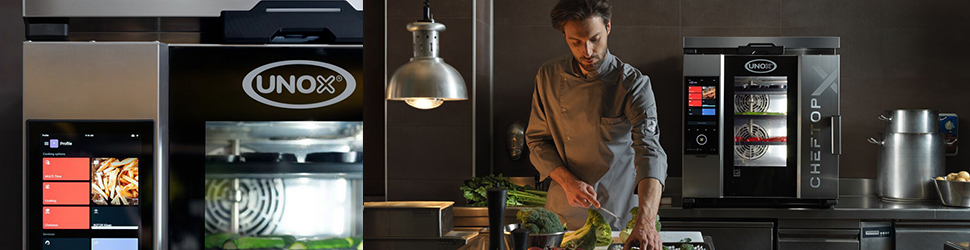
Automated machines and digital equipment have long had their place in home and commercial kitchens. Lettress says one he loves is the rationale oven. “It increases quality, letting you control many aspects of the cooking process. You can cook a protein to the exact temperature in the exact way you would like.”
Danette Morrison, Program Leader for Cookery at William Angliss Institute says culinary schools, including theirs, are evolving to meet the demands of tech-integrated kitchens. “They are incorporating smart appliances, AI-powered cooking assistants and app-controlled equipment – tools that enhance precision, reduce human error, and support consistency and cost-effectiveness. “
Darren Cooper is a product specialist at J.L.Lennard, a supplier of food machinery and equipment. He says automation and robotics are playing an increasing role in addressing operational challenges such as labour shortages, consistency, and food safety.
Cooper also says that while technology can support chefs, “There remains a strong and enduring place for human skill, creativity, and craftsmanship — particularly in fine dining and artisan kitchens. Technology cannot replicate the intuition, sensory experience, and emotional connection that comes from manual food preparation.
Robots cannot replicate the artistry
Customers value food provenance and hand-crafted artistry in food preparation, and are willing to pay for dishes they cannot make at home according to a recent Unilever Food Solutions report. “Most chefs view robots as tools rather than replacements, with many robots having extremely limited abilities to do basic tasks and still relying on human intervention.”
Lettress says, “We wouldn’t be very successful without tools, however I can emphasise the importance for chefs in preparing as much as possible in house and from scratch. At Cecconis, pasta (except for linguine) is made from scratch. The fish comes whole, with guts and scaled attached. We make the sponge for tiramisu.”
According to PDF Foods, there is growing interest in interactive and immersive dining experiences where customers can see chefs in action, providing an exclusive behind-the-scenes look at how dishes are created.
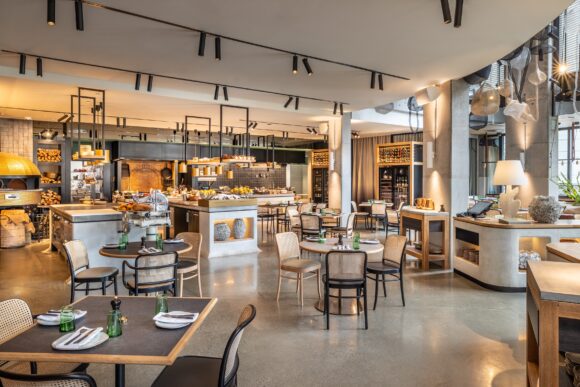
With an open kitchen at Cecconi’s, Lettress says a curious customer will sometimes poke their head over the marble and say, ‘Is that rabbit? Are those artichokes? Those are some big quails! Where are they from? You guys do all this?’
“They love to see how much effort goes into the food. Certainly there is a bit more “soul” or love in food prepared by hand, every brioche bun or agnolotti varying ever so slightly. For example, for filled pasta such as tortellini, each is different depending on who made them and their finger size with which the pasta is wrapped around.”
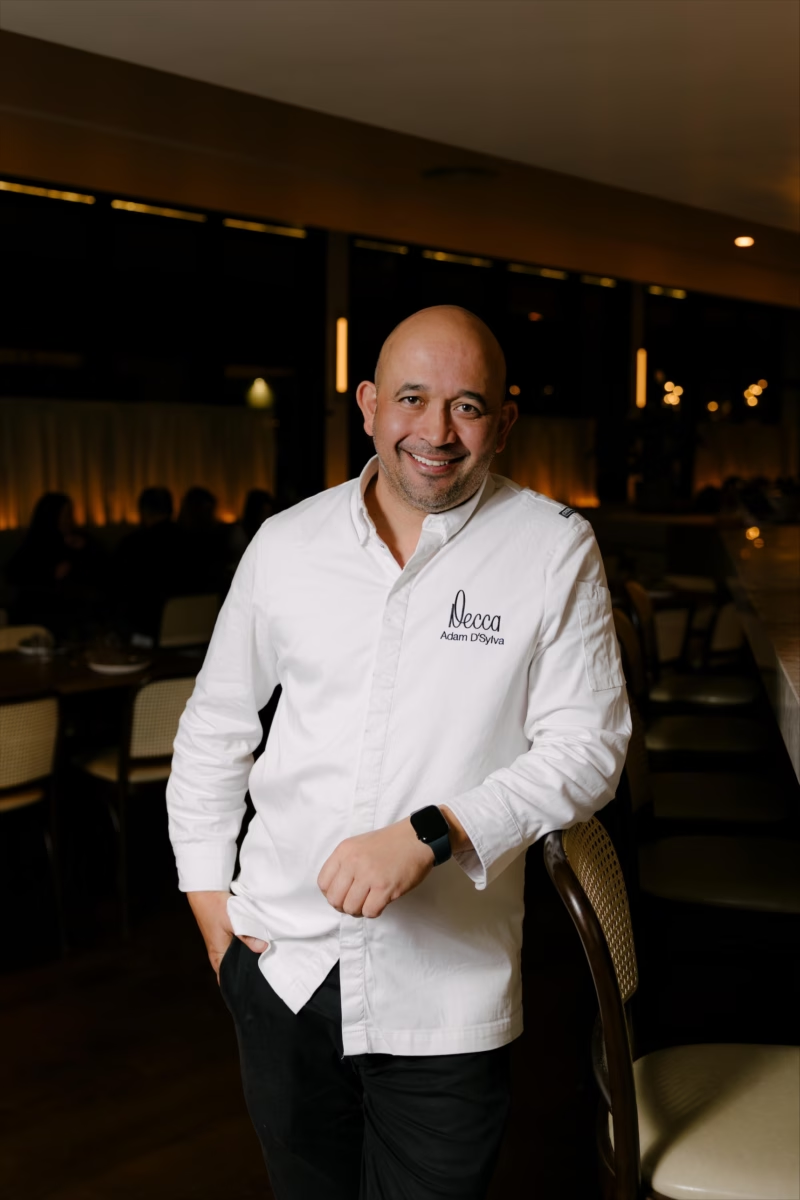
Pasta is also the dish that Adam D’Sylva, chef and owner of Decca Restaurant in Melbourne says depends heavily on human intuition and skill – tossing the pasta, emulsifying the sauce and looking out for glossiness in the sauce.
“When cooking food, you need some sort of instinct, understanding, and, skill, because it’s so volatile. So many different factors can affect a dish.” He believes this is something robots can’t replace.
Cooper says technology also struggles with creativity, adaptability, and presentation — the hallmarks of fine dining. “Anything involving taste adjustment, plating, or emotional storytelling through food still relies on the chef’s personal touch. Cooking is not a precise science and requires touch, smell, and taste to create a perfect dining experience.
As D’Sylva says, robots may work for fast food, but for restaurants, there’s a certain amount of finesse. “The finishing process, service of food, plating up the food, and coordinating the dishes, which requires communication with the waiter.”
He also says robots would require programming, and as Cooper explains, “Most chefs rely on technology that is built into equipment and utilise preprogrammed settings which requires significant investment and ability.”
Fine food requires human senses and intuition
Despite the availability of equipment like airfryers, Terry Jackson, head chef at Workout Meals, says he still manually flips or shakes food midway during cooking to get evenly browned food like fries, chicken wings, or fish cutlets. Most airfryers don’t have an automatic rotation or mixing function.
“When tasting and adjusting, sauce might need more seasoning or need reducing a bit more for better consistency. In this instance, human touch adds flexibility and instinct in cooking.”
Morrison from William Angliss says manual techniques offer the full use of our senses, channelling a Chef’s passion and creativity.
She says cultural storytelling, and sustainable practices rooted in local traditions can also only be cultivated through hands-on practice and experience.
She says the industry’s renewed interest in wood-fired cooking, fermentation, and sustainable use of offcuts reflects a broader movement toward authenticity and environmental responsibility – areas where human skill and intuition are irreplaceable. “It reflects a key theme in modern culinary education and industry practice: automation is not replacing chefs but instead redefining their roles.”
Cooper agrees. “AI will likely assist with predictive cooking, menu optimisation, and reducing waste. However, I believe the future lies in collaboration between technology and human craftsmanship — not in one replacing the other.”
By integrating tools like AI-powered cooking assistants, smart ovens, and IoT- enabled sous-vide machines, chefs can streamline operations and improve consistency, says Morrison. “However, their individual creativity, leadership and mastery of traditional techniques remain solid. This balance allows chefs to lead innovation, personalise dining experiences and preserve the artistry and soul of cooking, ensuring they remain essential in the hospitality landscape of the future.”