The RB Big Interview series brings you in-depth conversations with the industry’s most influential leaders, innovators, and visionaries who are shaping the future of Australia’s hospitality landscape.
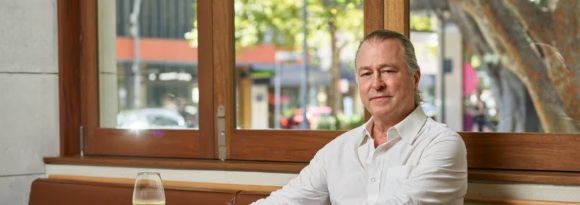
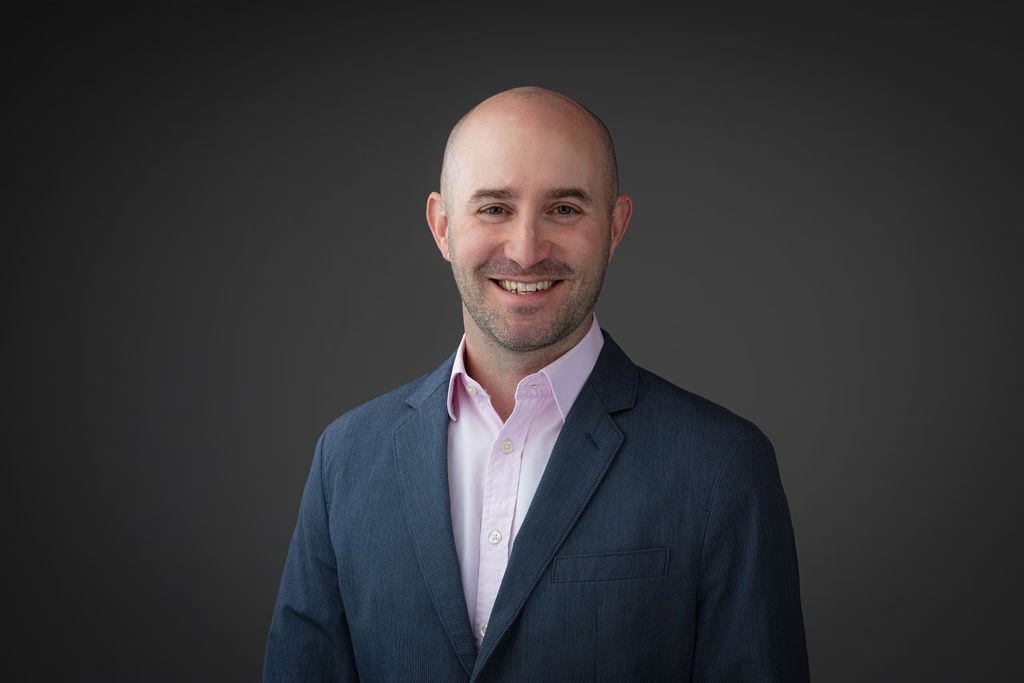
Drew Bowering is General Manager, Australia, at OpenTable, where he leads the company’s growth and expansion across the country. Before joining OpenTable in 2022, he spent 14 years at Expedia Group in senior leadership roles across the UK, Asia Pacific, and the US. Known for his human-first approach to leadership and his deep hospitality expertise, Drew is a regular speaker at industry events on the power of technology for hospitality partners. Born in the UK and having lived across three continents, he now calls Sydney home, where he lives with his young family.
You describe yourself as someone who can simplify complexity and communicate a clear vision. What’s the most complex challenge facing Australian restaurants right now?
The pincer-press of rising cost of goods and changing dining trends, such as frequency, location, and spend, is the prime challenge for today’s hospitality operators. There’s a natural tension that lies between the urge to express creativity through the dining experience and the increasing cost of delivering that. It can be difficult for diners to understand the slim margins and operating pressures of a restaurant, which can create a gap between viable business and happy/engaged customers.
At OpenTable, we see our role in the industry as serving restaurants, alongside helping diners discover them. We do this by providing world-class operational tech that improves efficiencies and optimises operations and marketing. My team in Australia works closely with our restaurant partners to review these systems and provide tangible recommendations to improve cover volume and spend per head, and ultimately, revenue. Our other key pillar of value is, of course, our diner marketplace, which helps restaurants navigate the murky world of demand generation, enabling them to maximise revenue.
You’ve built your career around the philosophy that growth comes from blending ‘the human and tactical’. How does that philosophy shape the way OpenTable supports restaurants in Australia?
I’ve always believed that a great-looking strategy means nothing unless you’ve got the right people in place to be able to execute it. Our philosophy for how we want to operate in Australia is based on a desire to be deeply integrated with the industry; we want to be visible, supportive, and to truly listen.
All of that requires quality human connection across the board, both internally – in the way my team works with each other – but it’s also crucial to how we build bonds and partnerships in the industry as a whole.
We have thousands of strong restaurant partnerships, and we work closely (and integrate) with a number of high-class tech peers. Being able to do that comes from being a human-first organisation that believes the heart of hospitality is in people.
Australia’s hospitality scene has its own unique characteristics compared to other markets. What surprised you most when you took on the role of leading OpenTable’s Australian operations?
What struck me most was just how entrepreneurial and diverse the Australian market is – from tiny wine bars down laneways to large multi-venue groups, all operating with incredibly high guest expectations and very tight margins.
I quickly realised you can’t run a copy‑and‑paste playbook from other countries here; every city, and often every neighbourhood, has its own rhythm, diner behaviour and operational challenges. That’s shaped our strategy to be hyper-local: investing in people on the ground, building deep partnerships with both independents and groups, and tuning how we use the OpenTable platform city by city rather than assuming one ‘global best practice’ fits everyone.
With cost-of-living pressures affecting dining out, how is OpenTable helping restaurants maintain profitability while still delivering great experiences for diners?
Cost-of-living pressures mean diners are more selective, and operators have to work twice as hard for every dollar of margin without compromising the experience. Where OpenTable helps is by making sure that every seat, every service, and every shift is working as hard as possible – from pacing and table configuration, to turning softer shoulder periods into genuinely compelling experiences.
We’re giving operators clear, actionable insight into cover patterns, spend per head and channel performance. We then use our marketplace, marketing tools and integrations to help drive the right diners at the right time, not just more noise. Done well, it lets restaurants protect their brand and guest experience, while quietly lifting revenue and profitability in the background.
OpenTable has been connecting diners and restaurants since 1998. As AI and new tech reshape the industry, what innovations are you most excited about bringing to Australian restaurants?
The big shift I’m excited about is moving from systems that simply capture data to ones that actively coach operators on what to do next. OpenTable has accelerated its adoption and development of AI tools that support our restaurants and diners. We’re taking an early mover approach because we feel strongly that AI can uplevel many aspects of the dining experience for both our audiences, including making it effortless to discover and book the right table and alleviating operational burdens for restaurants.
AI can help forecast demand more accurately, smooth out shift patterns, and surface the ‘next best action’ in plain language – whether that’s adjusting pacing, creating a targeted campaign, or tailoring the experience for a VIP guest.
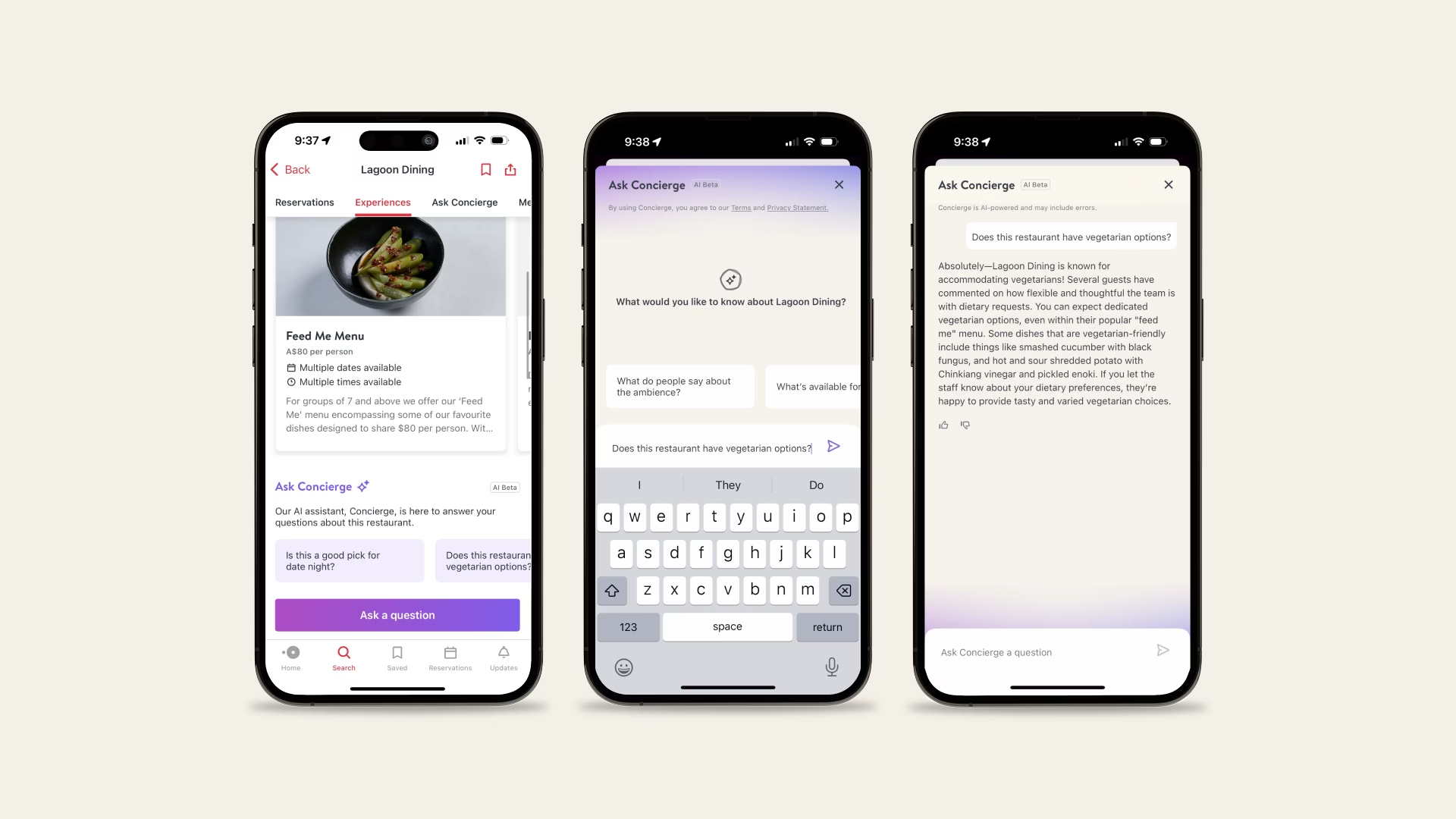
On OpenTable, that means bringing together marketplace demand, guest insights and operational data so the product feels less like a static tool and more like a calm, always-on revenue and guest-experience partner. On the diner side, we recently launched Concierge – an AI-powered assistant embedded into each OpenTable restaurant profile that better connects diners with our 60,000 restaurant partners and helps our restaurants free up time and capture diner interest.
Crucially, I don’t see AI replacing hospitality – it’s there so that humans can spend less time wrestling spreadsheets and more time at the pass or on the floor with guests.
Many independent restaurants are still hesitant about restaurant tech. How do you convince sceptical operators that platforms like OpenTable are worth the investment?
I never start with the software – I start with their week. I’ll ask, “Where are you losing time? Where are you losing sleep? Where do you feel you’re leaving money on the table?”
Once we’re clear on that, we’ll run very simple, very real experiments together. For example, tightening no-show management, redesigning how they use their floor, or turning quiet nights into experience-led offerings through OpenTable. Then we look at the numbers and the lived experience: more covers, stronger spend per head, fewer stressful services, more time back for the owner and their team.
When sceptical operators see that we’re not trying to digitise hospitality for its own sake, but to make their business healthier and their work more sustainable, we stop feeling like a cost and become a partner.
You’re an ICF-accredited coach with a focus on helping people grow. How does that coaching mindset influence the way you lead your team and partner with restaurants?
Coaching is about helping people see more of themselves and their options, not telling them what to do, and I try to bring that into every conversation. With my team, that means spending as much time on who they are becoming – their strengths, values and leadership style – as we do on numbers.
With restaurant operators, it shows up as curiosity and co-creation: we’ll explore their vision, challenge some assumptions, and then build a growth plan on OpenTable that feels like ‘theirs’, not something imposed by a tech company.
The goal is that people walk away from time with us feeling clearer, more confident and more resourced, rather than simply ‘sold to’.
Do you have a specific example of how you’ve helped a restaurant operator or team member have a breakthrough moment?
One example that sticks with me is a multi-venue operator who was completely burnt out: constantly on the tools, constantly reacting, and convinced that it was just part of ‘the job’.
We sat down with their data and their diary and realised a few structural changes – rethinking pacing rules, tightening no-shows, and creating a series of bookable Experiences on quieter nights – could help give them both better revenue and more predictable weeks.
Over the next few months, they saw material uplift in midweek covers and far fewer chaotic services, but the real breakthrough was when they said, “For the first time in years, I feel like I’m running the business rather than it running me.”
For me, that’s what growth looks like. It’s not just about better numbers on a dashboard, but rather a person who’s got more control, more energy and more belief in what’s possible for their restaurant.
You’re clearly obsessed with restaurants – what’s your take on where Australian hospitality is heading in the next 3-5 years?
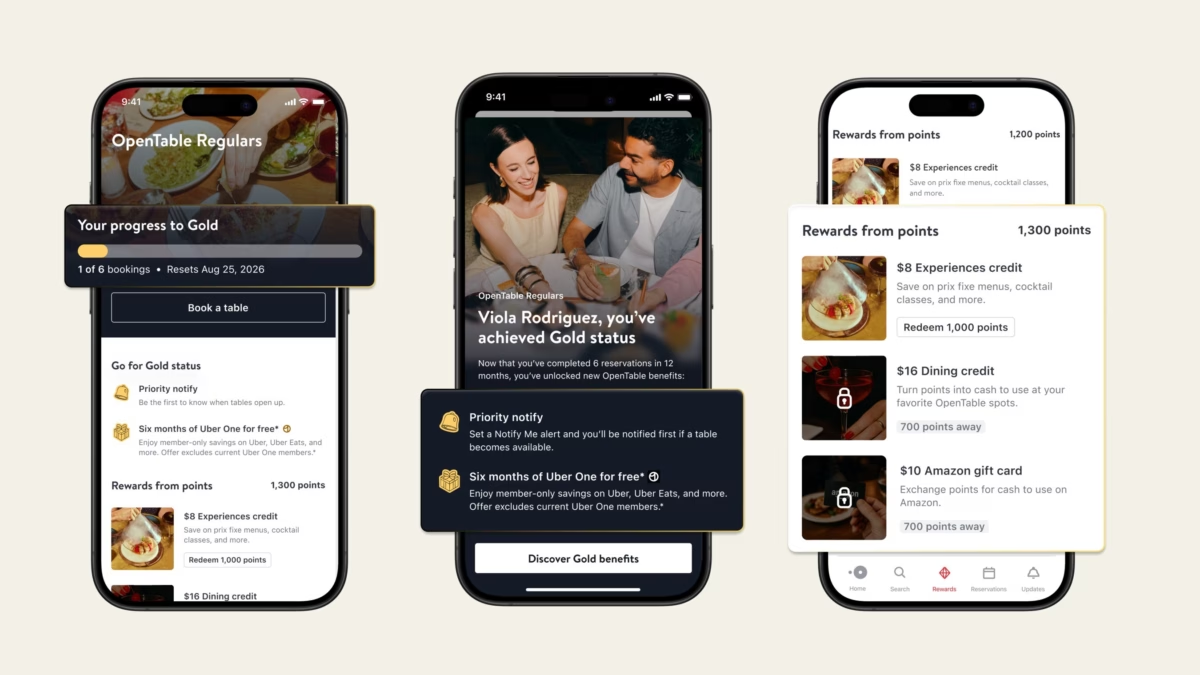
I think we’ll see even more fragmentation in the industry over the next 3–5 years. Everyday value and truly special-occasion experiences will both thrive, but the vague middle will get squeezed. Guests will expect sharper storytelling. They’ll look for a clear point of view on why your restaurant exists – paired with frictionless, tech-enabled journeys from discovery and booking through to payment and loyalty.
Operators will need to be ruthless about margins and menu engineering, while also building direct, data-backed relationships with their guests rather than relying solely on walk-ins or generic marketing.
Those who treat technology and partners like OpenTable as part of the fabric of their business – not a bolt-on – will be in the strongest position to adapt, experiment and stay ahead of where diner behaviour is moving.
Outside of work, your perfect day includes eating out with family. When you’re a customer rather than an OpenTable leader, what makes a restaurant experience truly memorable for you?
The restaurants that I remember most aren’t the ones that nail every technical detail; they’re the ones where my family and I feel genuinely seen.
That might be a host who recognises we’ve got kids in tow and subtly adjusts where we sit and how the pacing works, or a server who connects a small recommendation to something we mentioned in passing. I love when there’s a strong sense of place – the room, the music, the menu and the energy all telling the same story – but delivered with warmth rather than theatre.
If the booking is easy, the welcome is relaxed, the meal feels unhurried, and we leave talking more about the people than the process, that’s a perfect night out for me.
For more information, check out: https://www.opentable.com.au/