There’s a conversation that happens in the boardrooms of almost every growing hospitality brand at some point. A landlord calls. The location is good. The foot traffic is there. But the format isn’t quite right: it’s a kiosk when you’ve only ever done inline tenancies, or a food court when you’ve built your brand around full-service dining. And the default answer, for many operators, is no.
Zeus Street Greek used to say no too. Then they learned to say yes. And it changed the shape of their growth.
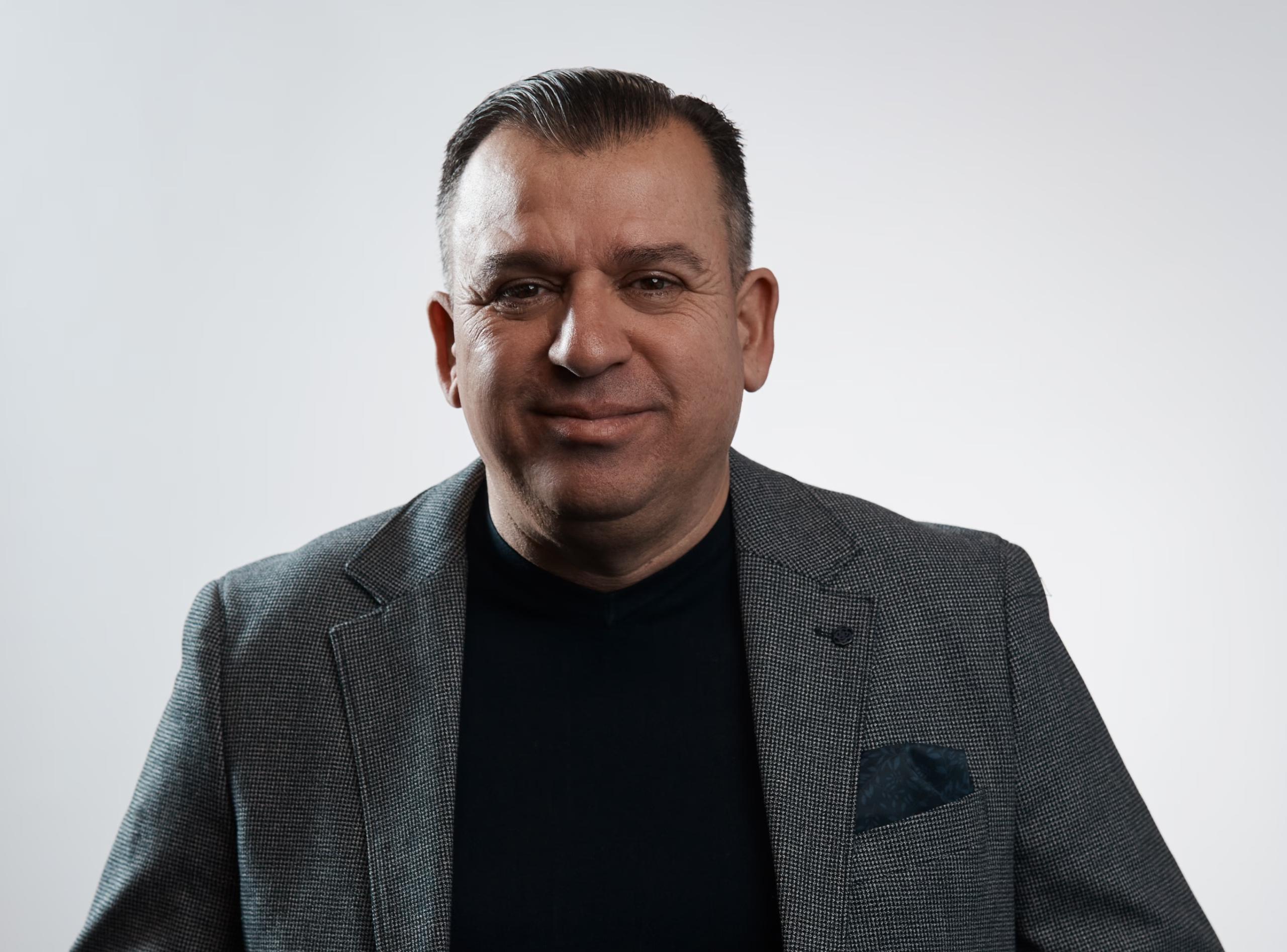
Speaking at a recent industry fireside chat moderated by Tim Kummerfeld of Foodie Coaches, Zeus CEO Ramon Castillo laid out the journey from single-format restaurant brand to a multi-format QSR operator running across kiosks, food courts, strip sites, and shopping centre tenancies, with Australia’s first Zeus drive-through slated for mid-2027.
The strip site lesson
The turning point came, as many turning points do in hospitality, from a mistake that looked like a smart idea at the time.
Post-COVID, with work-from-home reshaping foot traffic patterns across Australian cities, strip sites surged as an attractive alternative to shopping centres. Lower rents, more flexible lease terms, and a consumer base that had relocated to local neighbourhoods made them an obvious play. Zeus leaned in hard.
“We lent really hard into some strip site leases,” Castillo recalls. The problem, as the dust settled, was structural. A cheap rent only works if the top line can support the business, and without the built-in footfall of a shopping centre to supplement lunch and dinner demand, some of those strip sites simply couldn’t generate the volume.
“If you don’t have the footfall supplementing lunch and dinner demand, then you’re getting great rent, but your top line is really limited.”
The lesson, Castillo is at pains to point out, wasn’t that strip sites are wrong. It was something more nuanced and more useful: that a single format creates a single point of failure.
The kiosk that changed everything
The shift in thinking crystallised when a shopping centre approached Zeus with an offer: not an inline tenancy, but a kiosk. Historically, the answer would have been immediate: no. Zeus was a restaurant business. Kiosks weren’t part of the story.
This time, they said yes.
“A shopping centre will come to us and say they don’t have an inline tenancy, but they do have a kiosk. Historically we would have said no way. We’ve opened a kiosk, made it work. Different formats create the opportunity for you not to become a one-trick pony.”
Making it work, though, required solving for a constraint that trips up many operators who try to stretch across formats: menu complexity. A kiosk can’t run a full restaurant menu. The throughput isn’t there, the equipment footprint is smaller, and the operational demand on a smaller team is higher.
One menu, every format: The rule that makes it work
The decision Zeus made, and has held firm on, is one that runs counter to the instinct of many multi-format operators: one menu, everywhere.
“We have one menu, and it doesn’t matter if you’re in a kiosk or you’re in a 250 square metre store,” Castillo says flatly.
The practical implication of that decision is that menu rationalisation becomes a strategic priority, not just an operational nicety. Every item that stays on the menu has to be executable across every format Zeus operates. Every item that can’t be (that works in a 250-square-metre kitchen but falls apart in a kiosk) is a candidate for removal, regardless of how beloved it is.
“We will continue to keep pushing that efficiency,” Castillo says, acknowledging that menu simplification is always “a bit challenging, because everyone has a favourite that doesn’t sell.”
The payoff is operational consistency at scale. Franchise partners and restaurant managers don’t need to learn a different version of the Zeus product depending on where they’re located. Training is unified. Supply chain is unified. And critically, the customer experience is unified: whether someone walks into a Zeus kiosk or a full-size restaurant, they get the same food.
The drive-through: Format flexibility’s ultimate test
The logical endpoint of Zeus’s format flexibility journey is the one that will test everything they’ve built: the drive-through. Castillo announced earlier this year that the brand’s scaling ambition now extends to drive-through, with the first location targeted for mid-2027.
Drive-through is a different discipline entirely. The margin for error in a three-to-four-minute service window is slim. The menu has to be designed around speed, not just flavour. The kitchen layout, the sequencing, the staffing model: all of it has to be rebuilt around a format that punishes complexity.
Castillo is clear-eyed about how much work remains. “We’ve got a stack of work to do to hit the three to four minute markers that model requires.”
The ongoing menu rationalisation programme is, in part, preparation for that moment. Every item removed from the menu now is one less constraint when the drive-through opens. Every efficiency built into the kiosk and food court operations is transferable muscle.
What other operators can take from this
The Zeus format flexibility story isn’t just a case study in property strategy. It’s a lesson in how to make a brand more resilient.
Brands that are locked into a single format are at the mercy of that format’s economics: the rent cycles, the foot traffic trends, the landlord negotiations. Brands that can operate across multiple formats have more options, more leverage, and more ways to grow.
The enabling condition (the thing that makes it actually work rather than just being an aspiration) is operational clarity. One menu. One mission. Non-negotiable standards that don’t bend to the constraints of the format. As Castillo puts it: “same mission” regardless of whether you’re in a kiosk or a flagship store.
For Zeus, that clarity has become, in Castillo’s words, “our super power.” For operators still locked into a single-format mindset, it might be worth asking: what would you say yes to, if you knew the format didn’t have to change everything?
This article is based on a fireside chat session at Food & Hospitality Week. The session was titled ‘From Souvlaki to Scale: The Zeus Street Greek Growth Story’ and featured Ramon Castillo, CEO of Zeus Street Greek, in conversation with moderator Tim Kummerfeld, Founder and Head Business Coach, Foodie Coaches.