
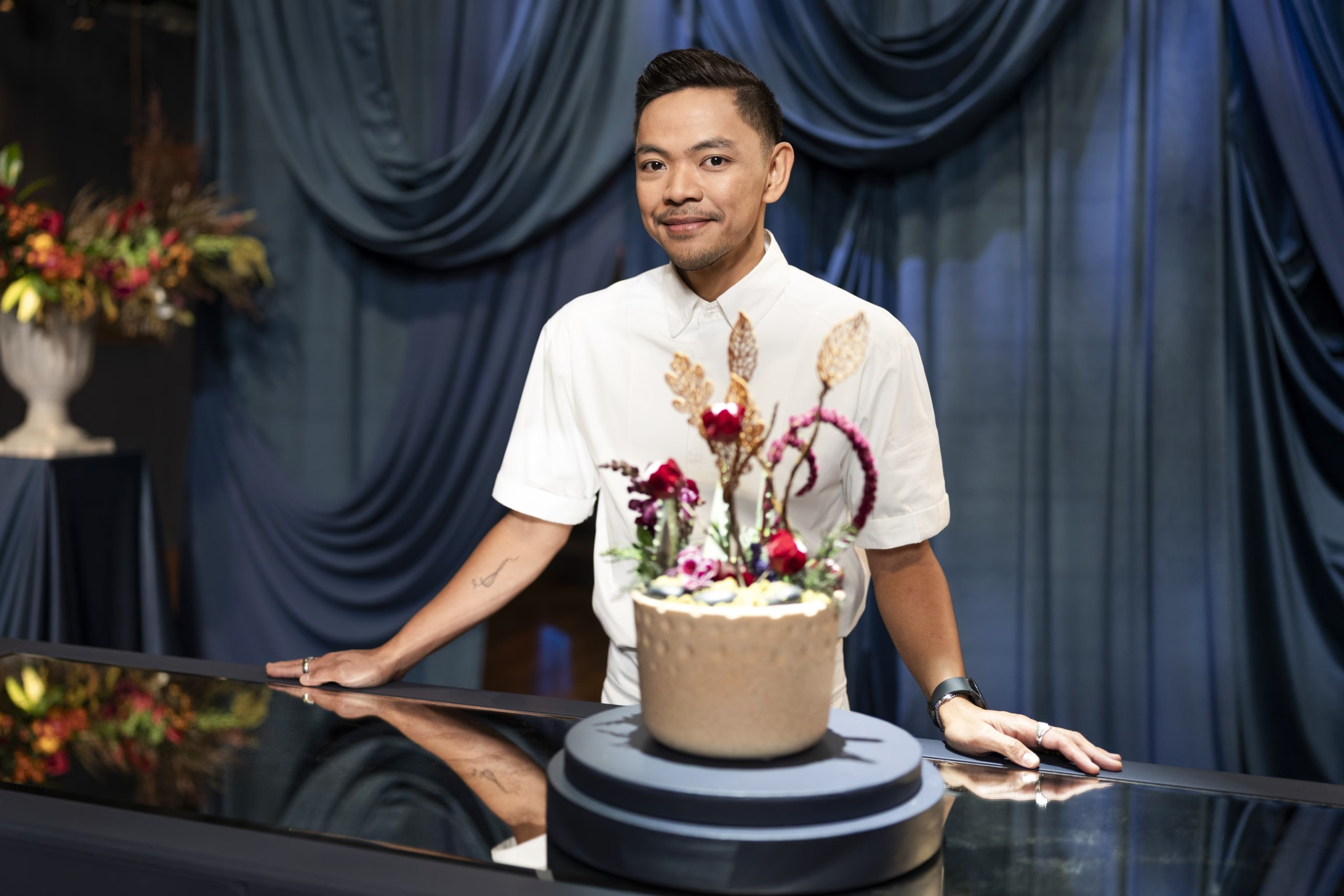
Executive Pastry Chef Miko Aspiras’ love for Australian native botanical ingredients is clear, if his extravagant Botanical Garden dessert masterpiece is anything to go by. Involving 149 steps and 4.5 hours to make, he presented the life-like bouquet at the 2025 MasterChef Australia’s finale as a guest judge and as the challenge for the finalists to recreate over four hours.
His passion for sharing the beauty and versatility of Australia’s bush native botanicals as culinary ingredients blooms as he talks about them, just like the edible floral creation which included these in his petit fours- lollipop flowers of raspberry and strawberry gum truffles, sprinkles of lemon myrtle crumble, Tasmanian pepperberry powder, and chocolate twigs with wattleseed tuiles.
He even managed to squeeze in a couple of Filipino native ingredients of the citrus calamansi and pili nut butter.
Early appreciation for local ingredients
He explains that his penchant for using local ingredients sparked in 2012 as a young chef in the Philippines, before he arrived in Australia in 2018 in pursuit of new creative horizons. Since then, he’s held senior roles at prestigious kitchens, including Hilton Sydney, Seta and Oborozuki. “While building my repertoire of skills and influences. I was really thinking, “How can I contribute to my country?” In the Philippines, it’s harder to build a bridge between chefs and farmers and producers.
“I was making a lot of effort to always try to source the local alternative, like instead of milk from the US, using milk from carabaos, or instead of ham from Spain, getting Philippine local wild horse meat. Although it wasn’t always successful, it was already sparking conversation. He says to his knowledge, he was one of only a few pastry chefs at the time promoting local ingredients. Though this made it more challenging, he says it only strengthened his passion for them, bringing this with him when moving to Australia.”
It seems these earlier experiences in his home country have helped him develop a greater appreciation for native ingredients.
The importance for chefs harnessing local
He thinks we can make better use of them because of their abundance, and he feels they’re better supported in Australia relative to other countries. “Also, by using them, you’re preserving these specific strains of fruits, making more people aware of them, and supporting the farmers who grow them.”
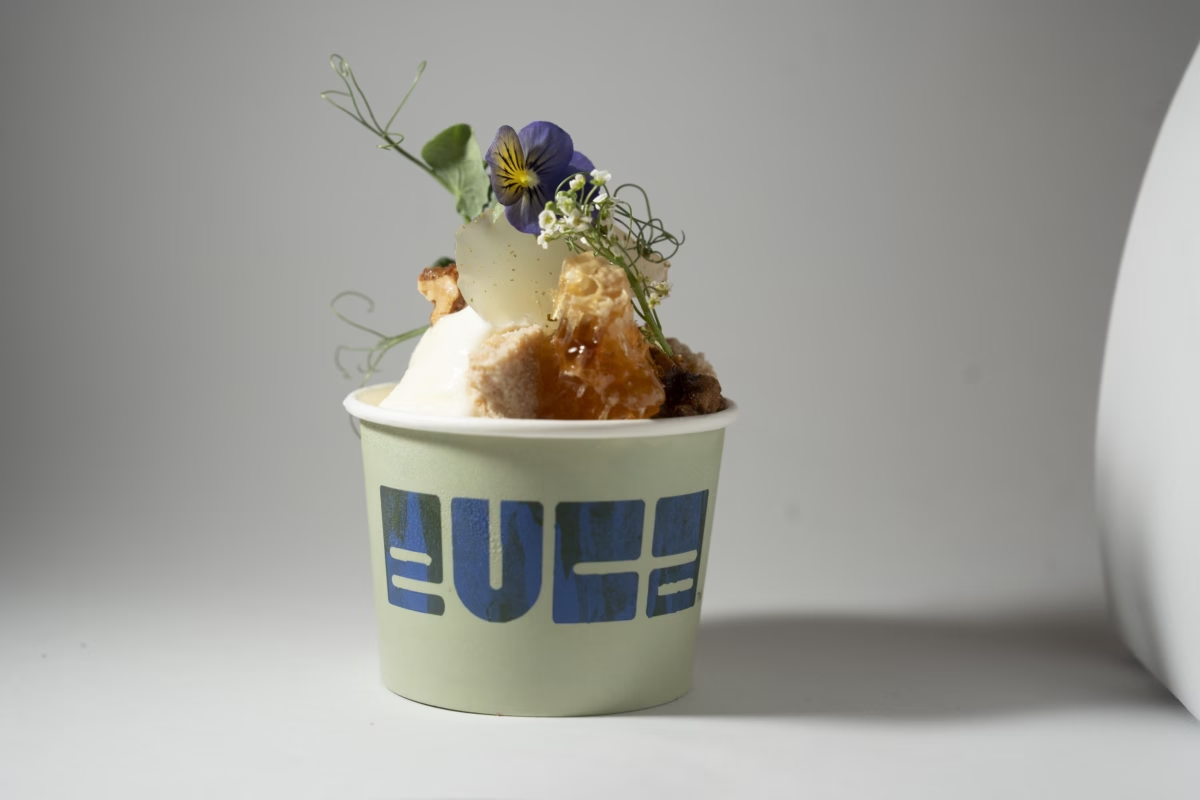
These are his aims in launching his gelato brand EUCA, inspired by eucalyptus, with various pop-up stores opened in Sydney in 2025, and further locations set to open this year, including a pop-up collaboration in Melbourne with ST. ALi Coffee Roasters. He has ambitious plans to open permanent locations, a bakery, a fine dining restaurant, and a café based around the gelato brand.
When he first approached local farmers to discuss using these ingredients for EUCA, he learned that demand was not high, which led to conversations with them about how to be most resourceful with the ingredients.
“Like freezing them once harvested. Or the challenge of transporting small packages of them. We wouldn’t have that conversation or challenge if there were more people using them.
“I wasn’t surprised, as I’ve seen this everywhere with local ingredients. As an industry, we are always going for the easy route because the culinary industry is already very tough. But the more we use them, it can ultimately make the industry better.”
Working with native Australian ingredients
He says he finds dealing directly with farmers to be more reliable for sourcing. He has been working with Naturally Native and Creative Native to source ingredients for EUCA. “When dealing with a middleman, they may say, it’s available at one point but then later, it’s no longer available.”
Aspiras is also respectful and detailed in the way he uses the ingredients. He considers, “Is this how the fruit, vegetable or seed is meant to be used?”
Using wattle seed as an example, he states, “The roasting process takes time. It’s sun-dried and the native local farmers do this under the sun. I could do it myself in an oven, but by not doing that, I am respecting and honouring the process.”
Rather than relying on their names, he has found that researching the ingredients, which includes tasting, is also important. “It’s respecting your craft, the ingredients, and how they’re meant to be used. It’s really about how you apply it to your food.”
His pastry techniques have also lent well to working around the seasonality of these ingredients. “I make fruit leathers, pureeing things and turning them into powder. There are a lot of pastry techniques that are clever for preserving and that apply to Australian native ingredients. I guess one of the most used techniques I apply is bringing them into sauces and jams.”
Taking native from restaurants to everyday rituals
Aspiras has embarked on taking these ingredients from high-end kitchens to a product that has become an everyday ritual for many. In creating his EUCA gelato brand, with Eucalyptus as the signature flavour, he gets to apply his exquisite dessert-crafting skills while making these ingredients more accessible, raising greater awareness of them and celebrating their use. It’s something he believes in and feels is much needed in the industry. “It’s creating reasons for people to try them and making them a big deal.”
For example, he has noticed native ingredients on a restaurant menu in Australia, yet its website does not widely promote them.
“It’s about sparking conversation and curiosity when we tell them, ‘We are a new gelato shop, and we focus on Australian native ingredients.’”
He says showcasing his Botanical Garden on the 2025 MasterChef Australia finale episode was one of his biggest career achievements. “There was no doubt I wanted Australian native ingredients in there and to be put on that pedestal. All the petit four components involved not just a sprinkling- they were front and centre of each.”