
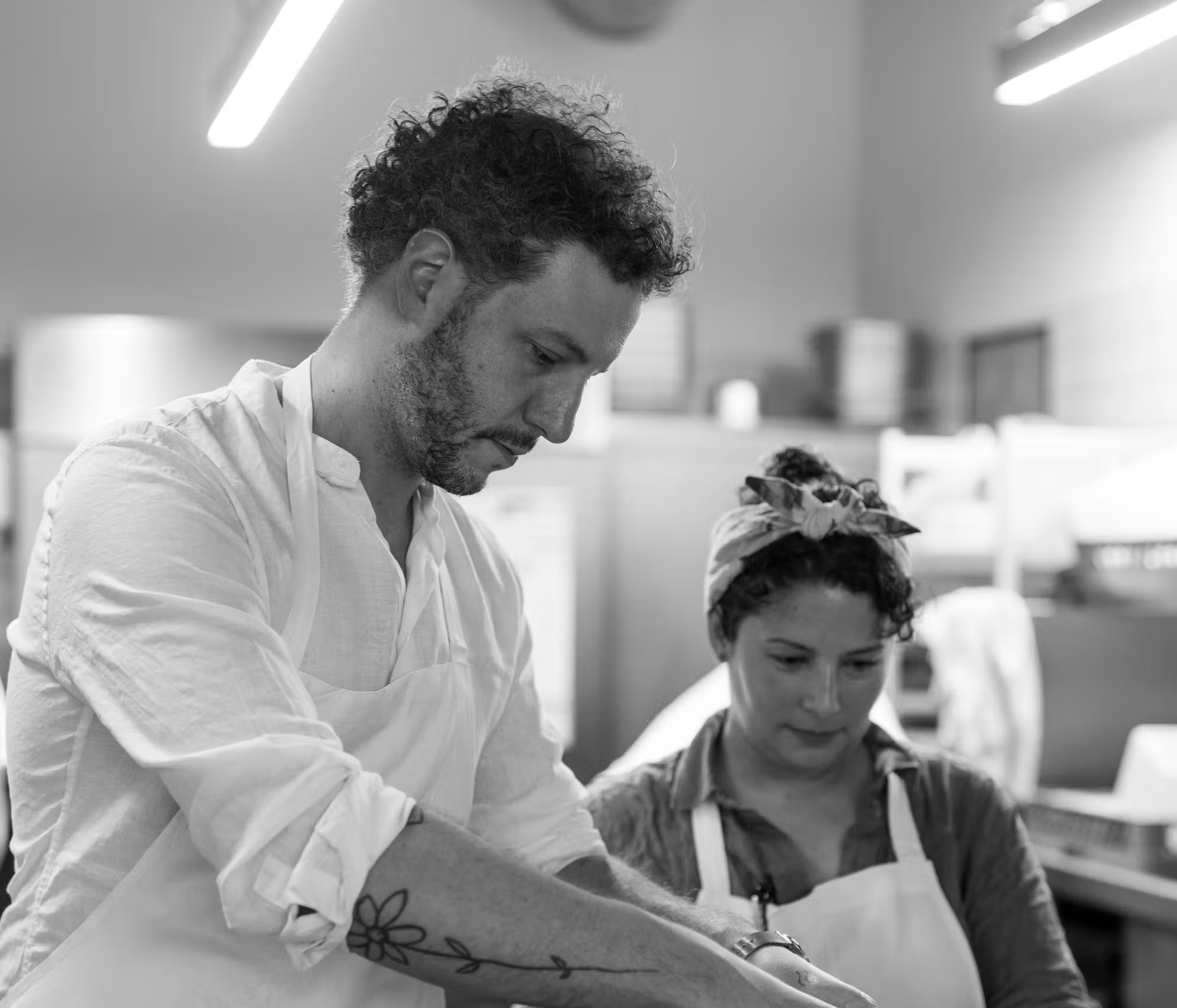
Nearly a decade ago, Kobi Ruzicka left Melbourne to open a restaurant where he could call the shots. “Melbourne felt crowded,” he tells Restaurant Business. “I didn’t have the backing to open something big, and the smaller stuff was being swallowed up.”
Instead, he found a more achievable model in Tasmania. Hobart offered lower overheads, smaller scale, and direct relationships with growers. “You’re so close to the farms, it just made everything feel more accessible,” he says.
In 2016, Ruzicka launched Dier Makr, a stripped-back, fine-dining restaurant without the formality, in Hobart’s CBD. He spent six months doing the fitout himself, building a minimal kitchen with just a flat-top grill, two induction burners, and a single fridge. “There were nights we had to wait for plates to come back from the tables to send the next course out,” he says. The restaurant serves a single tasting menu, tight, focused, and entirely ingredient-led.
“If you start with a carrot that’s not that good, you can only take it so far, even if you’ve cooked it perfectly,” he says. “The growers and winemakers are the point,” he says. “We just build the menu around them.”
That same clarity has guided Ruzicka as he’s steadily grown his presence in Hobart. Since opening Dier Makr, he’s added Lucinda, a wine bar next door, and leads creative direction at Six Russell, a bakery by day and bistro by night in Sandy Bay, run by the Tso family, best known for Hobart favourite, Me Wah.
Spending Christmas with our farmers
While each of Ruzicka’s venues has its own identity, they share a core DNA: seasonal, agile, and grounded in strong local relationships. “You can’t just put anything on the menu and expect it to fly,” he says. “People want to know where things come from, and so do we. We know the names of the people who make our plates and cutlery. We spend Christmas with our farmers and wine importers.”
That intimacy translates into flexibility. The Dier Makr kitchen adjusts menus weekly based on what’s available, while Lucinda’s wine list evolves constantly to avoid falling into repetition. “If we see the same wines we’re pouring start appearing all over town, I’ll just change what we do,” he says. “No drama—it just means it’s time to move.”
Lucinda wasn’t part of the original plan. When the neighbouring café closed unexpectedly, the lease became available. “I’d had the idea for years,” he says. “A European-style wine bar where you could stop in for a glass and snack, or stay for a full meal. The space was too perfect to ignore.”
The bar has since become a cult favourite. “I feel like Lucinda’s always done the same thing, we’ve just gotten better at it. And now people understand it more,” he says. “It used to be that people thought wine bars were only for drinks and a nibble. Now they’re having proper meals.”
Even with the critical acclaim for Lucinda and Dier Makr, Ruzicka resists the pressure to expand or formalise. “I’m probably not a great businessperson,” he says. “I don’t lead with numbers—I lead with flavour, with experience, with people. Profit comes second.”
Method to the modesty
Still, there’s a method behind the modesty. He’s built a lean, values-driven business with low staff turnover and a strong internal culture. His hiring philosophy is straightforward: “I care more about attitude than experience,” he says. “You can teach someone how to cook. You can’t teach them how to make someone feel welcome.”
That people-first approach extends to guests. “We consciously appeal to a smaller group of people, and that’s OK,” says Ruzicka. “If someone else down the street is packed and we’ve got a quiet night, it doesn’t bother me. I know who we’re doing this for.”
It’s a mindset that’s earned him a loyal following, even without chasing media attention or industry awards. His venues are consistent, original, and unmistakably local.
Ruzicka is characteristically tight-lipped about what’s next, but he hints at something in the pipeline. “There’s an idea I’ve been sitting on for a long time,” he says. “I think there’s still a gap for it here. It just needs a bit more time and money—but I think it’ll happen.”
Whatever shape it takes, it’s safe to say it won’t stray from the foundations that have guided his venues to date: strong community ties, clear creative intent, and a refusal to cut corners.
“I just want to leave behind something that feels like it could only exist here,” he says. “And hopefully, some memories of good meals, if nothing else.”