Despite the current cost pressures, going out remains an important part of Australian life, with Tyro’s Eat Pay Love 2026 hospitality report finding that 52% say they visit pubs, cafés, or bars to socialise and see friends, while 17% say it’s to enjoy food and 6% for drinks.
However, as the cost of socialising rises, what has changed is how people order and spend, with one of the major shifts seen when dining in a group, as Tyro’s report also reveals. One in three customers is less likely to buy a round, with more people preferring to pay only for their own order.
Expectations around behaviour are also tightening. Top dining out turn-offs include ordering expensive items and expecting others to split the bill evenly (47%), being rude to staff (43%), and mates disappearing when it’s their turn to shout (31%).
Digital tools are accelerating the shift, with 37% saying they use QR codes to avoid awkward money conversations with friends.
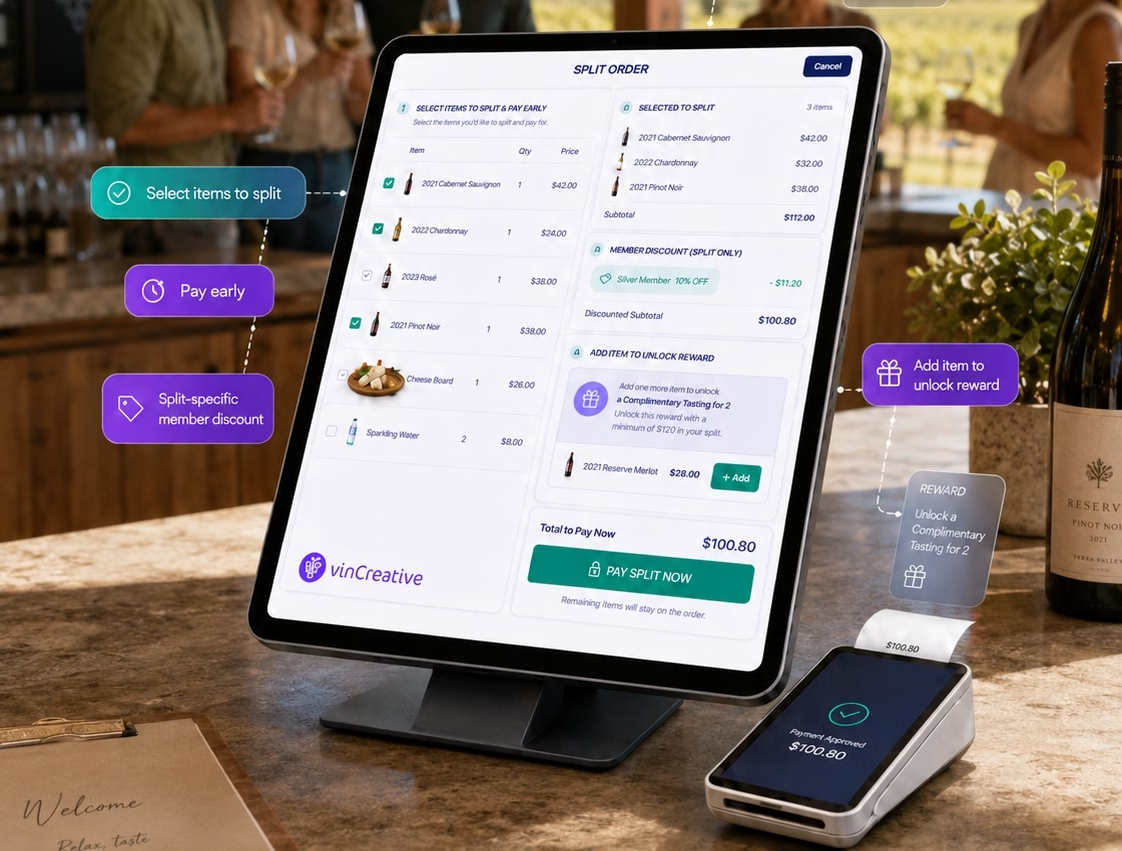
Adam Coward is COO of vinCreative, a POS and ecommerce platform with over 150 winery users. He says, “We are seeing an increasing number of people doing split bills in the last year, but particularly in the last three months. So much so that we’ve had to update all new features in the platform to accommodate growing requests.”
Coward tells of just some of the bill-splitting scenarios he has seen presented, including the ability to pay for “just the drinks” but with a member discount separate from whoever booked the table, and handling split bills where a deposit has been paid. He’s also seen the request for the ability to split, but on payment, buying some additional wines under the same split bill order.
Loyalty programs add further complexity, with customers wanting to connect split bills to relevant loyalty programs.
Making bill-splitting an easier and smoother experience
Some customers split bills privately outside of the venue, whether through banking features such as PayId or bill-splitting apps.
However, venues that offer facilities to split bills on-site can make it a smoother experience for customers, as Chrissy Symeonakis, CEO of hospitality marketing agency Creative Little Soul, says: “It makes group dining enjoyable and not a hassle.”
For example, QR code ordering, a feature offered through me&u’s platform, has meant that, as CEO Kim Teo explains, “The vast majority of bill splitting on our platform happens organically without any friction or negotiation at the end of the meal.”
For traditional table-service environments that prefer to maintain table service and where a single bill is presented, Teo says customers are increasingly choosing to divide it, but with margins thin and labour tight, this isn’t always something staff have time for.
She says, “This is where we find guests love being able to leverage me&u’s Pay product. Guests can access a QR version of the bill, see exactly what they ordered, choose how to split it—whether evenly, by item, or by a specific amount—and pay independently. The whole process is transparent and fair, which matters a lot when people are watching their spending.”
Operational benefits of bill-splitting facilities at venues
According to Teo, when guests handle their own payments, staff do not have to run cards, split bills at the POS, or resolve discrepancies after service. That time goes back into the guest experience.
She says, “Table turnover improves because the checkout process is happening in parallel with the meal. Billing errors drop dramatically when the system calculates everything automatically and guests can see what they’ve ordered in real time.
“On spend per head, we find that when people are ordering for themselves and paying as they go, there’s less friction around adding an extra drink or a side because the financial decision is individual rather than collective. That tends to support incremental spend in a way that shared bills sometimes don’t.”
Teo says a facility like me&u’s Pay also means less reliance on a mental tally or awkward conversations with the table or staff who refuse to split payments.
Long-term shift to bill-splitting facilities at venues
This ease of experience is one reason why Symeonakis says she believes venues may continue with improved bill-splitting options, even after economic conditions improve.
Coward also thinks it may turn into a long-term trend, citing changing demographics.
He says, “With more singles, couples not married at younger ages and separation of bank accounts – I can’t see splitting orders/bills stopping.
“There are also more apps being released that allow splitting between groups, so restaurants will keep up to enable it through their systems. It also allows restaurants to “sign up” more customers to their membership programs as part of split-bill orders – rather than one person being provided all the “credit” for the sale.”
With vinCreative’s platform about to launch, and after spending the past six months building it to adapt to overwhelming demand, Coward says the investment was worthwhile. “It was definitely something we saw as worthwhile investing in.”