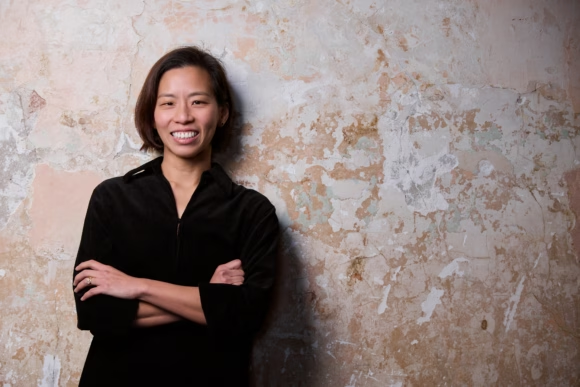
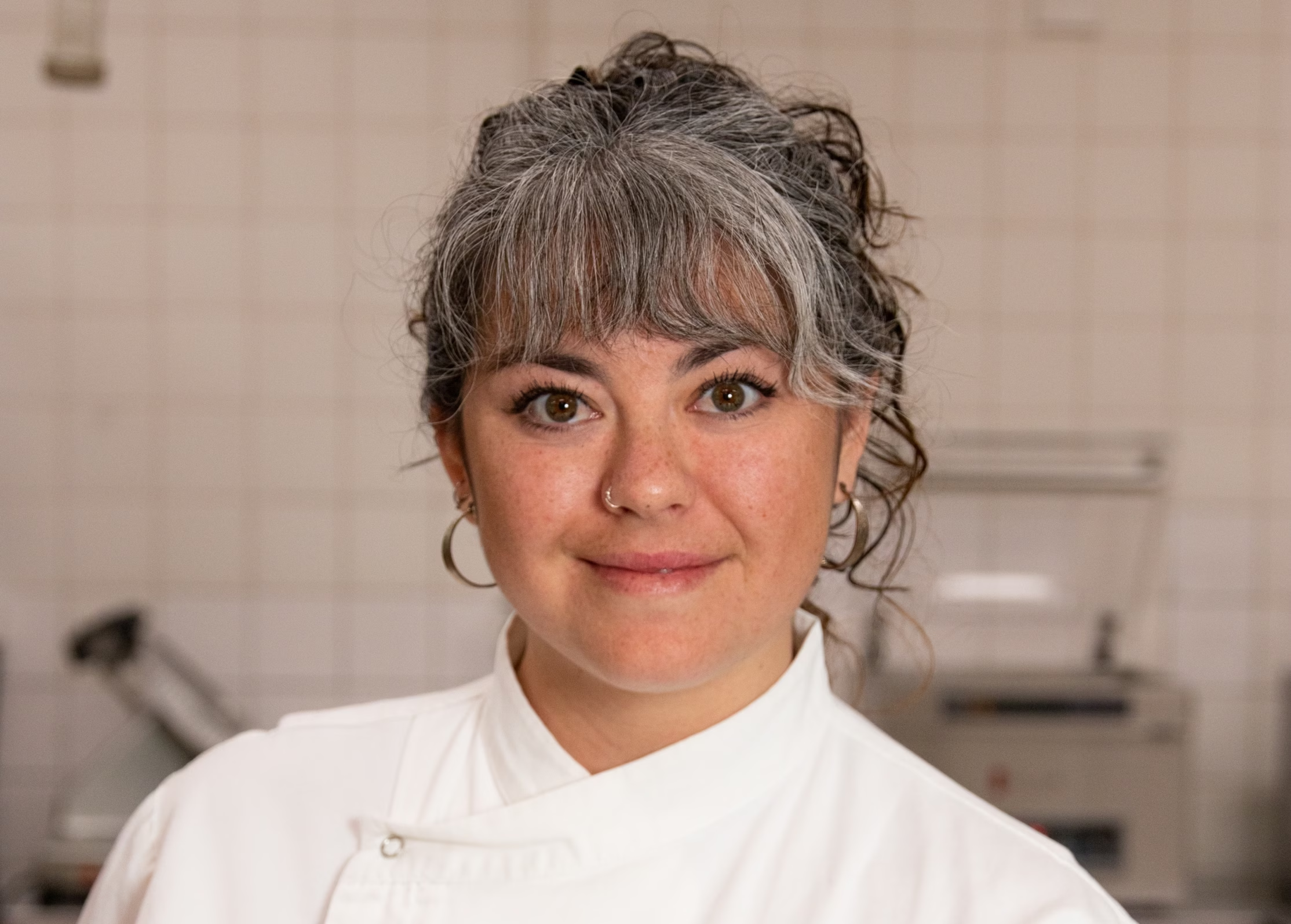
Chef Javiera Gómez’s career began at just 20 years old in her native Chile, where she combined her boundless creativity with a love for fresh ingredients. During her four years of culinary studies, she launched her own catering company before setting off to immerse herself in the unique sea-to-plate traditions of Rapa Nui (Easter Island), where she spent six months learning the power of local produce and cultural storytelling through food.
Where did your love of food come from? My love of food comes from my culture. In my family, everything happens around the table – it’s how we show love. My mom is a big foodie, and she inherited that from my grandmother. All of our important moments, the happy ones and even the difficult ones, are tied to food. Since I have memory, I have been in the kitchen around the matriarchs of my family peeling, chopping, kneading, it has always been the centre of our lives.
What was your first role in the industry and what was the most significant lesson it taught you at the time? I started very young, helping my dad, who was an event producer. I loved food, so I gravitated toward the kitchen, assisting chefs during functions and helping with plate-ups. That’s really where it all began. While I was studying to be Chef, I started a catering company with my class mates, we had very little resources and experience as we were new in the industry but that taught me one of the biggest lesson and it was to keep going nothing is too little and nothing is to big – stay busy, push through, and pay attention to ever single detailed around me. It’s never just about one dish; it’s about the whole picture.
Tell us about your current restaurant and its menu – what excites you most about it at the moment?UMA is now a South American restaurant, though we began with a purely Peruvian influence. We’re seasonal and change the menu at least three times a year. We highlight WA produce through South American flavours and techniques, we’re constantly creating – new dishes, new ideas, new events. We showcase an experience, a journey through South America, and what that means for us. We invite our customers to travel without the need for a passport. We embraided the culture celebrating South American festivities during the year. For example, in Chile there’s a Fiesta de la Tirana, a masquerade celebration in July.
What’s the most interesting ingredient, product, or technique you’ve been exploring lately—and why? We’ve been choosing single ingredients and elevating them in unexpected ways. For Valentine’s Day, we used red cabbage in multiple textures, so guests wouldn’t even recognise it as cabbage. We’ve also been doing a lot of fermenting – mustard, pickles, chicha – and experimenting with building sauces and recipes completely from scratch. It’s about pushing boundaries and opening new creative doors.
Do you do anything day-to-day that helps you to tap into your creativity or source new ideas?Creativity is constant for me. As soon as we finish one project, I’m already thinking about the next. We work closely with a mix of small and large suppliers, and those relationships spark ideas. One small supplier has a unique cheese made from a specific breed of cows, and we’ve used it for everything from cheesecake to ice cream to savoury sauces. Algorithms also feed me endless inspiration, and after so many years in the industry, I naturally absorb a lot. Our team is multicultural, and everyone contributes ideas – not many restaurants allow that level of creative freedom.
How are guests and their changing expectations making you think about your approach?
We stay very connected to our guests and track feedback closely, especially from our regulars. Every guest has their own profile, so we know their preferences and can personalize their experience. We have guests visit multiple times a year, and we make sure they feel looked after and part of the UMA family. Offering something new each time keeps the experience exciting for them and for us.
Are there any food trends you’re embracing or intentionally pushing back on right now?
Our menu isn’t just a collection of good dishes – every dish has a story. Protecting storytelling is important to us. We guide our customers in a journey throw the Amazonas, where they can travel to different countries with the necessity of standing from their chairs, our food has meaning and a purpose, embracing sustainability and connection.
What’s the best thing about being a professional chef? Everything. This is my passion, and I can’t imagine doing anything else. Seeing guests happy, constantly creating, and always improving – it’s just warmth for the heart. Feeling the adrenaline of the rush is indescribable, powerful, and exciting. Creating a good team environment is essential; we work long hours, but we support each other like a family, which hasn’t always been the case in my experience.
What about your current role or experience that keeps you up at night? The industry never stops, so there are always things to do and little fires to put out. I wouldn’t say things keep me up at night but just wake me up very early.
How do you switch off from stress? I don’t think I ever fully switch off because I genuinely love what I do. But I do have hobbies that help me reset – I’m a scuba diver, I paint, and I enjoy anything that lets me work with my hands.
What’s one piece of advice you’d give to your younger self? Keep pushing. Coming from South America, the kitchen environment was much tougher back then, especially for women. I’d tell myself to be a sponge – absorb everything, the good and the bad, because even the difficult moments shape your future.
Who’s impressing you in the industry at the moment and deserves a Restaurant Business to shout out? Carolina Bazán. She was one of the most first well-known chefs in Chile and opened Ambrosia. She blends cultural traditions with modern, vanguard techniques – a mix of heritage and innovation that I really admire. It’s similar to what I try to do: honour culture, transform textures and visuals, and keep the flavour at the heart of everything.