The RB Big Interview series brings you in-depth conversations with the industry’s most influential leaders, innovators, and visionaries who are shaping the future of Australia’s hospitality landscape.
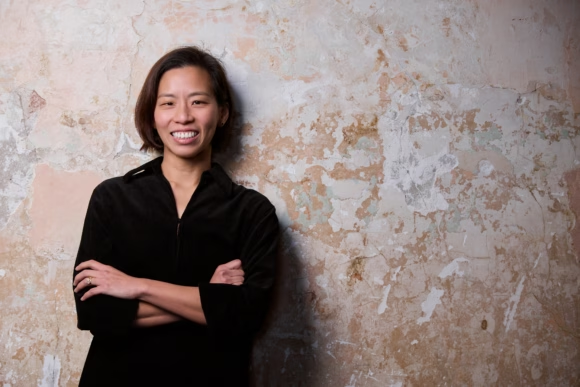
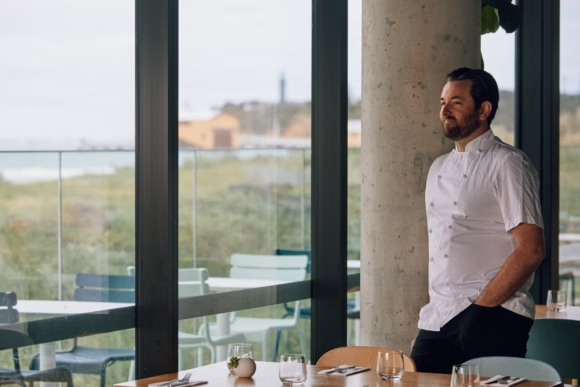
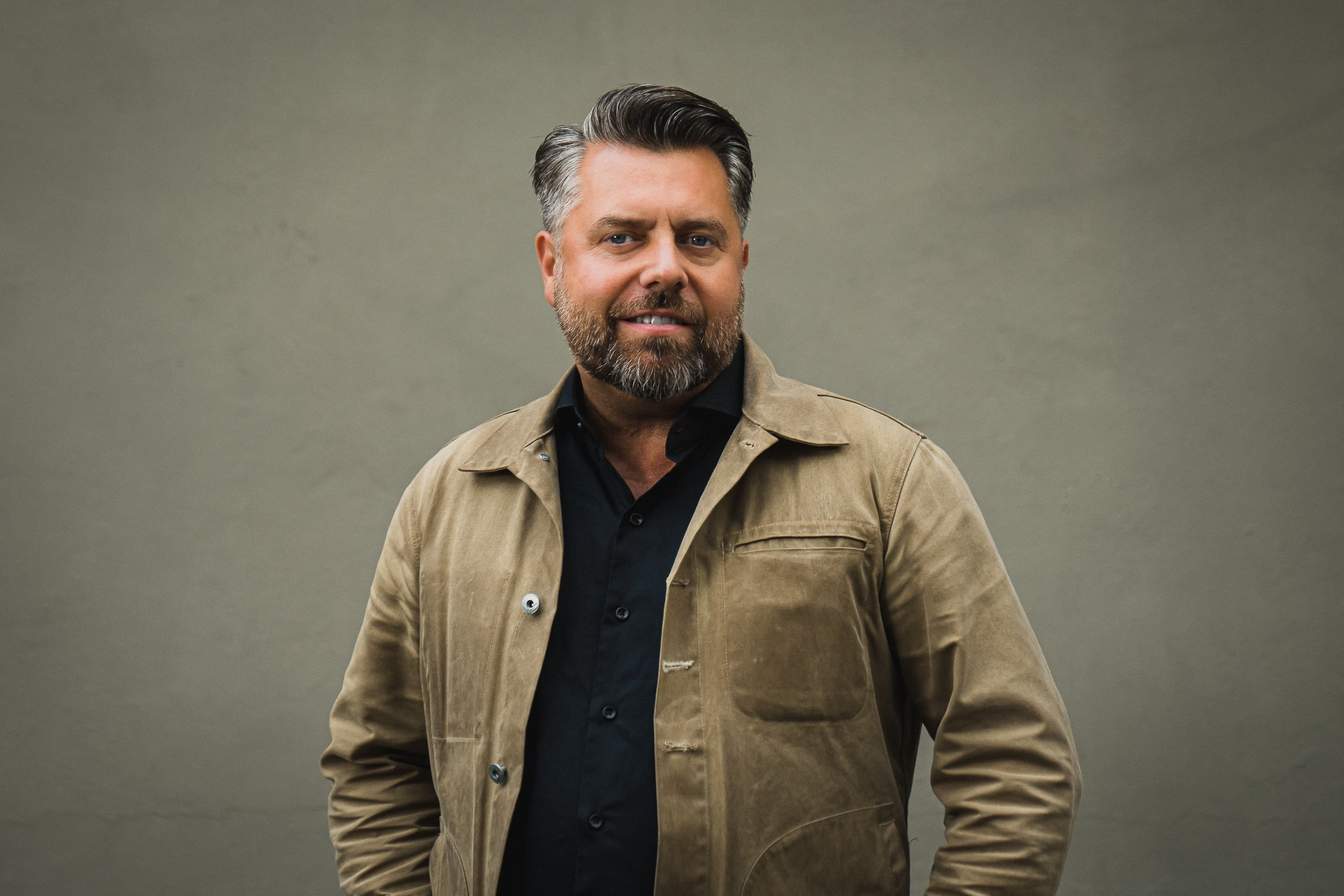
James Ingram is the co-founder and managing director of Peninsula Hospitality, the company behind The Dry Dock Public House and Dining Room — a landmark venue in Sydney’s historic Balmain. With over three decades of experience spanning every tier of the industry, James’ career began at 16 under acclaimed restaurateur Gay Bilson at Berowra Waters Inn, before taking him through some of Sydney’s most revered fine dining rooms — including Neil Perry’s original Rockpool — and abroad to London’s famed Bibendum under Sir Terence Conran.
Since returning to Australia, James has held senior leadership roles at Merivale and Solotel, co-founded award-winning venues, and built Ingram Advisory, a consultancy working across hospitality, property, and leisure. In 2021, he turned his attention to restoring and reimagining The Dry Dock — a project that stands as a testament to his belief in layered, elevated hospitality. We sat down with James to find out more.
You’ve worked at iconic fine-dining establishments, and here you’re reimagining the pub. What drew you to the pub format?
I’ve always loved the concept of the pub. I don’t come from a pub background, so to speak. Although you know, in the groups, I was responsible for looking after a lot of pubs. But I love what a pub is to a community. It’s such an important part of a community. And in the 80s and 90s, we had a much better pub culture. There were a lot of hatted chefs in pub dining rooms throughout the 90s —people like Matt Moran, Sean Moran, Stefano Madden, Paul Marini—there was quite a culture there. And it brought great food to the pubs. I feel that’s sort of been lost over the years; there are still examples of it, but by and large.
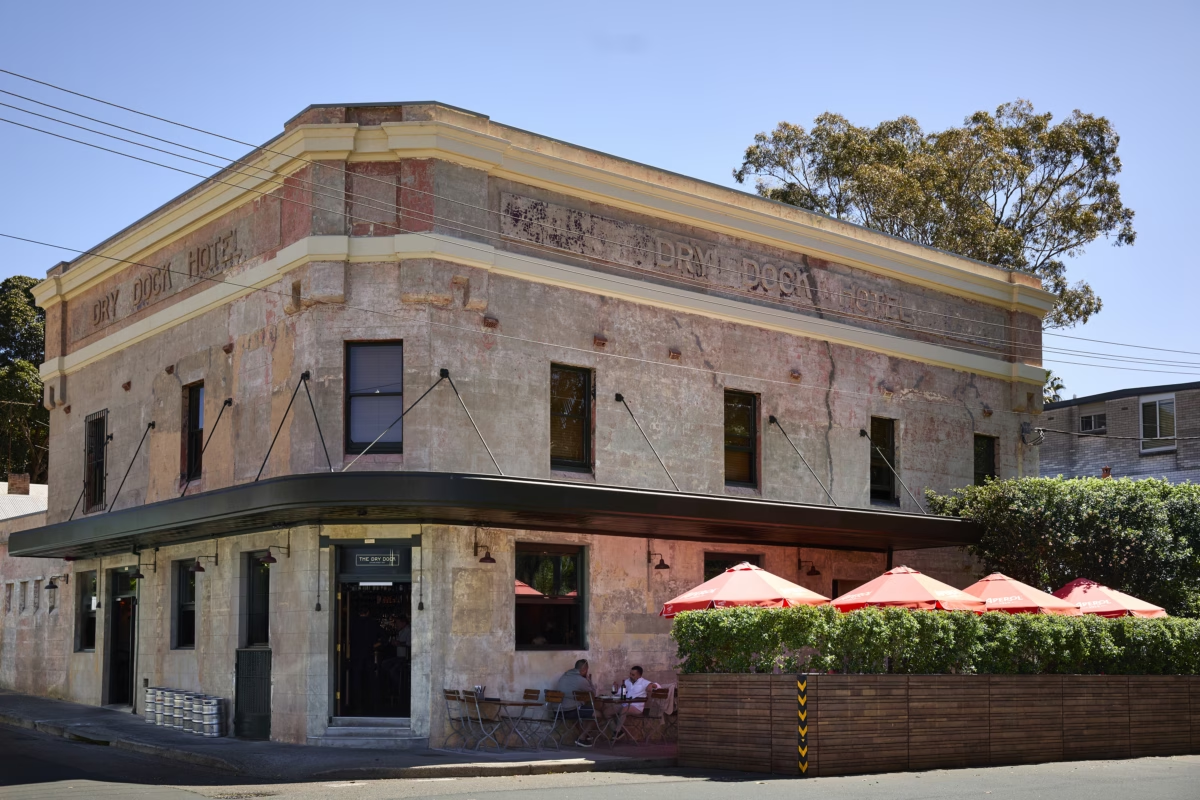
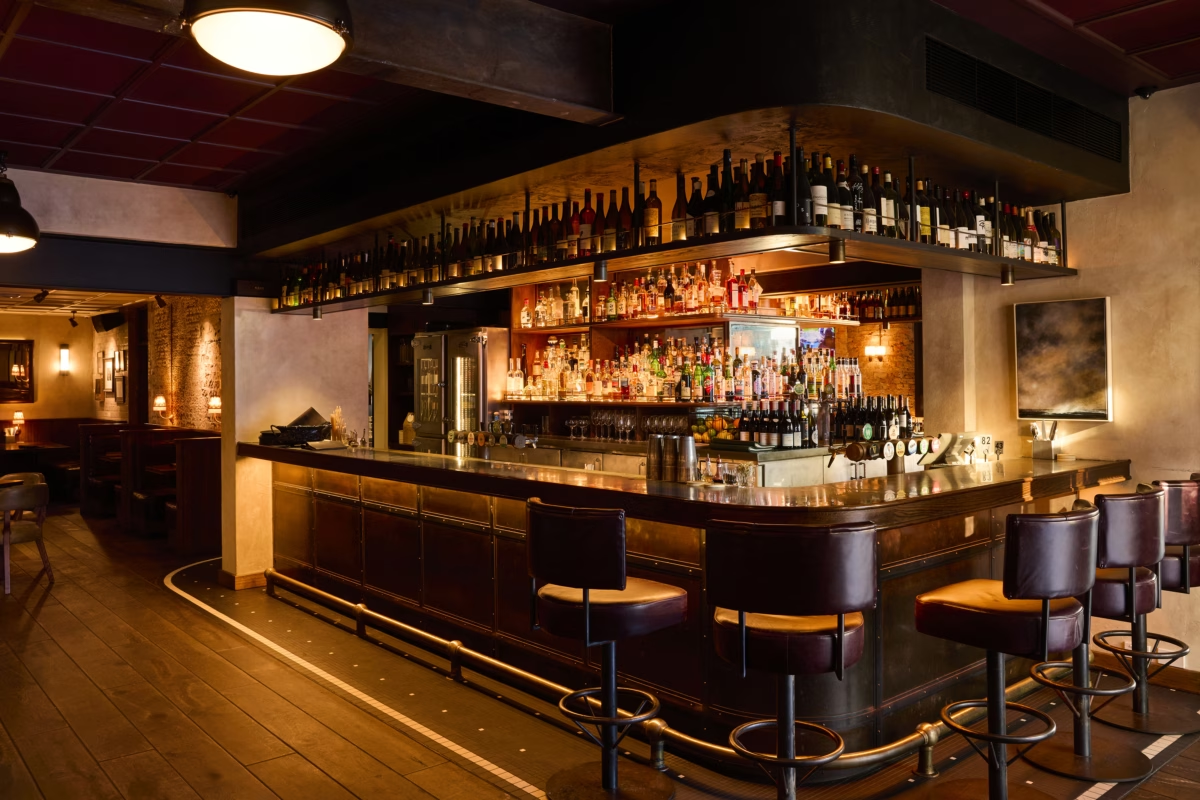
I think that people, more and more so now, are drawn to a more casual, or less pretentious environment when they’re dining on a day-to-day basis. Doesn’t mean they don’t want a special experience at a fine-dining restaurant. There’s still a place for that, but we just felt there was an opportunity to create something with layers. Mike Everett is my business partner and has a house in Balmain; he has been a resident here for 30 years. He found the site. One day, he sent me a text message saying, mate, there’s this pub around the corner from my place in Balmain. It’s super rundown, but the layout and size are good. It’s on the market. Do you think we should look at it? And I came down and looked at it, and I immediately saw what we could do with this. It has this classic layout with a little public bar, a lounge bar, and a separate dining area.
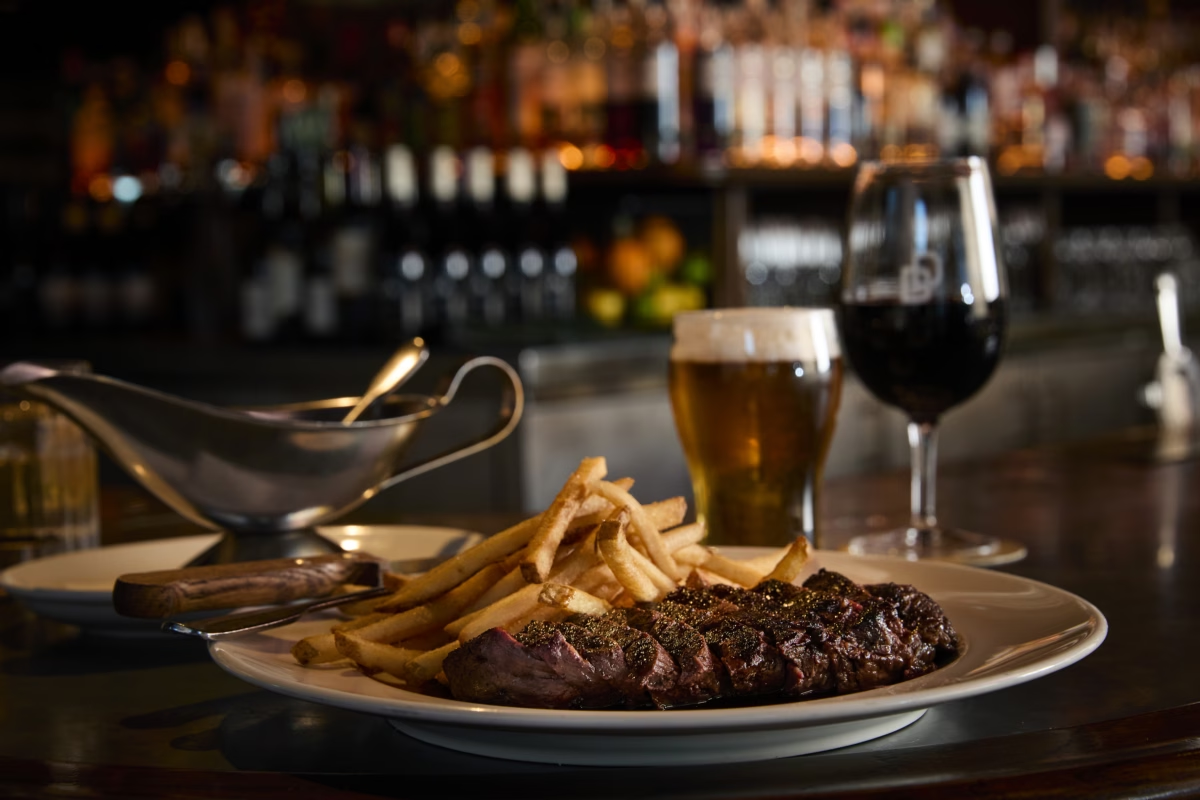
While we have a 100-seat a la carte dining room in here, you can choose your experience. If you just want to have a burger and a beer at the bar, have that. If you want six oysters and a pint of Guinness, you can have that. If you want to punt on the races and have a steak with a glass of red, you can do that. Or you can come in and have a full à la carte experience. When we go to London in particular, everybody comes back talking about the pub culture there and how amazing it is. Good food in pubs in the UK is just normal. The Gastro Pub — there’s probably more gastro pubs than normal pubs these days, and some of them have Michelin stars and incredible chefs. I don’t think this is a new concept. I just think it’s something that we haven’t got enough of in Australia at the moment.
I wanted to make sure it had the heart of the pub. And it was a local to people, and people used it as an extension of their lounge room, to come and meet their friends, to decompress after work, to have a quick dinner with the family, or to come for a business lunch, or for a special occasion. Having that ability to have all those layers is really important.
Let’s talk about your win at the Australia Wine List of the Year Awards 2025 – your category was voted for by consumers, not critics. How did you build that with pub punters in mind?
The first thing is, while we wanted to have the heart of a pub, we run it like a sophisticated restaurant and bar. The principles don’t change in high-quality hospitality — it’s about attention to detail, it’s about nice ambience, it’s about great food and wine, and most importantly, incredible service. Wine, I think, is incredibly important to people. It doesn’t matter whether you’re having a burger or a seafood platter — the wine experience is critically important to people these days. I think the public is well educated and discerning, and we all buy the best quality we can afford at home. For me, it was important to be able to create an experience around wine in the pub, and not just have a short list of ten whites and ten reds from one supplier.
I think value is very important. It’s a perceived concept, and when you can add value to their experience by having well-educated people guide it, that really captivates people. There’s nothing like going to your favourite restaurant and having your favourite sommelier take you on a journey, where you’ve got trust.
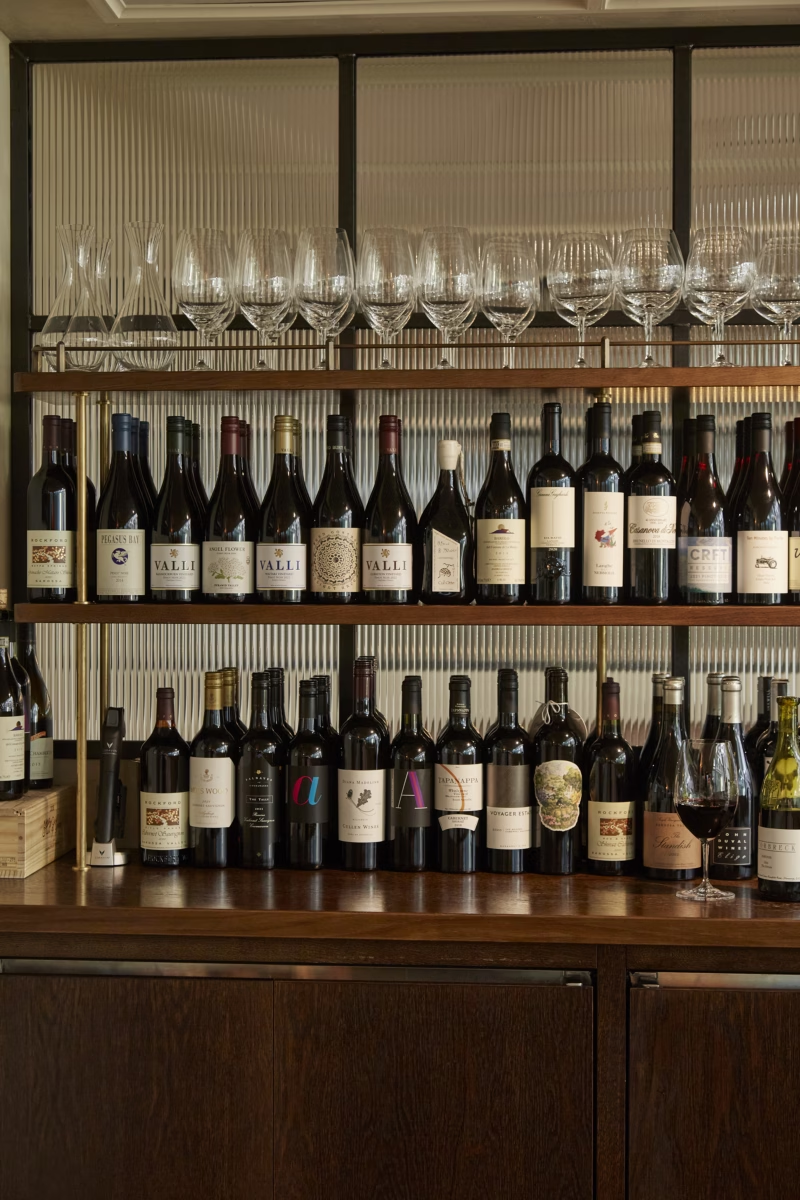
I also don’t like wine lists that baffle customers and make them feel inadequate. Layout is very important. We have a very clean layout. I believe in presenting wine lists by varietal, which allows people to understand the grape varieties — which are really about the taste of wines — as well as the countries and regions. We have 36 by the glass, a corridor programme that’s revolving continually, and 500 on the list. We’re only two years old, so the biggest challenge is finding aged wine. You need to start your own cellaring programme, and it takes time. So that’s our next evolution.
It’s interesting to hear you talk about it so holistically. Typically, in a pub, you’ve got the bar, and then you’ve got the restaurant. And here it sounds like it’s a whole-of-experience approach.
You’ve got to have a strategy, you’ve got to have a narrative, you’ve got to have an idea. And I think that one of the biggest mistakes that operators have, which you see time and time again, is it’s not a poorly conceived concept — there might be some good ideas there, but it hasn’t been thought through properly. I’ve been doing this since the mid 80s. I call it a long apprenticeship, which it is — you’re constantly learning. And when you get to my age, and you’ve spent this time, I feel like a real responsibility to do something well.
You spent the good part of two years restoring The Dry Dock from the ground up. Walk us through a little bit of that process — some of the challenges, physical, financial, conceptual.
It’s a heritage hotel, so there was a lot of red tape to get through. It was a deep renovation. Bianca Sgrò was the interior designer that I collaborated with — it was sort of my concept, with her interpreting it. My brother is a furniture designer and joiner, and he did all the booths, banquettes, tabletops and waiting stations. Chris Field was the builder. It hadn’t been renovated since the 70s. We had to take the roof off and lay new slabs — we basically just kept the facade, and everything else had to be rethought and reimagined.
Time and money are the biggest challenges. Having a business closed for two years is the hardest thing, because we had a mortgage. I wouldn’t want to do that again. Finding the right people for the project is critical, and you have to be part of every decision because each one, at certain points, becomes permanent. I don’t believe in open-ended budgets — less is always more. But I really believe that how a room feels is more important than how it looks. We don’t feel comfortable in shiny gallery spaces. We love a bit of patina. We love nooks and crannies, warmth, and organic.
I also wanted to make sure there were lots of moments and experiences throughout the venue — little perches, really good bar stools at the bar, little couples booths behind the fireplace, where you can find moments together. I work very much from the perspective of the customer, and what sort of experiences are going to meet but exceed their expectations.
Your Chef’s Hat and Pub of the Year Award from the Good Food Guide are two accolades that don’t often sit together. How do you reflect on those achievements?
With great pride. I don’t do this for awards. I do it to create a great business that is successful creatively and financially, and I judge our success by our customers and how they feel about us. But you can’t underestimate the respect when you get recognition from your peers — that’s really important. I love this industry; I love hospitality, and getting that recognition is amazing. It’s particularly important for the team. We have more than 100 staff, and 50 of them are under 25. Winning a hat is a benchmark — it’s what all chefs want on their CVs, and it makes it so much easier to attract talent.
For the Good Food Awards to bring back the best pub category says something — that pubs need to be better. Next year, there’ll be more people competing for that category. The wine awards were fantastic. We got three wine glasses in our first year and retained them this year. But we also won the People’s Choice Award, which is a national award, and we won it again this year, which was a huge surprise for me. That’s our customers — and that’s a pretty good barometer. For me, it’s just confirmation that we’re doing the right thing. We just focus on what we do and on being better at it. I strive to be better every day.
We’ve seen in the news recently that Quay closed after almost four decades in business. It does feel like people are coming to more accessible spaces. What’s your view on it?
I think it’s a generational change. We are not formal in our lives, and we crave quality above everything else. We want to eat out, drink and dine out more. So the value proposition and price point are important. I like the customer to be in charge of their journey. Writing menus is about seduction. We have a brasserie-style menu in here — very classic, quite large, great for sharing or for your own journey. If you want to come here and have a burger and a glass of wine, you can do that. But if you want a seafood platter, steak tartare, pasta, a main course, and then go for gold — caviar, the whole bit — you can do that too. I don’t think people want fuss anymore. There’s a place for it, but you have to be the best of the best.
Peter Gilmore is not going anywhere. Something else exciting will happen, and all those incredible chefs, wait staff, and management in there are going to do something. I see it as just part of the natural process. People’s dining habits have changed, and that’s just normal. They’re excited to be taken on a journey, but they want to be in control.
I’d love to hear about Ingram Advisory. What are some of the common mistakes that you see at a time when the industry is harder than ever?
Ingram Advisory has been around for about 15 years. I work with owners and property developers to create precincts because it gives me the opportunity to have an impact on public space. I worked on Central Barangaroo in Sydney for three and a half years with Aqualand and Development NSW — they had 70,000 square metres of mixed-use, hospitality, and commercial space, and I guided all the hospitality. It’s about the operational design, how to lay it out, how to create the best experiences, and how to attract talent. I also just did a five-star hotel in Auckland for IHG — we did a restaurant called Bistro Saine, which has got a hat and is pretty much one of the hottest restaurants in Auckland at the moment, which I’m hugely proud of.
Common mistakes — I think people try too hard to create concepts that are too unique. If you step into the margins too far, you take a risk. But the last thing you want is to be vanilla. I look at classic principles, things that are going to stand the test of time, and then bring your own personality to that. Have a clear, executable plan. I think people rush with their ideas and their concepts too much. Finding a sustainable business model is probably the hardest thing you’ve got to think through carefully.
When you look at places like Berowra Waters Inn that have been around for 50 years, what is it that they continue to get right?
For me, hospitality has always been about the art of hospitality. It’s not about feeding people and serving people — it’s the art of how you do it. And that’s what people feel. These businesses are focused on that, and they have a clear vision for what they’re trying to do.
If you go around the world and think about all the places that you fall in love with when you’re in London, Rome, Paris, we always fantasise about these classic places. There’s a tendency to try to be too innovative. Don’t change something that you don’t have to. That’s why places become institutions — because they know who they are, they don’t change, they evolve, and they focus on experience. It’s a place that you can depend on.
Let’s talk about staff, because I know you’re so passionate about this topic. Is it harder now to attract talent than it has been? Is hospitality an attractive career to people?
People are your greatest asset and your biggest risk, and it’s the most important thing that you have to get right. The culture of your business is what our guests feel, and your staff will control that experience at every level.
I love the industry because you can leave high school and get your first job as a kitchen hand, a food runner, a bar back, and work your way up. By the time you’re in your mid 20s, you can be in a junior management role, and you can move quite quickly. We’ve got kitchen hands that are now chefs. I really believe in training and development, and being able to give people a career trajectory. We focus a lot on emotional intelligence — people who are well-balanced and have the right attitude.
Kitchens are much more sophisticated places now. We have to look after our people. I place a very strong focus on caring for the team. We feed everybody, and we have a staff drink at the end of service because it brings that sense of community. And I offer almost 50% off for up to four people to come in and eat and drink, because a lot of them can’t afford to go to restaurants. Because of that, they know the food, they know the wine, and they can talk with authority to our customers.
I always tell people — whatever you want to do is okay. This is a great thing to do while you’re on your journey. It teaches you so many amazing life skills. There are many examples of people who studied law or other degrees who have dropped out to stay with hospitality because they fell in love with it. You get the bug. It’s not easy, and you’re not going to earn the same money as if you were a banker, but the satisfaction you’ll get out of your career is pretty great.
I have this long-held belief that pubs are just so central to the community. I think it’s where life happens. What’s your view on the state of the pub industry and its prospects going forward?
I think it’s of critical importance. In Australia, we are at risk because of the corporatisation of the hotel industry, where the majority of hotels are owned by large groups, and so there’s less of a sense of community focus. I think every suburb in Sydney or Australia would probably love a pub where they could walk in and see their friends. Balmain is an amazing suburb because it has a real community feel — it’s a peninsula where people come in and live, and they love their pubs.
I really do hope that the next generation of publicans will see chefs and hospitality people move in that direction and, hopefully, create more intimate experiences for communities. I think it’s incredibly important for the community’s mental health as well.
We saw during COVID what happened with the isolation. There was a new appreciation at the end of COVID for how important hospitality was to people’s lives and wellbeing. We saw people flood back into businesses, joyously grasping the whole concept of interaction and experience. It’s going to be very interesting to see how it evolves now. Hopefully, we’ll have an impact on that.
Check out The Dry Dock on Instagram: https://www.instagram.com/drydockhotel/