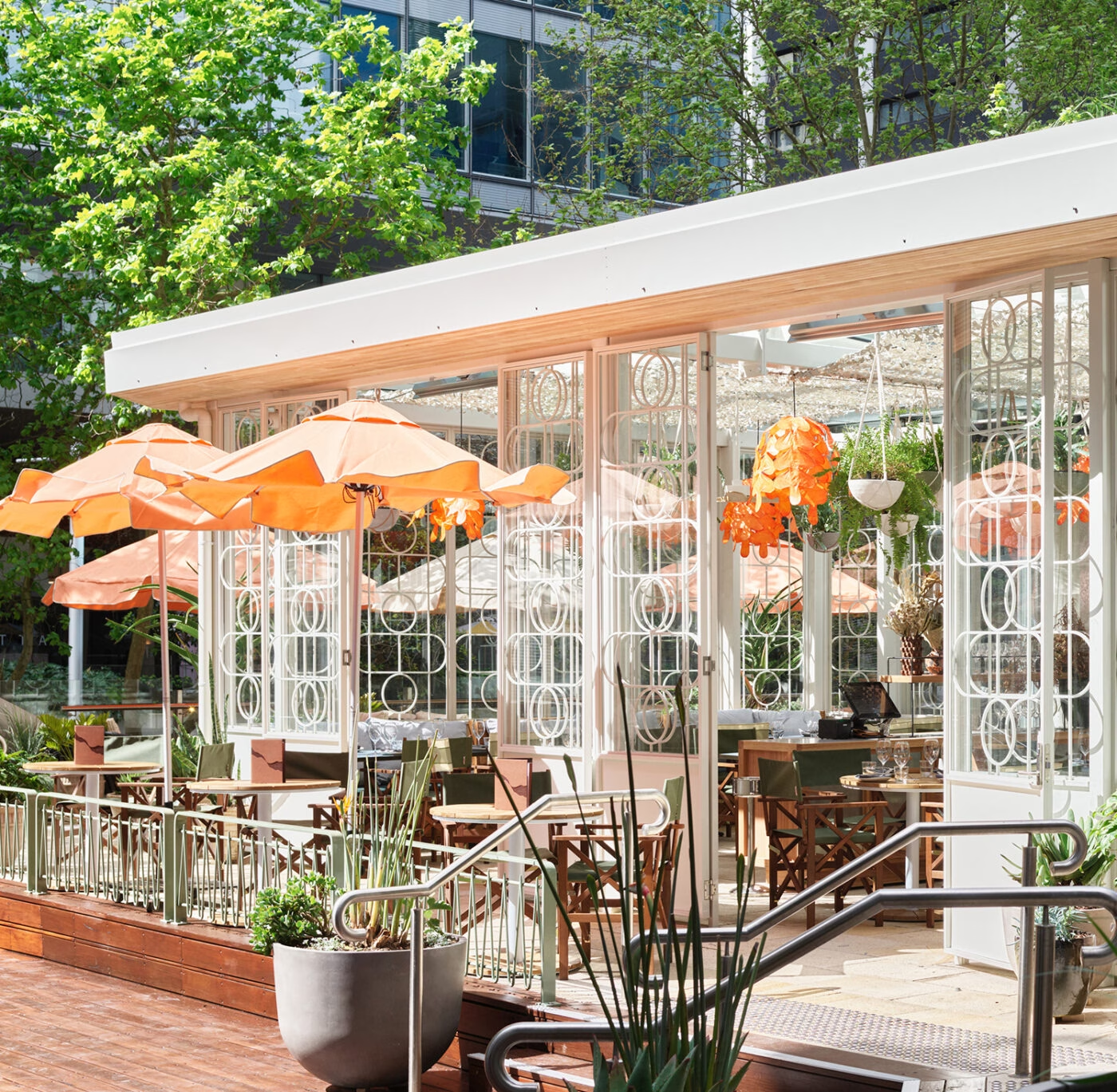
Up until five years ago, North Sydney had a clear identity: work hard, leave promptly at 5pm, and forget about dining out. Office towers emptied, the streets fell silent, and the few restaurants that existed served mostly quick corporate lunches or takeaways. After hours, the suburb felt like a ghost town.
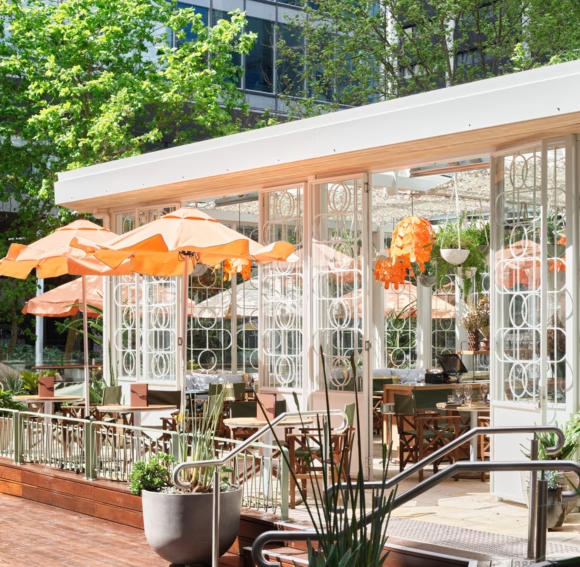
That’s changing. A new wave of restaurants is proving that North Sydney can be more than a daytime business hub. Venues like Poetica and RAFI North Sydney—both awarded one hat by the GoodFood Guide Awards 2024— have injected energy, design-led interiors, and inventive menus that draw locals, families, and foodies from across the city.
Newcomers such as Toki Bistro & Bar are pushing the bar even further, combining bold interiors with an elevated tasting menu more commonly associated with Sydney’s inner-city dining precincts.
For Sydney’s hospitality operators, North Sydney is emerging as a live case study: how do you transform a corporate postcode into a vibrant dining destination?
The Metro shift
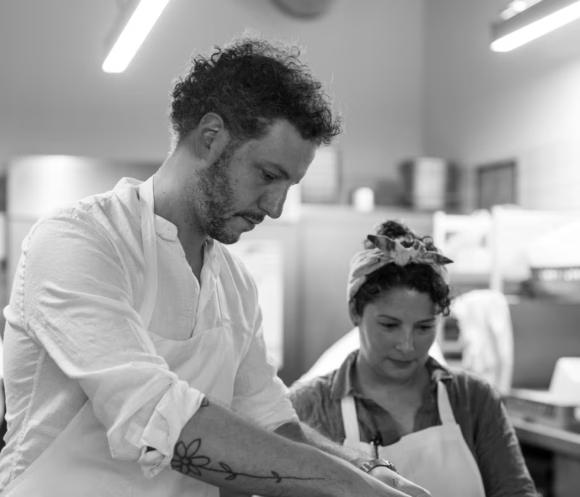
Keith Dsouza, head chef at RAFI North Sydney, recalls the moment it became clear the suburb was ready for something different. “Post-Melbourne Cup last year, and with the arrival of the Metro, we noticed a real shift in patronage,” he tells Restaurant Business. “Weekend trade began driving families, locals, and diners from across the city. That was when it clicked: North Sydney was no longer just a Monday-to-Friday corporate postcode.”
Adam Petta, CEO of Etymon (the group behind Poetica, The Charles, Loulou, and Sol Bread & Wine), noticed a similar opportunity. “After the success of Loulou in Milsons Point, we realised there was a gap in North Sydney for lifestyle and community dining,” he explains. “When the chance arose to expand to Walker Street within the AURA precinct, it felt like the perfect moment to help shape a cultural shift, from purely corporate to a place people want to live, eat, and socialise.”
Both Petta and Dsouza emphasise that timing was crucial. “You can’t just drop a high-end concept into a sleepy corporate suburb and expect it to work,” Dsouza says. “You need the market to be ready and the infrastructure to support it.
Balancing corporate and after-hours appeal
Even as the precinct evolves, the corporate crowd remains essential. Lunch specials, happy hours keep the weekday energy flowing. But all three operators agree that after-hours business is now the true driver of the precinct’s transformation.
Ian Kim, Operational Manager at Toki Bistro and Bar, puts it simply: “Weekends are when people want to enjoy a meal, and we aim to be their destination.” Dsouza echoes the sentiment, saying the corporate lunch trade is important, but growth has really come from evenings and weekends. “That’s why we built RAFI to transition seamlessly from day to night. It feels just as inviting for a client lunch as it does for a Friday night out.”
Welcoming the Metro
Infrastructure has played a surprisingly decisive role in North Sydney’s emergence as a dining destination. The opening of the Victoria Cross metro station has boosted foot traffic and made the precinct more accessible to diners across Sydney. “It removes friction,” Dsouza notes. “People are more willing to travel when it’s easy. It doesn’t create demand on its own, but it supports concepts that already have a strong appeal.”
Kim agrees, emphasising that accessibility alone isn’t enough: “You can’t rely on geography. North Sydney was traditionally known for weak foot traffic. Your concept has to be compelling enough that people choose to come here. The Metro just makes it easier for them to actually do it.”
Building a dining destination
As Petta observes, “We’re not just opening restaurants, we’re shaping a cultural shift. North Sydney is finding its identity as a lifestyle hub, and for chefs with concepts strong enough to stand on their own, the opportunities are enormous.”
The streets that once emptied after 5pm now host moody bistros, buzzing wine bars, and ambitious kitchens. Patrons cross the bridge willingly, drawn by inventive cuisine, elevated interiors, and experiences that feel worth the trip.
In less than five years, North Sydney has gone from ghost town to dining frontier. For operators and investors, it offers a clear message: with the right mix of timing, design, and experience, even a traditionally corporate suburb can be transformed into a thriving culinary destination.