Isaac Varano cringes every time he opens TikTok. Not because of the content—but because he’s in it.
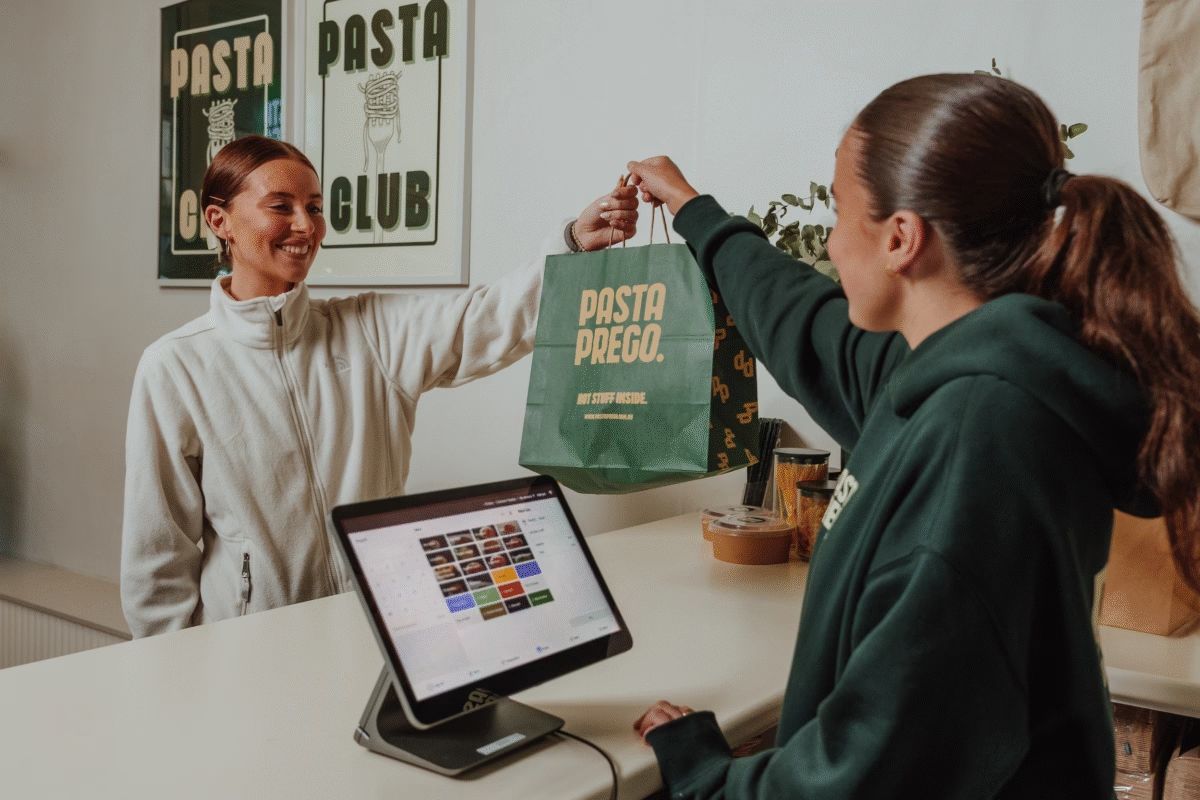
“We’ll be filming a TikTok and one of us will be like, ‘Alright, boys, I need you for a TikTok,’” says the co-founder of Melbourne’s Pasta Prego. “And they’re inside like, ‘Oh my God.’ The stuff they make us do… I just do not even open TikTok because I’m so embarrassed that it’s on there.”
But then customers tell him the videos are funny. And despite his discomfort, Varano keeps filming. Because for young hospitality entrepreneurs, social media isn’t optional—it’s existential.
“We shut our eyes and we have to do it,” Varano admits. “It’s just the nature of hospitality and business these days.”
The 90% rule
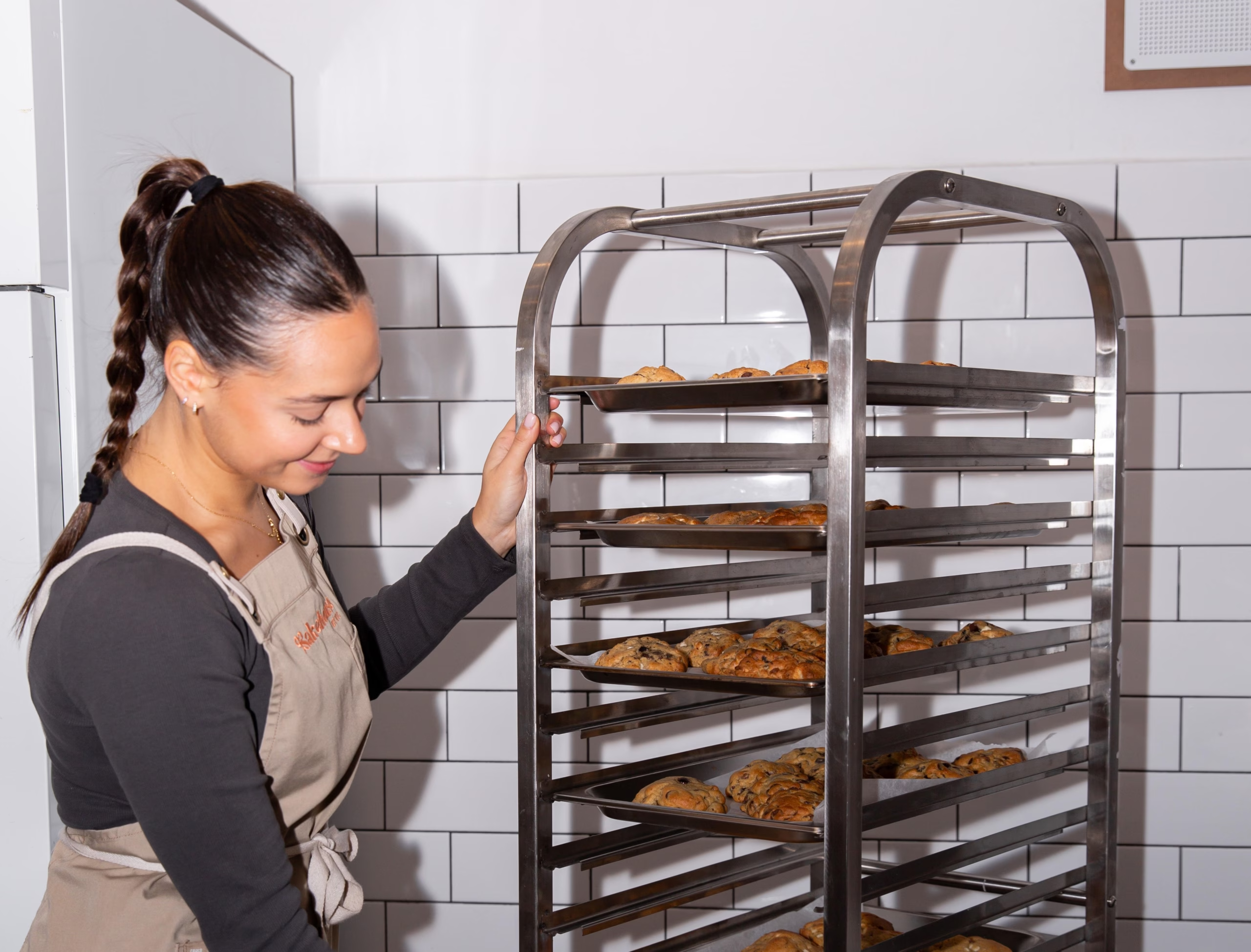
For Victoria Kyzintas, owner of Bakehouse by Vic in Melbourne, the math is stark: 90% of her customers discovered her business through TikTok. Her bakery sits hidden off the main street, with minimal foot traffic. Without social media, she estimates, the business wouldn’t exist.
“I truly limit yourself if you don’t have social media,” says Kyzintas. “There’s just so much more business that you can even think of just by creating foundations on your business online.”
During the pandemic, while still working retail and testing cookie recipes, Kyzintas started documenting her journey on TikTok—baking in her house, testing bagels and puddings, inviting followers to suggest flavours and methods. When she opened her physical location, customers arrived saying they’d been following the journey from the beginning.
“These people felt a part of it,” she explains. “I think building that personal connection is what really helped grow the bakehouse.”
From mirror talks to 132,000 followers
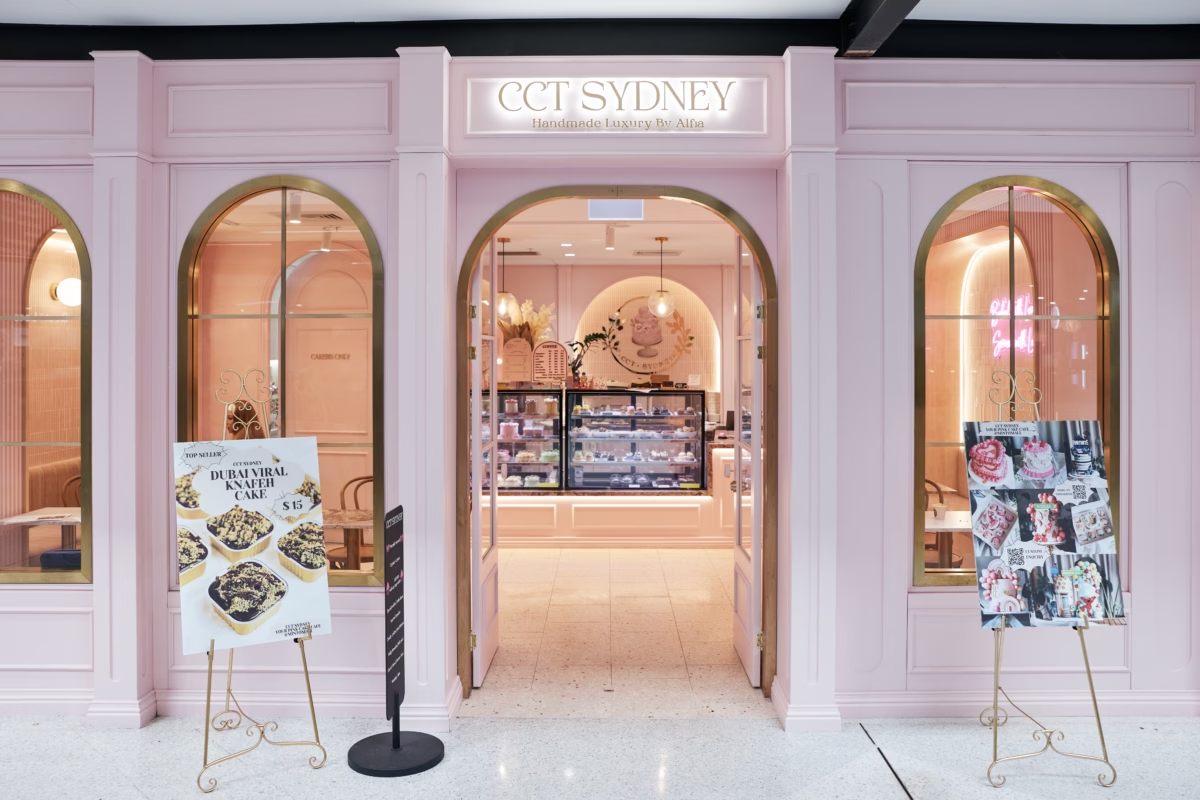
Alfia Karim, owner of CCT Sydney Group, understands the pressure. With 132,000 Instagram followers, she’s built a substantial audience—but knows it doesn’t automatically translate to sales.
“Having a big social following does not necessarily convert to sales,” says Karim, who operated from her garage for five years while raising three children under three. “You still gotta put the effort day in, day out, even if you don’t feel like it.”
For Karim, who focuses on custom cakes, the strategy centers on showing the process—her 4am trips to Sydney’s flower market, arranging flowers on her workbench, the gradual assembly of elaborate designs. “I try to photograph every different corner of a cake,” she says. “People who love art as well, like symmetric stuff, they would also love to see my content.”
But she acknowledges the toll: “It’s very, very hard to run a business. It’s very hard to manage people working for you. I was in my garage for five years, so it was just me talking to the mirror every day. But now I gotta do that with six other people in my team, day in, day out… plus there is a demanding factor of the social media.”
Her bottom line? “If you’re not on social media, you are often forgotten.”
The search behaviour shift
Lorenzo Fantarella, Varano’s co-founder at Pasta Prego, points to a fundamental shift in consumer behaviour that makes social media unavoidable: Young people have stopped Googling restaurants.
“When I’m looking for restaurant recommendations, I actually went on TikTok,” says Fantarella. “People aren’t realising that. I’m not going to go on Google Reviews. I’m not going to look up Broadsheet anymore. I’m probably going to go on TikTok and see two or three different reviews.”
The platform offers something Google can’t: a sense of the venue’s vibe, whether content is authentic or paid, and what the experience actually looks like. “You get a good understanding of the venue you’re going to, what you’re paying for,” he adds.
What actually works
The entrepreneurs agree: polished, perfect product shots no longer perform. Kyzintas tests her content by asking whether it would grab her own attention in the first two seconds—TikTok’s brutal attention economy has trained even creators to expect rapid engagement or nothing.
“People don’t want to see the polished, perfect lattes or product,” she says. “They want to see a bit of behind the scenes, but they also even like how you make it.” Videos of baristas explaining drink preparation while making specialty beverages consistently outperform static product photography.
By late 2025, all three entrepreneurs noted a shift away from chasing trends. “In the beginning of this year, we tried to look at other creators, what they’re creating, try to get more views,” says Karim. “But I think by the end of this year, that’s faded down a little bit. I’m trying to find my true self voice and try to connect with the people around rather than following trends.”
The grateful grudge
Despite the stress, Fantarella argues young hospitality operators should feel fortunate. “We should also be grateful,” he says. “With social media, we have the ability to scale a lot faster than businesses previously weren’t able to. Businesses that started 10, 15 years ago didn’t have Uber and they might have had Instagram, but Instagram wasn’t used like it is today.”
Still, the founders acknowledge the overwhelming nature of modern hospitality: cool branding, strong social presence, delivery platform optimization, events, team culture, and being a public persona—all while actually running the business.
“Yes, it is overwhelming and there are more facets,” Fantarella concedes. “It’s being across them all, and understanding how to utilise them all.”
For Kyzintas, the tension is simple: “I hold myself to a high standard, and I think it’s the desperation where I’m like, ‘Okay, I actually need to find something.’”
That desperation—to be seen, to survive, to grow—keeps these reluctant influencers filming, posting, and yes, occasionally cringing at their own content. Because in 2025, being good at food isn’t enough. You also have to be good on camera.
This conversation took place at Fine Food in Sydney as part of its live talks series.