
The City of Sydney is moving to cement its outdoor dining boom with sweeping changes that slash regulations and make temporary street spaces permanent fixtures of the city’s landscape.
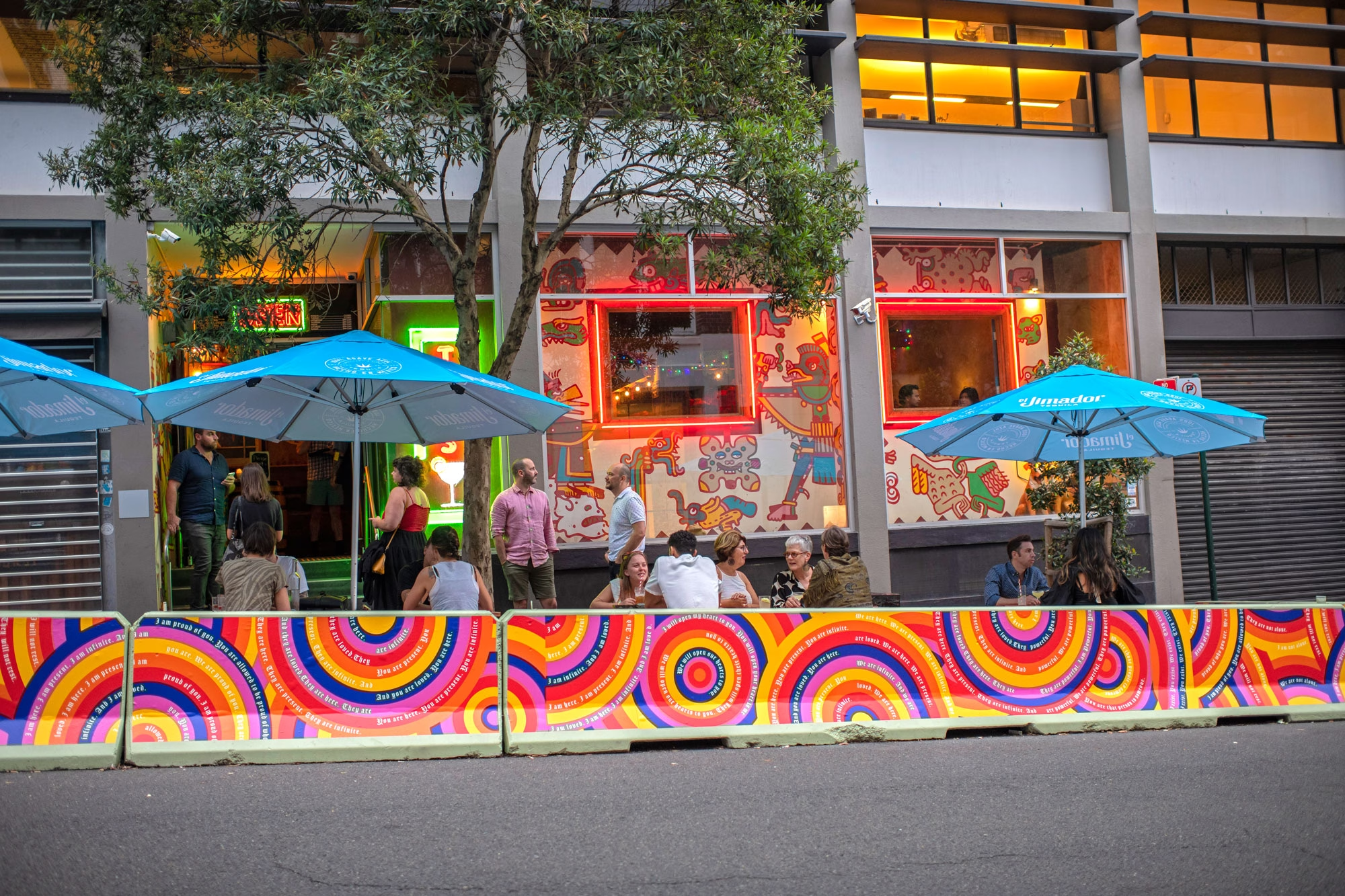
Under proposals announced Wednesday, the city will streamline approval processes, eliminate various operational restrictions, and convert on-street dining areas currently protected by concrete barriers into permanent footpath extensions with more aesthetically pleasing designs.
“We’re essentially flipping the script to supercharge outdoor dining,” said Lord Mayor Clover Moore. “Rather than telling businesses what they can do and where, we’re saying as long as you keep a clear path people can get through, and your neighbours are happy, we don’t want any red tape holding you back.”
The changes build on a program launched in 2020 that allowed restaurants to expand onto roads and footpaths free of charge during the COVID-19 pandemic. Since then, the city has approved nearly 1,000 applications, creating an estimated 13,000 square meters of new space on roads and footpaths and supporting more than 860 businesses.
Changes include 5-year approvals
Key proposals include:
- Five-year approvals for outdoor dining setups, up from current shorter terms
- Permission for businesses to set up dining areas outside adjacent properties after consultation
- Allowance for dining on both sides of pedestrian pathways where space permits
- Elimination of rules requiring tables or shelves for standing patrons
- Removal of additional requirements around food service, restrooms, and heaters
- Simplified application processes with reduced notification requirements
The city has waived approximately $20 million in outdoor dining fees since November 2020, costs that were permanently eliminated earlier this year.
Impact delivered with energy
Restaurant operators say the program has transformed their operations and neighbourhoods. Jeremy Blackmore, creative director of MUCHO Group, which operates Tio’s and other venues, said the changes have energised Foster Street.
“People can sit outside on both sides of the street, during the day and at night. This brings so much energy to the area,” Blackmore said.
Alfredo Perez, who runs Wings and Tins, La Farmacia, and Mrs Palmer’s, said the dual dining options have enhanced the guest experience. “The best part is giving diners the choice: enjoy the full restaurant vibe inside or relax outside in the open air.”
Three-quarters of participating businesses reported hiring additional staff due to increased customer traffic, with more than a third seeing turnover increases of 20% or more.
Paul Nicolaou, executive director of Business Sydney, praised the initiative as supporting the city’s evolution into a 24-hour global destination. He called the five-year approvals “a great step forward” and welcomed replacing concrete barriers with more attractive street enhancements.
Accessibility free from obstructions
The city is also revising its approach to maintaining clear pedestrian pathways. Rather than requiring a specific, clear space along building lines—which often conflicted with ramps, utilities, and storefronts—the new guidelines focus on keeping accessibility pathways genuinely free from obstructions.
“Our priority is to ensure the city continues to have thriving outdoor dining spaces while maintaining sufficient space for others, including people with disability, those pushing prams or people with limited mobility,” Moore said.
The proposed guidelines will be open for public comment from 12 January to 12 March 2026, following council endorsement.